Get Full Government Meeting Transcripts, Videos, & Alerts Forever!
Get email alerts on the SNAP Payment Error Rate topic
No spam. Unsubscribe anytime.
MDHHS outlines targeted fixes after federal review flags Michigan SNAP error rate
Summary
MDHHS told a House oversight committee Michigan’s SNAP payment error rate triggered federal scrutiny and potential new costs under HR 1; department officials outlined technical upgrades, targeted county interventions and staff training intended to lower errors below the 6% federal threshold.
Michigan House oversight committee members pressed state officials on Monday over a rising SNAP payment error rate and its consequences under recent federal changes, while the Michigan Department of Health and Human Services outlined a multi-pronged plan of policy, workforce and technology fixes.
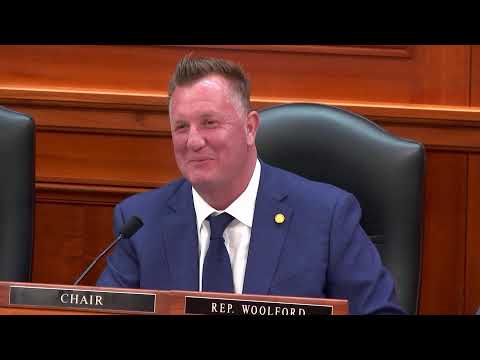
"The state’s error rate has climbed well above the national average," Chair Wolford said in opening remarks, calling the trend "alarming" and saying the committee’s goal was to understand what MDHHS is doing to restore federal compliance and public trust.
David Knesick, chief operating officer for MDHHS, told the committee the department views the issue as operational rather than primarily criminal: payment error rate calculations combine overpayments and underpayments identified through a federal quality-control (QC) sampling process and do not measure fraud. He said Michigan paid about $3.2 billion in SNAP benefits in fiscal 2024 and that changes in HR 1 will alter state costs and program requirements.
Knesick said HR 1 establishes tiered state cost-sharing linked to payment error rate bands, eliminated a $27,500,000 annual SNAP‑Ed grant primarily administered through MSU Extension and the Michigan Fitness Foundation, and shifts administrative matching from roughly 50/50 to 75/25 (state/federal) for a projected roughly $90,000,000 increase in state administrative costs.
Explaining how the payment error rate is measured, Knesick said MDHHS’s approved QC plan has it reviewing about 1,100 active SNAP cases and roughly 720 negative cases annually; USDA’s Food and Nutrition Service (FNS) then re‑reviews a subsample. "If you have that payment error rate higher than 6 percent, it puts us at risk of sanctions imposed by FNS," Knesick told lawmakers.
Knesick described concrete examples pulled from QC reviews that commonly produce errors: household composition mistakes (for instance, an under‑22 household member incorrectly excluded from group size), late reporting of newly earned wages, unreported monthly transfers from relatives treated as unearned income, and double‑counted mortgage or escrow items that inflated shelter deductions. He said these categories — wages/salaries and household composition — account for roughly half of the state’s error dollars.
The department proposed a targeted, not statewide, response. Knesick said MDHHS identified about 32 of its 94 local offices that account for nearly all of the error dollars and will focus resources — training, supervisory reviews and process redesign — at those sites rather than deploying identical measures everywhere.
Technology changes are central to the plan. Knesick described ten immediate enhancements to Bridges and MyBridges (the back‑end and front‑end systems), an ongoing list of 30 additional improvements identified in a diagnostic review, and earlier legislative investments to transition EBT cards to chip cards (he cited a $16,000,000 appropriation). He also raised the potential for optical character recognition and AI tools to reduce manual data‑entry errors, saying such tools could "remove the opportunity for operator error" when staff transcribe pay stubs or other documents.
Committee members asked for more granular reporting. Lawmakers asked MDHHS to provide a county-level breakdown of error volumes and error rates for the roughly 9.53% 2024 rate cited in the hearing, and a count of how many sampled errors were overpayments versus underpayments. Knesick said he would supply those details and other follow‑up material, including the list of the 32 high‑error offices and a breakdown of QC cases caused by nonparticipation in verification calls.
On remedies, Knesick described how the department corrects errors found through QC: underpayments are remedied by increasing later benefit issuances; overpayments are typically offset from future benefits and, when that is not possible, referred for federal recoupment or to the Office of Inspector General for suspected fraud investigations.
Members also questioned the MyBridges front end, asking why applications accept only the federal minimum (name, address, signature) and whether MDHHS could require more identifying information. Knesick said federal rules set minimums but MDHHS can build prompts and ‘‘nudges’’ into the application to encourage applicants to provide additional documentation; he committed to discussing possible non‑discriminatory prompts with technology vendors and federal partners.
Several lawmakers raised concerns about a small‑value threshold used in QC calculations (sometimes described in the hearing as a $57 tolerance), asking whether that allowance weakens scrutiny of minor but systematic errors. Knesick responded that MDHHS trains specialists to review to the dollar and that any change to the federal tolerance would need to come from federal rulemakers.
The committee asked the department to focus on clarity and rapid remediation: produce county and ZIP‑level counts of recipients, provide the over/underpayment split for the 2024 error calculation, report how often verification nonparticipation drives QC findings, and deliver the targeted‑office list the department referenced. The hearing closed with lawmakers pressing the department to use the recent $30,000,000 appropriation and the planned Bridges updates to speed fixes and to pursue federal waivers and coordination where appropriate.
The oversight committee adjourned after agreeing to receive MDHHS’s follow‑up materials and continued monitoring of the department’s implementation schedule.