Committee advances short pilot programs to extend Hathaway to CTE and private postsecondary providers with restrictions
Loading...
Summary
The committee approved two time‑limited pilots to allow Hathaway funds for certain career‑technical and licensed private postsecondary institutions. Debate focused on certification, in‑person instruction, potential conflict with existing Wyoming Works program, and fiscal exposure (draft limits roughly $1M over three years for CTE pilot). Several in
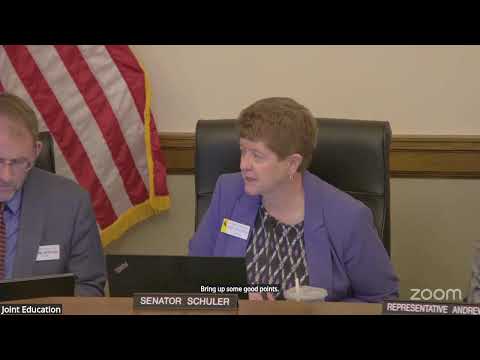
The Joint Education Committee voted on two related bills to pilot Hathaway scholarships outside the traditional university and community college channels.
26LSO0246 would create a limited Hathaway pilot for career and technical education institutions certified or licensed by the Wyoming Department of Education, with a statutory cap on participation and a $1,000 per‑student maximum total (and not more than 1,000 students over the pilot period). The draft included a sunset (repeal) of July 1, 2029 and required WDE rulemaking for institution certification and student eligibility.
26LSO0247 would create a separate short‑term scholarship for students attending licensed private postsecondary institutions, limited to 200 students at $500 per semester for up to eight semesters (alignment with Hathaway’s semester structure) and subject to private‑school licensure statutes.
Committee debate focused on three issues:
• Oversight and eligibility: Members worried the CTE draft language was broad enough to include out‑of‑state distance providers that merely did business in Wyoming; the committee adopted amendments to require physical instructional facilities in the state and to rely on WDE licensure/certification standards rather than loose business‑in‑state language.
• Program fit: Several members recommended strengthening or retooling Wyoming Works (an existing workforce/CTE scholarship vehicle) instead of creating new Hathaway pilots; others said Hathaway brand equity could legitimize and elevate CTE and private pathways.
• Fiscal exposure and safeguards: LSO and treasurer staff noted that the CTE pilot’s planned cap exposed the Hathaway fund to about $1,000,000 over three years under the draft; 26LSO0247’s maximum exposure was smaller because of participant limits and lower per‑student amounts.
Both bills drew stakeholder testimony: community college and private college representatives supported additional pathways to keep students and talent in Wyoming, while WDE staff advised the committee on licensure and implementation issues.
Votes and next steps: After amendments intended to narrow eligibility and require physical instructional facilities, the committee recorded a split vote on the CTE bill (clerk recorded 6 Aye, 7 No, 1 Excused) and later advanced the private postsecondary bill with a majority Aye. The Department of Education will oversee certification and the committee directed staff to refine statutory text and rule directions to avoid unintended inclusion of online-only providers.
Why it matters: The pilots reflect an effort to broaden state support for career and technical education and nontraditional postsecondary pathways while containing costs and tightening oversight. Lawmakers signaled willingness to fund hands‑on credentialing—if the bills can be tightened and matched to existing workforce programs.