Get Full Government Meeting Transcripts, Videos, & Alerts Forever!
Get email alerts on the Fueling Facility topic
No spam. Unsubscribe anytime.
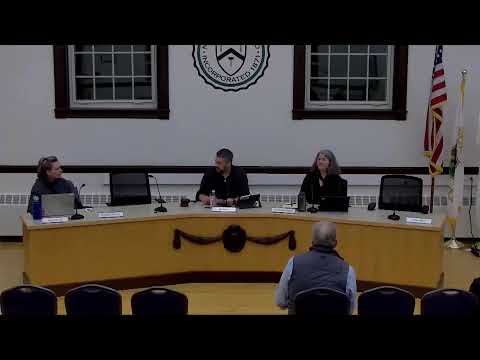
North Smithfield board approves special‑use permit for M and M Transport fueling tank with safety and reporting conditions
Summary
The planning board approved a special‑use permit and land‑development plan for M and M Transport Service to retain an above‑ground 10,000‑gallon Enviro tank, requiring the applicant to provide the federal SPCC plan and a maintenance/manual reporting to the planning department.
North Smithfield — The North Smithfield Planning Board on Nov. 13 unanimously approved a special‑use permit and land‑development authorization for M and M Transport Service to retain an above‑ground 10,000‑gallon Enviro fueling tank, subject to conditions that include submission of the facility’s federal SPCC (spill prevention, control and countermeasure) documentation and an operations and maintenance manual to the planning department.
Attorney Matthew Landry, representing the applicant, told the board the property is a permitted trucking and motor‑freight facility in the manufacturing zone but carries a history of prior zoning decisions and conditions dating to 1995. He said the applicant seeks relief under the unified development review and the town’s water supply protection/watershed overlay to allow existing pavement and the fueling accessory use.
Damien Dimitrick of Conoco Engineers and Scientists presented site plans and said the applicant has added multiple protective features since a pre‑application review: trench drains surrounding the concrete fueling pad, hooded deep‑sump catch basins, a water‑quality separator (listed in the submission as a Storm Scepter 450 I), positive limiting barriers and jersey barriers, bollards and ramp posts to protect the tank pad. The submitted spec sheet identifies the tank system as an EnviroVault: above‑ground, double‑walled concrete construction with leak monitoring, secondary containment and fire‑resistant and vehicle‑impact features.
Board member Miss Ramos pressed the team about tertiary containment and aquifer protection. Dimitrick and principal environmental engineer Brian Klingler said bladder‑style tertiary containment is not appropriate for above‑ground tanks and explained how the trench drains and treatment devices route runoff to the treatment unit; they also said catch basins and deep sumps reduce oil migration but are not sized to hold an entire catastrophic 10,000‑gallon release. Klingler said the team installed three monitoring wells and reported no detections in soil or groundwater testing at the site.
Klingler said the above‑ground design permits visual inspection of tank bottoms and multiple protective layers. "You can drink the water underneath this tank in this facility," he told the board, describing the monitoring and sampling results presented to the board. He and the applicant also confirmed a federal SPCC plan exists for the site and that annual reporting is performed.
As a condition of approval, planning staff and the applicant agreed the applicant would provide the SPCC plan and an operations and maintenance manual to the planning department and commit to maintenance intervals for trench drains and water‑quality devices. Chair moved to approve the land‑development project incorporating planning office findings and an additional stipulation requiring the federal reporting and maintenance manual; the motion passed on a unanimous roll call.
The board’s approval allows the applicant to continue use of the fueling facility and to fill and operate the Enviro tank, subject to the agreed stipulations and any follow‑up enforcement or monitoring required by the planning department.