Michigan Apple Committee tells House panel: labor, falling consumption and research cuts threaten growers
Loading...
Summary
At a House Agriculture Committee hearing, Michigan Apple Committee representative Diane outlined the industry's scale, said labor is the top cost driver, reported a 31% fall in exports in 2024 and urged more state marketing and research support.
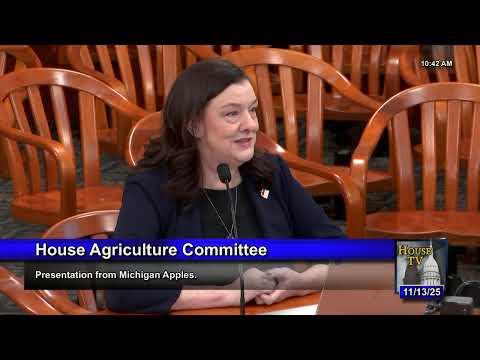
Diane, representing the Michigan Apple Committee, told the Michigan House Agriculture Committee that growers face acute pressures from labor costs, declining consumption and reduced research capacity.
Diane said Michigan produced "1,280,000,000 pounds of apples" on about "17,600,000 trees," making the state the nation's second-largest apple producer after Washington. She told committee members labor is the sector's biggest expense—"56% of total expenses for a grower are labor"—and identified pending federal changes to the AWER (the Department of Labor wage rate used for H‑2A workers) as a mixed development because a newly recognized housing-cost adjustment will lower the hourly wage component in the calculation.
Using a retail example, Diane said a $2.99, 3‑pound bag of apples yields roughly $0.19 to the grower while the retailer keeps about $1.06 and an estimated $1.74 covers packing, storage and shipping. She said exports declined about 31% in 2024, primarily because of crop size and pricing, and cautioned that large export volumes from Washington state can depress domestic prices.
Diane described research partnerships and spending: Michigan Apple funds production research in partnership with MSU Extension and AgBioResearch, and contributes about $250,000–$350,000 annually to such research. She warned that federal cuts and retiring researchers have reduced the pipeline of graduate and postdoctoral positions and that the industry is funding startup packages to help MSU recruit and retain staff. Diane also highlighted agritourism and a partnership with Pure Michigan and suggested the state could do more dedicated in‑state marketing for specialty crops.
Committee members pressed Diane on specifics. Representative Leitner asked whether growers using H‑2A also use E‑Verify; Diane said most large growers use H‑2A year‑round, that the industry has accepted E‑Verify when paired with comprehensive immigration reform and offered to provide numbers and a grower willing to describe the combined process. Representative Skaggs asked whether AWER adjustments will leave workers worse off; Diane said the housing allowance will reduce the hourly wage component (she estimated about $1.30 for Michigan) and that even an extreme AWER cut would only lower per‑acre labor cost by about 1–2%, though some growers might choose to continue paying prior rates to retain experienced workers.
On school sourcing, Diane said logistics and ordering systems make it difficult for every district to source local apples, though some districts such as Grand Rapids Public Schools have succeeded. She described school tasting programs run with Blue Cross Blue Shield and local universities to introduce children to higher‑quality varieties.
The exchange provided committee members with industry data and lines for follow-up: Diane offered to supply additional figures on growers' use of E‑Verify and H‑2A and to connect lawmakers with growers for firsthand accounts. The committee adjourned after completing its business.