Get Full Government Meeting Transcripts, Videos, & Alerts Forever!
Get email alerts on the Trio Teacher Pipeline topic
No spam. Unsubscribe anytime.
Students and educators warn TRIO, teacher‑residency and workforce grants are at risk after federal cuts
Summary
Students and higher‑education leaders told lawmakers that federal terminations of TRIO, Teacher Quality Partnership and SEED grants — affecting stipends, scholarships and training programs — threaten access, retention and the teacher pipeline in Minnesota, especially for first‑generation and rural students.
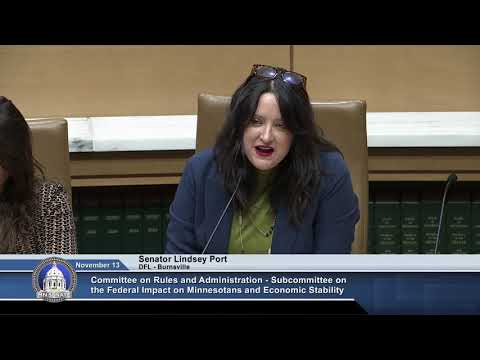
Students and educators told a Minnesota Senate subcommittee on Nov. 10 that federal grant noncontinuations are jeopardizing programs that support access to college and training for teachers and school‑based mental health providers.
Mikaela Holman Schmidt, a TRIO alum and staff member, described how TRIO programs provided ACT prep, campus navigation and emergency grant access that kept her in school and supported her career. "If TRIO programs go away, barriers that were once broken will go back up again for those wanting higher education opportunities," she said.
Dr. Shelley Nielsen Gatti of the University of St. Thomas described the termination of a Teacher Quality Partnership grant that had provided living‑wage stipends to teacher residents and a SEED grant that supported scholarships; she said at the time of TQP termination 21 residents were left with less than four months of paid support and that the institution scrambled to find funds so those students could complete the program. She said SEED termination left a $4 million shortfall in scholarship funding and about $400,000 in living stipend losses for charter residency programs.
Paul Sheppard of Minnesota State reported the system is tracking nine canceled grants totaling about $9.9 million and emphasized Minnesota State’s reliance on TRIO programs, which the system operates on 24 campuses and that currently serve roughly 11,641 students.
Students at community colleges recounted how TRIO staff provided advising, tutoring and connection to emergency aid that prevented dropouts. Lawmakers said these programs are critical to recruiting teachers and mental‑health providers for rural districts and minority communities. Committee members asked campus officials and the Office of Higher Education to provide additional data so the Legislature can evaluate potential state responses.