
Minnesota colleges say abrupt federal grant cancellations have paused research, cut millions
Get AI-powered insights, summaries, and transcripts
Subscribe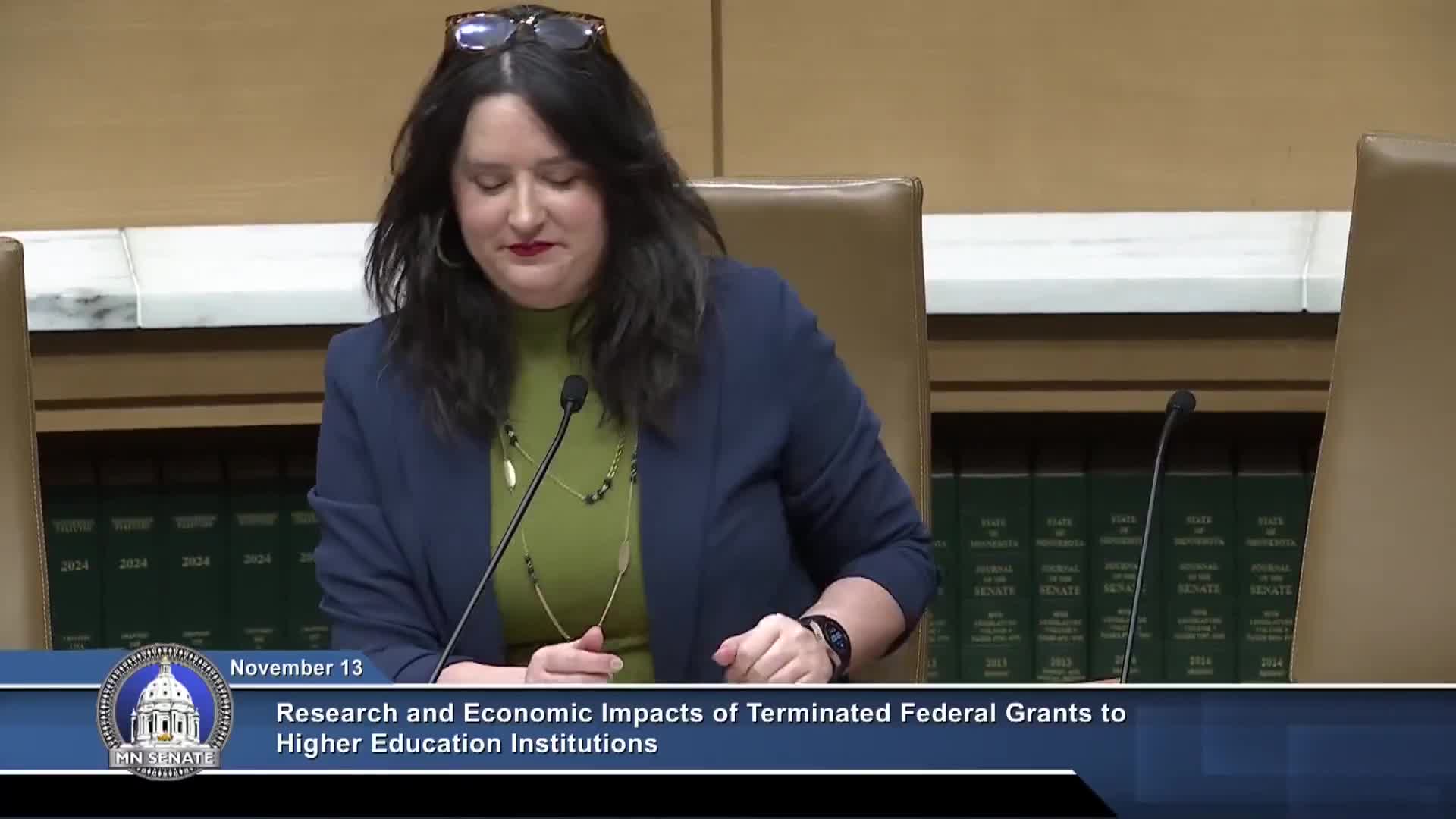
Summary
College presidents and research leaders told a Minnesota Senate subcommittee that recent federal grant terminations — including hundreds of awards at large campuses and several multimillion-dollar program cuts at private colleges — have forced layoffs, halted student research, and left institutions scrambling for stopgap funding.
College leaders from Augsburg, Saint Catherine, the University of Minnesota and other campuses told a Minnesota Senate subcommittee on Nov. 10 that recent federal decisions have abruptly ended research and training programs, with immediate staffing and student impacts.
"We were clearly pulled out by way of a keyword search that identified words the administration has banned from federal grant applications," Paul Pribbenow, president of Augsburg University, told the subcommittee, describing two terminated awards including a $785,000 McNair Scholars renewal that supported staff and scholarships. He said the university’s appeal was denied without acknowledging changes it had made to its application.
At Saint Catherine University, Katie Campbell described the sudden termination of five federal grants totaling more than $2.4 million and focused on a 5‑year, $1.98 million R25 CARE grant from the National Institute on Aging. "On May 27, as our cohort of 18 research students were in transition to their summer projects, we were notified that our grant had been summarily terminated," Campbell said. She said the loss forced the university to let its full‑time grant coordinator go and made it impossible to recruit the next cohort.
Chunhyung Cho, assistant vice president for research and innovation at the University of Minnesota, reported 101 federally funded research awards terminated or suspended across agencies, representing more than $33 million in unobligated research funds and affecting 20 colleges and research centers across system campuses.
Testimony and questioning from senators emphasized the breadth of impact — from clinical trials and pediatric cancer research to faculty and graduate student positions — and noted potential long‑term economic consequences: startups, workforce training and regional industries often depend on the research pipeline. "When federal grants are eliminated, the immediate consequences are job loss in high‑skill, high‑wage jobs that cannot be replaced overnight," Senator Dibble said.
Institutional witnesses described short‑term measures — internal reallocation, donor support and partner contributions — to keep students and cohorts supported, but they warned such measures are not sustainable. Several institutions have filed appeals and joined or referenced litigation seeking reinstatement of awards.
The subcommittee did not take formal action. Senators concluded by pledging further engagement with institutions and federal partners to track appeals and possible state responses.
The subcommittee adjourned with no vote; witnesses said litigation and administrative appeals are ongoing.