Get Full Government Meeting Transcripts, Videos, & Alerts Forever!
Get email alerts on the Boards And Commissions topic
No spam. Unsubscribe anytime.
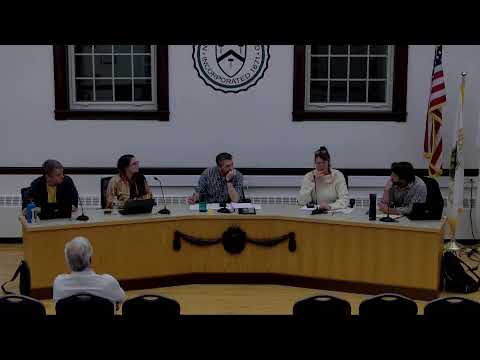
Charter Review Committee hears boards’ calls for clearer roles, staffing and process fixes
Summary
At its Oct. 29 meeting the North Smithfield Charter Review Committee reviewed feedback from town boards and commissions, which generally asked for clearer lines between volunteer advisory bodies and administrative staff, more inter-board collaboration, and procedural fixes for budgeting and asset replacement planning.
The Charter Review Committee met Oct. 29 and heard reports from multiple town boards urging clearer delineation of duties between volunteer commissions and town staff, improved inter-board collaboration, and administrative changes to support long-term asset management and budgeting.
Parks and Recreation members told the committee there is “very little in the charter about parks and rec,” and suggested most of their concerns are code- or ordinance-level rather than charter-level. One member proposed removing the clause in Article 10, Section 2(4) that exempts facilities “under the jurisdiction of the school department,” arguing some town recreational leagues are being denied access to school-owned fields. Committee members noted the school department’s ownership and control of some facilities and said any increased town involvement would include added funding commitments and an expectation of negotiation between school and town users.
Planning Board representatives recommended more public education about the board’s quasi-judicial role and said a recently enacted state law allowing a so-called “super board” likely would overburden a town of North Smithfield’s size. The planning liaison said annual reporting language in the charter appears out of date and may be a candidate for removal or revision to reflect current practice.
The Asset Management Commission said the charter and ordinance language assigns operational responsibilities to volunteers that the commission prefers to hold as advisory tasks. The commission asked that the town create a dedicated staff role — a facilities director or asset manager — to oversee capital maintenance, assessments and RFPs, leaving the commission to advise and prioritize. The commission also raised capital-replacement timing concerns: insurance proceeds historically split between the general fund and the fire department generate roughly $700,000 annually, while apparatus replacement costs have grown sharply (committee members cited a rescue vehicle rising from about $160,000 to roughly $500,000 and pumpers exceeding $1 million), which complicates long-term planning.
Personnel Board members told the liaison that Article 13’s language does not reflect current practice: the board said it is not salaried, performs only a subset of the powers listed in the charter, and needs clearer coordination with administration and the newly hired HR director. The town administrator said an employee handbook has been finalized and that an onboarding process, HR staffing and a pay/benefits assessment are underway; the administrator said the handbook will be sent to the personnel board for comment.
Members of the Budget Committee sought modest charter-related changes to timing rather than structural overhaul. The committee suggested moving the administration’s budget-submission deadline (currently the second Monday in March) later in the spring — mid-April was proposed — to give the budget committee more workable timelines. Several speakers described an operational issue: the town council’s current role in approving bills prevents those payables from being booked in the accounting system until council action, rendering interim financial projections incomplete. Committee members and staff discussed using monthly or quarterly budget-to-actual statements and involving the budget committee in recommending procedural changes to the council to improve timely financial reporting.
The committee recorded additional outreach updates: a sewer commission request to combine water and sewer oversight so water matters are considered by the appropriate commission rather than the full council; trouble contacting the conservation commission and an unfilled seat for groundwater protection work; and the economic development commission’s plan to focus on supporting existing businesses and to seek better communication channels with planning and the public.