Get Full Government Meeting Transcripts, Videos, & Alerts Forever!
Get email alerts on the Historic Preservation topic
No spam. Unsubscribe anytime.
Local preservationists point to unmarked mass grave at Lynn Cemetery; committee forms research subcommittee
Summary
Rick Dotson of the Lynn Cemetery Association told the Downtown Committee that an unmarked mass grave of an estimated 150–200 people lies near Lynn Cemetery; the committee voted to form a subcommittee to research documentation, marking options and possible funding.
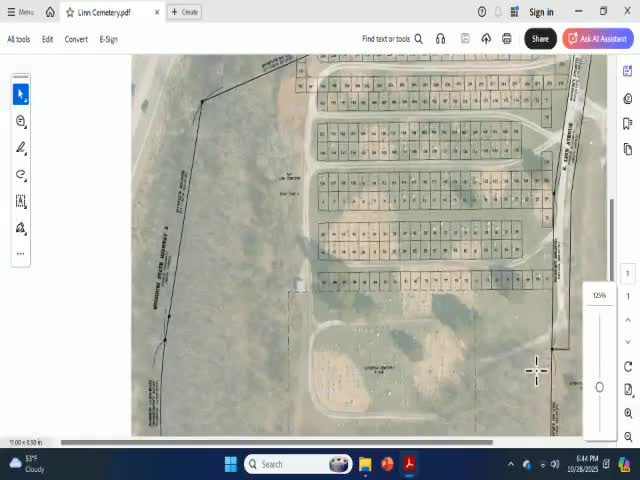
Rick Dotson, representing the Lynn Cemetery Association, told the Downtown Committee that research and deed records indicate an unmarked mass grave near Lynn Cemetery that may hold an estimated 150–200 people, many of them likely victims of 19th‑century epidemics and railroad construction workers. Dotson asked the committee to consider interpretive signage or a monument to recognize the site and its history.
“There’s a 150 to 200 people buried there,” Dotson said, describing repeated outbreaks of smallpox, cholera and typhoid among early settlers and railroad crews. He said part of the parcel is owned by the Lynn Cemetery Association and part is city property, and that the site has not been disturbed.
Committee members discussed historical verification, possible archaeological or noninvasive surveys, property ownership and funding sources including state preservation grants (SHPO) and nonprofit sign donations. Ben (staff) noted the difference between downtown committee duties and historic preservation responsibilities and said a formal proposal would require documented historical evidence, a defined site and a funding plan before Board of Aldermen consideration.
The committee adopted a motion to create a subcommittee to research the burial ground’s documented boundaries, identify appropriate marking options (signage, plaque or monument), explore grants and funding, and then return with a proposal. Volunteers for the subcommittee included Mike, Lois Kessler, Jean Perel and Bridal Nolan; Rick Dotson and other preservation stakeholders indicated willingness to participate. The committee noted this is a longer‑term preservation project that will require historical records review and potential grant applications before any physical work occurs.