Get Full Government Meeting Transcripts, Videos, & Alerts Forever!
Get email alerts on the Detention Corecivic topic
No spam. Unsubscribe anytime.
California City Holds SB 29 Hearing on CoreCivic Detention Plan amid Protests and Legal Challenges
Summary
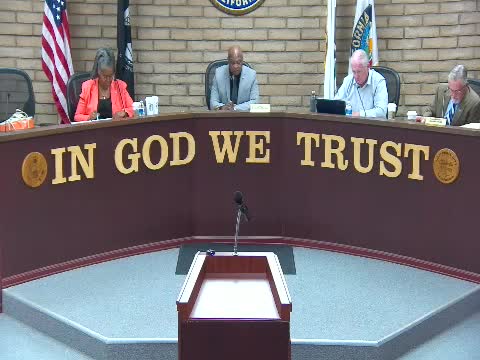
City staff opened a ministerial site plan review hearing Oct. 28 to accept public comment on CoreCivic’s application to operate an immigration detention facility in California City, and said no approvals or permits had yet been issued.
City staff opened a ministerial site plan review hearing Oct. 28 to accept public comment on CoreCivic’s application to operate an immigration detention facility in California City, and said no approvals or permits had yet been issued.
The hearing drew sustained public testimony from local residents, attorneys and statewide advocacy groups who alleged the facility has been operating without required conditional-use or other permits and urged the council to enforce state law, including Senate Bill 29. Rev. Anna Carmichael, representing the Episcopal Diocese of San Joaquin, told the council, “We have been told that, oh, no. There's nobody in there. There are people in there. There are people in there.” Several speakers read or submitted first-hand accounts and petitions from family members of people detained at the site.
Staff described the application as a ministerial site plan review under the municipal code and said SB 29 triggers public-notice and meeting requirements. The city attorney summarized the state requirement: “SB 29 requires that ... the city must conduct these public meetings to allow for the public to comment,” and staff said it would document the hearing as part of the administrative record and continue its objective compliance review.
Advocates and legal experts, including representatives from Dignity Not Detention, Detention Watch Network and the Immigrant Legal Resource Center, urged the council to require CoreCivic to apply for a conditional-use permit and to deny any authorization that would allow continued operations without full compliance. Priscilla Ruiz of the Immigrant Legal Resource Center said SB 29 “requires 2 public hearings and ... at least 180 days before any approved action would be valid,” and urged the council to take steps that would secure state funding the speakers said is available if the city denies a permit.
Multiple family members and people calling from inside the facility described delayed medical care, limited legal-library access, inadequate food and leaks and mold. A recorded read-in of a detained person’s testimony said, “When we put in requests to be seen by a doctor, we have to wait at least 72 hours. And in some cases, I've waited 2 weeks.” Several speakers cited recent reports of deaths in custody statewide and raised questions about the facility’s staffing, medical care and incident response.
City staff emphasized that no permits or entitlements had been issued and that the site plan review is administrative if it meets objective code standards. Staff said it would post and maintain the administrative record and return with status updates and the results of its compliance review. The council did not take formal action on the SPR at the meeting.
The hearing produced numerous petitions and postcards from local residents, oral testimony from clergy and community leaders and coordinated legal demands from statewide coalitions. Staff said the city will document the comments for the administrative file and confirm whether SB 29 notice requirements and other municipal standards have been met before any administrative approval is issued.
What happens next: staff will complete the objective compliance review, verify SB 29 notice timelines and report back to the council when appropriate. The city indicated today that it has not issued any building or operational permit tied to the proposed use.