Get Full Government Meeting Transcripts, Videos, & Alerts Forever!
Get email alerts on the Business Improvement District topic
No spam. Unsubscribe anytime.
Council approves 5 Points business improvement district after amendments
Summary
Jacksonville City Council voted Oct. 28 to establish the 5 Points Business Improvement District (Ordinance 2025‑0539) after adopting a floor amendment that removed several objecting properties and eliminated an annual opt‑out.
Jacksonville City Council voted Oct. 28 to create the 5 Points Business Improvement District (BID), approving Ordinance 2025‑0539 after a floor amendment that removed 11 properties from the proposed district and eliminated an annual opt‑out provision.
The measure won final approval after floor debate. Sponsors described the amendment and the ordinance as a response to months of community outreach, public meetings and written support from property owners and merchants.
Why it matters: Business improvement districts enable property owners in a defined area to levy special assessments to pay for services—cleaning, safety ambassadors, marketing and short‑term capital—aimed at stabilizing commercial districts. Supporters said 5 Points faces recent vandalism and safety problems that small merchants cannot solve alone.
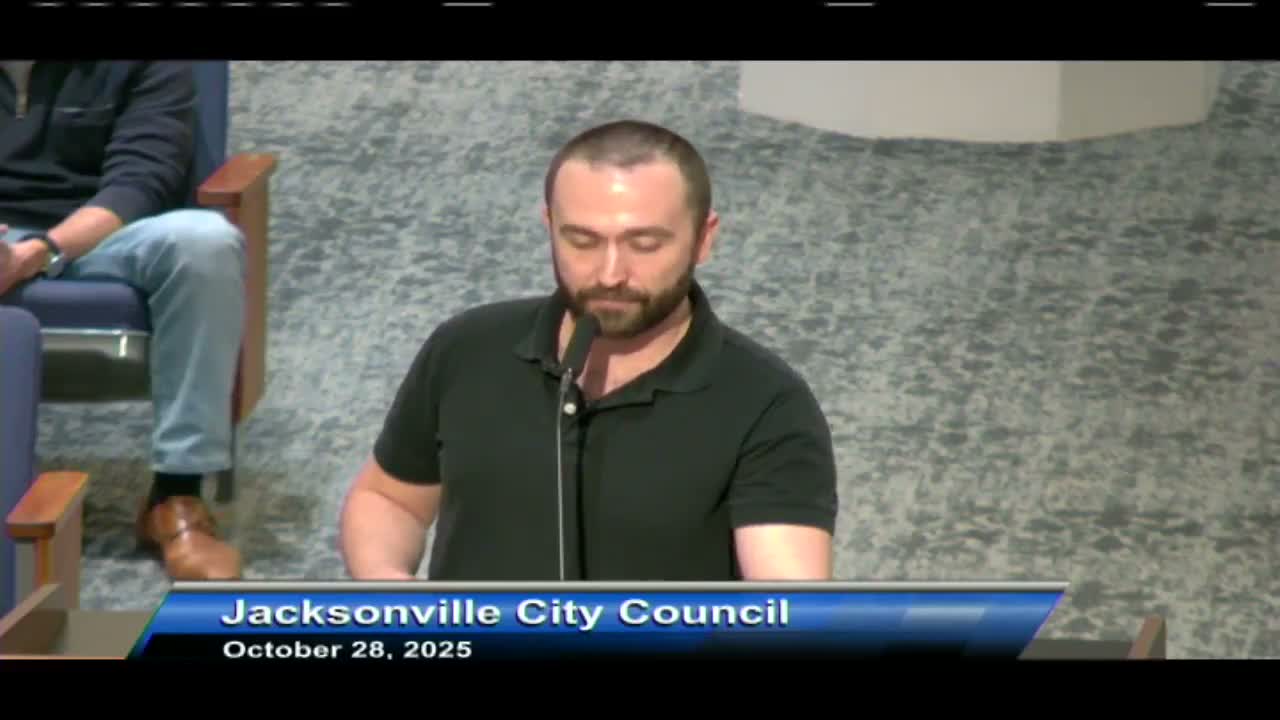
What supporters and opponents said: Casey Roth, representing Riverside Avondale Preservation and speaking for merchants and property owners, said the effort “did this the right way,” noting 14 public meetings, signed letters of support, and repeated conversations with property owners. “This whole legislation is all about giving a small district local control to make their own streets safer, cleaner and more welcoming,” Roth said during public comment.
Council member Jimmy Peluso offered a floor amendment that removed 11 property owners who had objected and removed an annual opt‑out provision after consultation with the Office of General Counsel. OGC explained that an annual opt‑out could create legal exposure for a special assessment district because assessments must align with the pattern of benefits across properties. After debate that included multiple council members, the amendment carried and the ordinance passed.
What the ordinance does: The ordinance establishes the 5 Points BID boundaries and assessment methodology, authorizes a board, and sets budgeting and reporting requirements. Because of the timing of assessments, council members noted that the first year’s work will be seed‑funded and the property assessments would not begin until the stated assessment year in 2026.
Clarifying details: The amendment removed 11 property owners from the initial map; under the adopted structure, boundary changes or removal of properties would require subsequent council action. Council and OGC discussed a petition/board process that would allow property owners to seek changes in the future; that mechanism would come through ordinance and is not a simple annual opt‑out.
Provenance: Community testimony in favor is documented in public comments (Casey Roth, Dori Thompson, Alexander Rodriguez) beginning at 00:46:03; floor amendment and OGC explanation are recorded during final debate (floor amendment discussion beginning about 01:30:15). The final vote was recorded in the council proceedings.
Ending: With the ordinance approved, staff and the newly constituted BID board will begin the steps required by the ordinance—budgeting, hiring or contracting for services, and preparing the assessment roll for the tax cycle described in the legislation.