Get Full Government Meeting Transcripts, Videos, & Alerts Forever!
Get email alerts on the Land Use topic
No spam. Unsubscribe anytime.
Jacksonville council approves ordinance easing landscaping standards over legal warnings
Summary
On third reading Oct. 28 the Jacksonville City Council approved Ordinance 2025‑0448, changing development and landscaping standards after public testimony warning of legal risk and potential conflict with the city’s comprehensive plan. Speakers representing planning and neighborhood interests urged caution and cited Florida Statute 163.3194; the 18
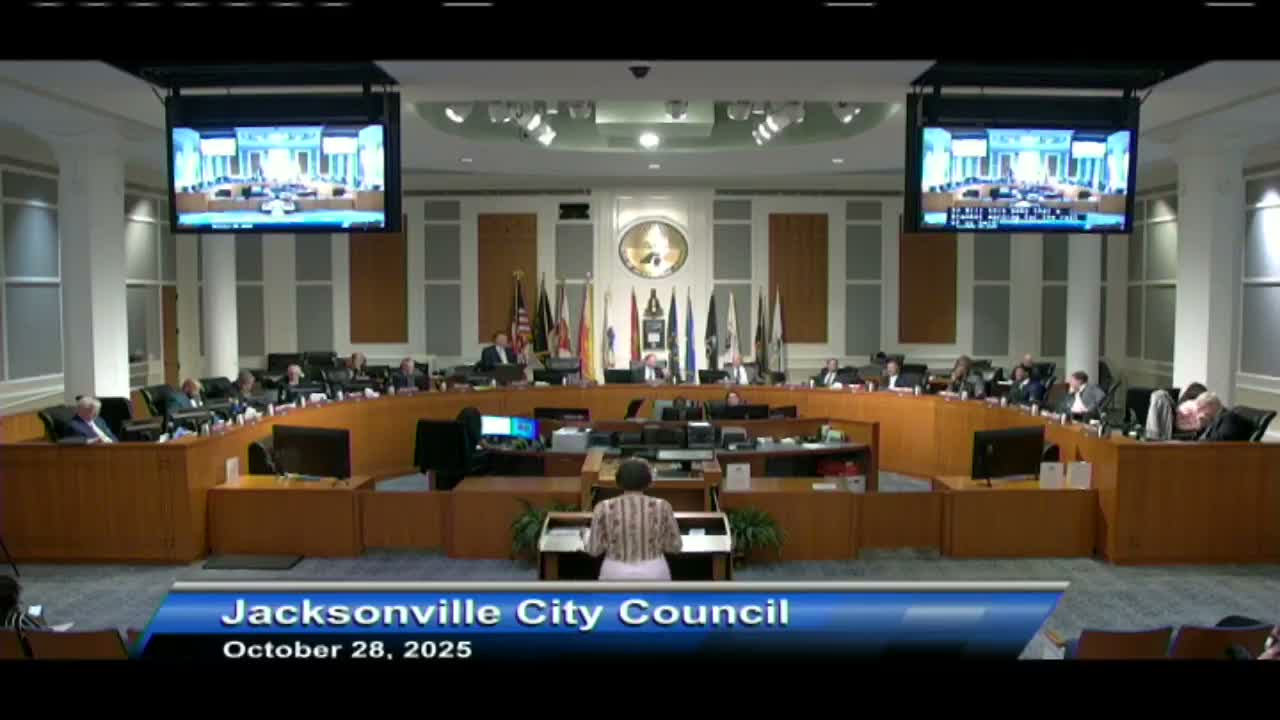
Jacksonville City Council on Oct. 28 approved Ordinance 2025‑0448, which alters landscaping and related development standards, despite public commenters and neighborhood advocates warning that the change could conflict with the city’s comprehensive plan and expose the city to legal challenge.
The vote on third reading was 18 yays and 1 nay. Council members adopted one or more floor amendments before taking the final vote.
Why it matters: Several residents and advocates urged the council to reject the ordinance, saying the change would permit faster, lower‑cost development at the expense of tree canopy, flood mitigation and long‑term planning goals. During public comment Chrissy Kinney said the absence of evidence connecting the proposed regulatory relaxations to demonstrable public benefits left the city exposed. “The greatest risk here isn’t slowing development or commercial corridor renewal. It’s fast‑tracking regret,” Kinney told the council, adding specific statutory references to support her point.
What supporters and opponents said: Kinney, who identified herself at the podium and provided her address on file, urged the council to uphold the comprehensive plan and cited Florida Statute 163.3194 as a statutory constraint on plan consistency. In public testimony she argued that courts have repeatedly required a rational nexus between relaxed standards and claimed public benefits and warned the city could face legal challenges.
Council supporters said the changes would increase development flexibility and speed economic activity in some corridors; supporters also said staff and attorneys had reviewed the ordinance and its amendments. Opponents countered that the staff reports lacked the empirical nexus—plan‑consistency analysis and data—needed to justify the relaxation.
What the ordinance does (as discussed in the meeting): The ordinance revises landscape and related site‑development requirements in ways proponents described as streamlining review and reducing burdens for certain projects. The council debated technical amendments on the floor before adoption. The final ordinance text and staff exhibit define the specific numeric and procedural changes (not all of which were read into the record during debate).
What’s next: The ordinance takes effect as prescribed in the final text and any applicable charter provisions; legal challenges were raised by speakers as a possible future step but none were filed during the meeting. Council members and staff indicated they will monitor compliance and implementation.
Provenance: Public testimony and legal concern are documented in the council record beginning with Chrissy Kinney’s remarks during the public comment period (transcript excerpt starting at 00:32:00) and continuing through third‑reading debate and final vote recorded at 00:54:00.
Ending: The council approved the ordinance after a contested discussion about planning priorities and legal risk; opponents urged closer adherence to the comp plan, while backers argued the measure would help spur development in targeted corridors.