Get Full Government Meeting Transcripts, Videos, & Alerts Forever!
Get email alerts on the Eviction Assistance topic
No spam. Unsubscribe anytime.
New Castle County committee backs plan to create $300,000 eviction settlement assistance fund
Summary
The Community Services Committee reviewed a proposal to appropriate $300,000 from the New Castle County Housing Trust Fund for an eviction settlement assistance program administered by Community Legal Aid; staff said the ordinance will be revised to remove a geographical restriction before the Nov. 18 vote.
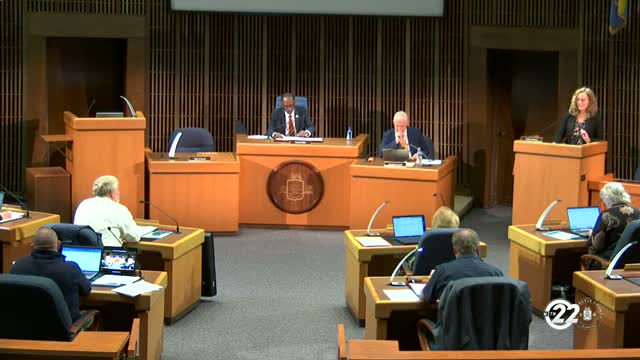
The New Castle County Community Services Committee on Oct. 28 reviewed an ordinance to appropriate $300,000 from the county Housing Trust Fund to establish an eviction settlement assistance fund intended to help tenants facing eviction secure settlements and remain housed.
The proposal, introduced by Councilman Penrose Hollins, was presented to the committee by Sarah Ryan, deputy director at Community Legal Aid. Ryan said the three legal services agencies that coordinate eviction representation in the county provide representation to all households under 200% of federal poverty because of state legislation. She told the committee that settlement assistance typically averages about $1,300 per household and "stabilizes the household and allows them to remain housed." Ryan said the program preserves housing vouchers and can prevent eviction when paired with legal representation and repayment plans.
Ryan provided intake and program estimates drawn from recent experience: the agenda packet cited an estimated 8,800 eviction filings in New Castle County and an expectation that about 1,320 households would be both eligible under the 200% federal poverty threshold and seek assistance in the next year. She said the program has been used since 2023 and that clients helped then remain housed.
Council members asked whether the 200% federal poverty threshold mandated by state law is sufficient. Councilman Jay Street and others noted that many households that struggle fall above the federal-poverty-based threshold and suggested the county could study whether broader eligibility (for example, 300% of federal poverty or AMI-based thresholds used during the pandemic) is warranted. Ryan said the state statute requires representation for households under 200% of federal poverty and that changing the threshold would require state action or explicit county authority.
Councilwoman Koneko raised a concern that the ordinance text available on the civic clerk site appeared to limit the program to unincorporated areas. Carrie Casey, Department of Community Services staff, said the department had issued a revised ordinance removing that clause and other typographical errors; Hollins said the council would confirm the corrected language before the scheduled Nov. 18 vote.
Rachel Stucker, chair of the Housing Advisory Board, testified in the chamber in support of the proposal and said the advisory board had voted to strongly support the use of housing trust fund dollars for settlement assistance. Several council members praised the work of Community Legal Aid and the Housing Advisory Board and emphasized the importance of legal representation to preventing evictions.
No final vote on the ordinance was recorded at the committee meeting; the item was calendared for Nov. 18. Committee members directed staff to confirm the corrected ordinance language and to provide any additional details the council requests prior to the vote.