Get Full Government Meeting Transcripts, Videos, & Alerts Forever!
Get email alerts on the Economic Impact topic
No spam. Unsubscribe anytime.
Grocery owners and unions tell council soda tax shifted sales across borders and pressured jobs
Summary
Retailers, bottlers and union representatives told a council hearing the 2017 beverage tax redirected sales to suburban markets, reduced in-city beverage volume and in some cases reduced hours or closed stores. Industry witnesses said large buyers can adapt while smaller neighborhood businesses and low-income shoppers bear the cost.
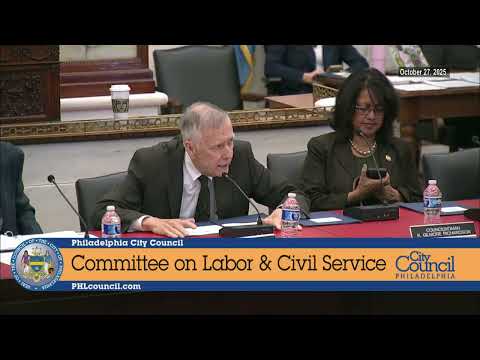
PHILADELPHIA ' Owners of city grocery chains, bottling franchise executives and union leaders told the Committee on Labor and Civil Service that the 2017 sweetened beverage tax changed where Philadelphians shop and that shift led to lost in-city beverage sales and workforce impacts.
Jeff Brown, founder and executive chairman of Brown Superstores, which operates ShopRite and other chains in and around Philadelphia, said his stores near the city's border lost volume to suburban competitors: "A lot of my business went to my competitor because peep people, they're not rich here in Philly. They struggle to pay their bills, and I I understand that if it cost you a dollar more for a 2 liter and you want that, it's your family's decision." Brown told the committee that about 20% of revenue in the city market flows through SNAP and that any federal SNAP disruption would worsen the retail impact.
Representatives of beverage distributors said their sales inside city limits have fallen while sales outside the city rose. Francis McGorry, co-founder and CEO of Liberty Coca-Cola, said franchise data show a 45% decline in beverage sales within Philadelphia and a partial offset in suburban ZIP codes. "That shift reflects more of a change in ... consumers are really just shopping elsewhere to avoid the tax, taking their spending power and the city's revenue with it," McGorry said.
Unions described concrete effects on members. Leonard Purnell of UFCW Local 1776 said the tax contributed to slower hiring, fewer hours and, in some instances, store closures. John O'Rourke of Teamsters Local 830 told the committee the tax is "blatantly unfair" and urged council action to adjust or end the tax.
Industry witnesses provided estimates of lost beverage sales and wage impacts; they asked council to consider a broader or different tax design that spreads the burden across a wider sales base rather than concentrating it on beverages.
Why it matters: Retail margins are narrow and grocery operators say they rely on overall store traffic, not individual product markup, to remain viable. The committee pressed both the industry and labor to produce more documentation of job losses and asked the administration to provide additional economic analyses to resolve competing claims.
Sources: Testimony from Jeff Brown (Brown Superstores), Leonard Purnell (UFCW Local 1776), John O'Rourke (Teamsters Local 830), Francis McGorry (Liberty Coca-Cola), Reginald Goins (Heineken Companies), and PFMA staff.