Get Full Government Meeting Transcripts, Videos, & Alerts Forever!
Get email alerts on the Fee Waiver Program topic
No spam. Unsubscribe anytime.
PCDC advances amendments to city fee‑waiver program, proposes higher SAWS caps and clarified timelines for affordable housing projects
Summary
Neighborhood and Housing Services briefed the committee on proposed updates to the fee waiver program, including raising the SAWS per‑project cap (from $250,000 proposed to $400,000), aligning SAWS waivers to the SAWS calendar year, clarifying eligibility for homes rebuilt after fire, and seeking an increased SAWS annual allocation for affordable
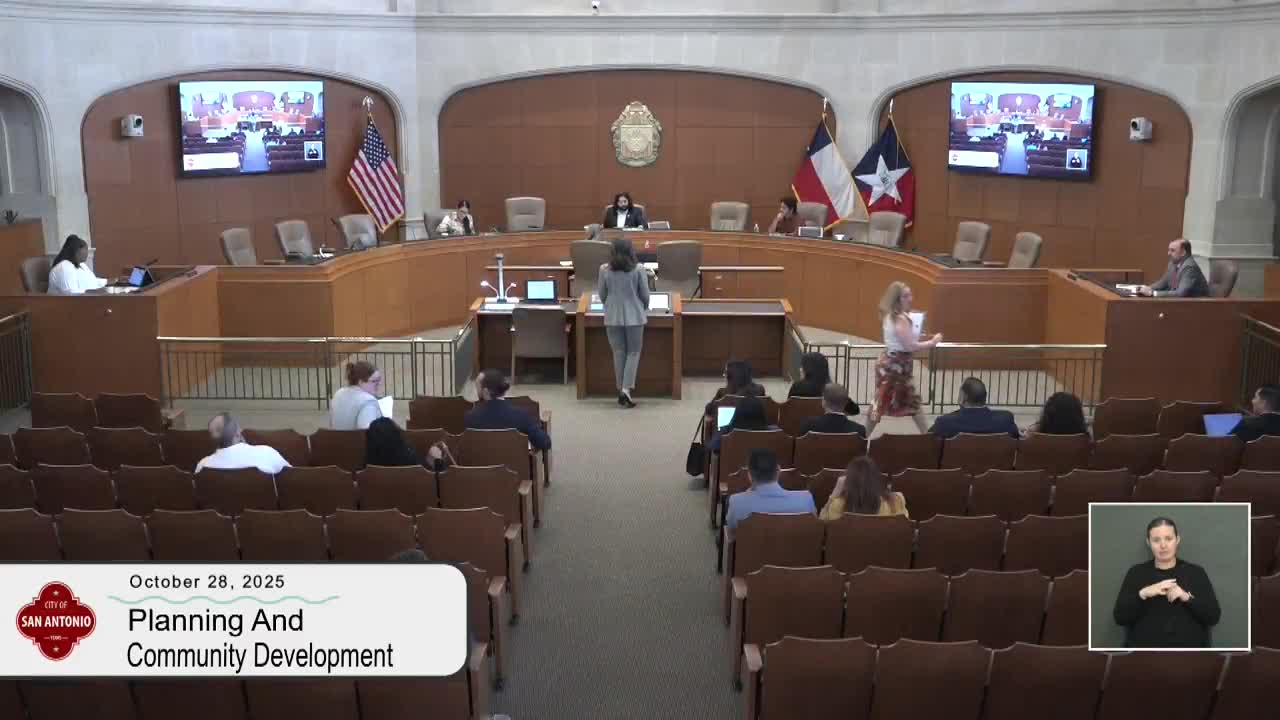
The Planning and Community Development Committee on Oct. 28 considered proposed amendments to the City of San Antonio fee waiver program that staff said would preserve the program’s purchasing power and better align timing with SAWS budgeting.
Erica Ragsdale of Neighborhood and Housing Services told the committee the fee waiver program issues two types of waivers: city permitting fee waivers (paid to Development Services during permitting) and SAWS water/wastewater impact fee waivers (administered by SAWS). The program is available to four categories: affordable housing, historic and owner‑occupied rehabilitation, small business and targeted industry projects. Since adoption in 2018 (updated 2021), staff said the program has supported more than 8,200 units as well as small‑business and historic‑rehab projects.
Staff proposed several adjustments: increase the SAWS per‑project cap (staff proposed raising the cap to $400,000 to offset higher impact fees), add explicit language to clarify that homes rebuilt after a fire may qualify, and align SAWS waiver award timelines to the SAWS calendar year so funding is prioritized for projects that can commence in the award year. Ragsdale said SAWS currently allocates its waivers to the city in five‑year increments and staff will ask SAWS to increase the affordable‑housing allocation by $1 million (from $2 million to $3 million annually) to maintain project support if per‑project caps rise.
Ragsdale provided a budget snapshot: the city’s fee‑waiver budget is $1 million this year (most for affordable housing); SAWS’s annual allocation to the city is currently shown as $3 million (staff noted the 2025–2029 cycle was under negotiation). Committee members asked whether increasing SAWS allocations would require SAWS to raise rates; staff said that is a separate SAWS budget and rate process. Members also asked which projects qualify under the targeted‑industry bucket; Brenda Hicks Lorensen of Economic Development said targeted projects have included large mobility and advanced‑manufacturing investments.
Committee members clarified administrative practice: fee waivers are approved administratively by staff when applications meet policy and funds are available; targeted industry incentives typically roll into larger economic incentive agreements that come to Council. The committee moved, seconded and voted to forward the proposed fee‑waiver amendments.
Details and figures provided in the presentation: city fee waiver annual budget $1,000,000 (majority for affordable housing); SAWS allocation to city $3,000,000 (assumed for present planning); program support since 2018: ~8,200 units, including ~1,200 rental homes at ≤30% AMI and ~700 for‑sale homes ≤80% AMI; 64 small businesses supported; 15 historic building rehabilitations; 4 targeted industry developments. Proposed SAWS per‑project cap increase from $250,000 to $400,000 and request to SAWS to increase affordable‑housing allocation by $1,000,000 annually.