Get Full Government Meeting Transcripts, Videos, & Alerts Forever!
Get email alerts on the Code Enforcement topic
No spam. Unsubscribe anytime.
San Antonio officials unveil multi‑year code enforcement strategic plan to boost communication, vacant‑lot cleanup and hardship referrals
Summary
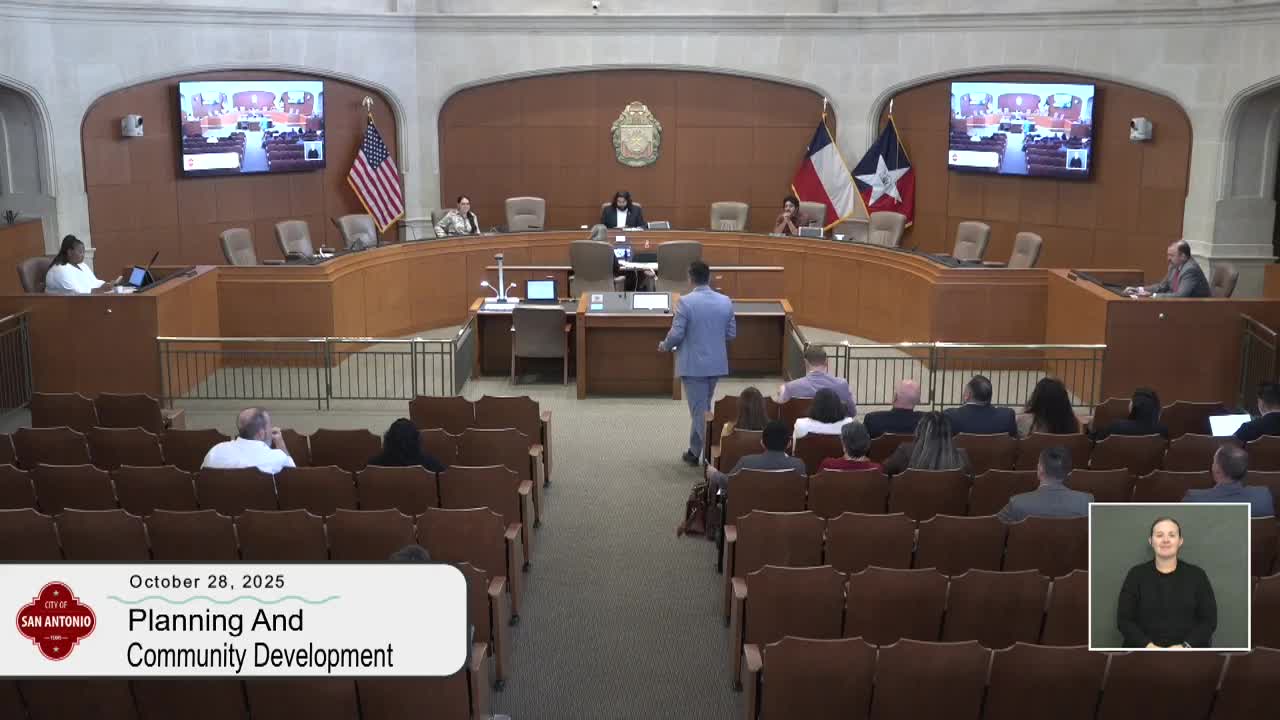
A proposed Code Enforcement Strategic Plan that Development Services staff say is rooted in community feedback and staff input was presented to the Planning and Community Development Committee on Oct. 28.
A proposed Code Enforcement Strategic Plan that Development Services staff say is rooted in community feedback and staff input was presented to the Planning and Community Development Committee on Oct. 28.
The plan, presented by Amin Thomas, director of Development Services, proposes five focus areas — communication systems, educational materials, a balance of proactive and reactive enforcement, expedited vacant‑lot abatement and expanded hardship referrals — and outlines short‑, mid‑ and long‑term actions to increase transparency and customer satisfaction.
Thomas said the city hired a consultant after the 2025 budget set aside $50,000 for facilitation of internal and external listening sessions. “This strategic plan will serve as our roadmap for the next several years,” Thomas said. He told the committee the outreach effort included 11 in‑person district meetings with about 260 participants, 12 staff listening sessions with about 60 participants and an internal staff survey with 81 respondents.
City staff said the plan aims to improve the BuildSA case‑tracking system so residents receive automatic case updates and can check status more easily. Thomas said the goal is to ensure both staff and residents “have access to accurate, timely, and transparent information.” The plan also calls for plain‑language educational materials to be distributed online and at libraries, senior centers and council offices so property owners and tenants better understand rights and responsibilities before violations arise.
Vacant‑lot enforcement was highlighted as a priority tied to neighborhood safety. Thomas summarized current state law authorities the department relies on: the city may summarily abate certain vacant lots without additional notice in cases covered by an annual notice, and it can summarily abate lots with grass over 48 inches within 1,000 feet of a school or daycare. The plan calls for expedited abatements near schools and daycares and prioritizing cleanups of lots under annual notices.
Hardship referrals are an explicit part of the plan, staff said, with an emphasis on spreading awareness of existing programs so residents who qualify are more likely to apply for assistance. Thomas said some violations stem from hardship rather than neglect and the department intends to incorporate hardship referral information into outreach and printed materials.
Committee members asked about likely shifts between proactive and reactive inspections, integration with the 311 system and whether additional funding or staff will be needed to expedite abatements. Thomas said staff are still evaluating the workload split and geographic boundaries, and that any need for added staff or funding will be determined after those analyses. He also told committee members the BuildSA–311 exchange has improved in recent years but that fuller integration is a longer‑term goal.
The presentation sets a path to two community sessions in December (one in person and one virtual) and to B‑session briefing on Nov. 12, with final council consideration planned for early 2026. Staff described the plan as a “living framework” that will be updated based on ongoing community feedback and performance data.
Details provided at the meeting: consultants‑facilitated outreach funded at $50,000 (2025 budget); 11 district meetings (one repeated for District 3 after technical problems) and roughly 260 community participants; 12 staff listening sessions with about 60 participants; staff survey with 81 respondents; summary abatement authority cited for vacant lots with grass over 48 inches and for lots under annual notice; implementation timeline through early 2026.