Get Full Government Meeting Transcripts, Videos, & Alerts Forever!
Get email alerts on the Infrastructure Building Code topic
No spam. Unsubscribe anytime.
Ossipee Selectmen vote 2–1 to release $14,000 withheld for boardwalk contractor as code fixes are arranged
Summary
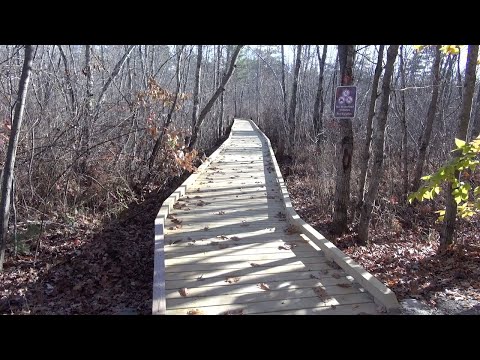
Selectmen in Ossipee met at the Deer On Trail to inspect a newly completed boardwalk after the town’s building inspector said portions of the structure exceed state building-code and ADA thresholds that trigger guardrail and handrail requirements.
Selectmen in Ossipee met at the Deer On Trail to inspect a recently completed boardwalk and to address unresolved building-code and ADA-accessibility issues.
The town’s building inspector told the Selectmen that the state-adopted building code (citing IRC/IBC 2021 in his remarks) applies to municipal property and that sections of the boardwalk exceed the 30-inch deck-to-grade threshold. "Any area of decking that is above 30 inches requires a guardrail," the building inspector said, and added that a compliant guardrail must reach 42 inches with openings no larger than 4 inches. He also described ramp and handrail requirements for ADA compliance, including a maximum ramp slope of 1 inch of rise per 12 inches of run and handrails that extend 12 inches beyond the start and end of the ramp.
Contractor Sam Brakely said the project was built to the RFP and to U.S. Forest Service accessibility guidance used on prior work. "I was asked to replace the boardwalk as is, and that's what we did," Sam Brakely said, explaining that the RFP did not specify guardrails and that the Forest Service standards informed their approach.
Selectmen and staff discussed options to resolve the noncompliance. The group identified two paths: alter grade with permitted fill (which would reduce the fall height and avoid guardrails if allowed by the wetlands permit), or install the needed guardrails and handrails. Town staff said public works could perform fill work if the wetlands permit and board approval allow it.
The building inspector also read from a statute in the record (transcribed during the meeting as "chapter 155-a:27"), telling the board that contractors are responsible for meeting state building code and that municipalities are not liable for a contractor’s failure to comply. "The contractor is responsible to make code compliance," he said.
Selectman Brian Keyes moved to release $14,000 that had been withheld from the contractor, arguing the work was performed according to the RFP; the motion was seconded and the board voted in favor, 2–1. One Selectman opposed the release citing concerns about taxpayer liability if the town issued a certificate of occupancy with known violations. The vote was reported during the meeting as two in favor and one opposed.
The board asked Sam Brakely to prepare a written quote for the corrective work (board members agreed not to require the contractor to include any fill in that quote), and discussed splitting responsibility for costs between the town and the park organization if necessary. Public works indicated willingness to do filling if allowed by permits and if the board agrees.
Selectmen said they had not been alerted earlier in the project to request inspections and that the code issues were discovered after the boardwalk was completed. Town officials also told donors who had asked that the situation appears to be an oversight rather than misconduct.
The Selectmen concluded by requesting a formal quote from the contractor, confirming that the building inspector’s email and measurements outline the specific handrail and guardrail details, and adjourning the meeting.