Get Full Government Meeting Transcripts, Videos, & Alerts Forever!
Get email alerts on the Water And Sewer topic
No spam. Unsubscribe anytime.
Ossipee selectmen back water and sewer budget increases as town plans for lagoon closures and repairs
Summary
Selectmen approved the water budget and a separate sewer budget after hearing that rising chemical, pump and repair costs and looming state standards for lagoons require rate increases and added reserves; the board approved rate adjustments and dedicated maintenance funding.
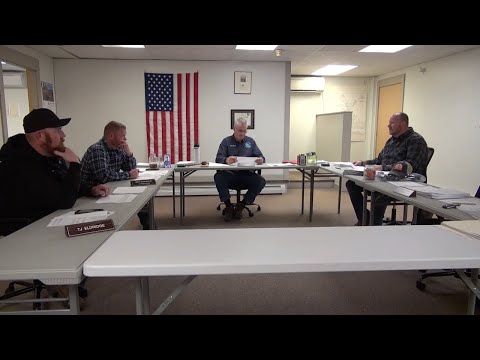
Selectmen voted on Oct. 20 to approve the Water Department operating budget and a sewer/wastewater maintenance budget, and discussed an upcoming plan to increase user rates to build reserves ahead of state‑mandated treatment changes.
TJ, who presented the water and sewer overview, said water operation costs have risen sharply: chemicals, pump replacements and lagoon maintenance all cost more than in prior years. He told the board the town will assess a 10% increase in water rates and raise the water maintenance line to allow the utility to self‑fund repairs. "We're gonna increase it 10%... we went up to 70,000 on maintenance, which is for water leaks and maintenance of the system," he said.
On wastewater, selectmen discussed the New Hampshire Department of Environmental Services (DES) timeline to phase out lagoons and require treatment facility connections by 2030. TJ said that transition could produce large capital expenses if the town is unprepared; he recommended gradual increases to avoid a large, sudden rate shock for customers when lagoon discharge options close.
Board action included approval of the Water Department budget in the meeting (motion recorded to approve $266,955 for the Water Department) and approval of the sewer/wastewater budget/CRF (motion recorded to approve $293,630). Selectmen emphasized that the water and sewer enterprise systems must be self‑supporting and cannot rely on general taxation.
Selectmen instructed staff to prepare rate schedules and public notices in forthcoming meetings so ratepayers can review planned increases and reserve strategies.
The board framed the move as preventative: spread small rate increases now to pay for routine repairs and to build capital reserves for inevitable large investments tied to state regulation and aging infrastructure.