Get Full Government Meeting Transcripts, Videos, & Alerts Forever!
Get email alerts on the Hospital Finance topic
No spam. Unsubscribe anytime.
Coffey County Hospital briefs commissioners on finances, federal rural health fund and service-line plans
Summary
Hospital leaders told commissioners that a new federal Rural Health Transformation Fund offers programmatic dollars but will not pay for routine operations or capital; hospital staff reported improved collections, supply-cost pressures tied to pharmaceutical programs, and plans to expand surgical services and swing-bed care in 2026.
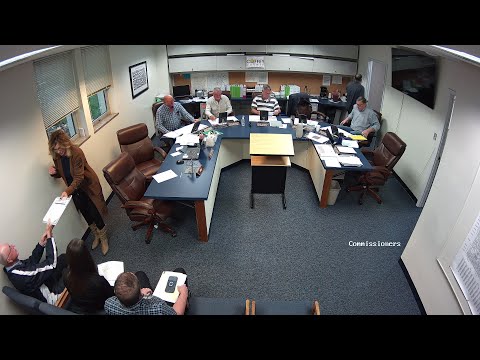
Coffey County Hospital administrators gave commissioners a quarterly update on Thursday that covered federal funding opportunities, near-term service-line plans and recent improvements in billing and collections.
Hospital administrator Stacy (hospital administrator) told commissioners the newly authorized Rural Health Transformation Fund totals $10 billion over five years and is being distributed partly through a state application process administered by CMS and coordinated in Kansas by the Kansas Health Innovation Alliance. She said half of the fund is allocated equally to states and the remainder distributed through state applications and data-driven awards, and that the money is intended for programmatic rural health initiatives rather than direct support for hospital operations or capital projects. "They have made it very clear that it's not to support operations or capital expense," Stacy said.
The update included a two-part financial briefing. Ray (financial presenter) reviewed month-by-month cash and accounts receivable metrics and said October cash on hand was roughly $316,000 and that the hospital currently sits below the board's target of 30 days of operating cash. He reported progress converting accounts receivable into cash and said that year-to-date collections have improved relative to 2024. "In the first nine months of this year, we've collected about $1,600,000 more than we did in the first six months of 2024," Ray said.
CFO Greg Ledbetter and other finance staff detailed revenue mix and write-offs. The hospital billed significantly more than it collected but reported an improvement in collection rates: year-to-date the hospital was writing off roughly 42.8% of charges and collecting about 57% of billed amounts, an improvement of approximately 4.5 percentage points compared with 2024 levels, the finance presentation said. The group also noted payer mix: Medicare accounts for the largest share of revenue, Medicare Advantage and commercial insurance next, with pure self-pay at roughly 3% of revenue.
Staff flagged supply-cost pressure as a key near-term risk, attributing year-to-date supply increases to pharmaceutical costs and 340B program dynamics. Ray said supply costs are running roughly 30%–33% higher than budgeted for 2024 baselines and that this is offset in part by salary savings tied to attrition and position consolidations.
On services, Stacy said hospital leadership plans to grow surgical services in early 2026, integrate more behavioral health into the clinic, expand swing-bed capacity after the closure of labor and delivery, and add rehab and therapy capacity to support orthopedic patients. She said the hospital expects to host a board strategic-planning retreat in February and welcomed commissioners' participation in the strategic-planning component.
Hospital leaders described operational changes to billing and collections, including mailing multiple statements, proactive phone outreach, implementation of an online patient portal to allow statement viewing and payment plan setup, and partnerships with early-out and collections vendors. Those changes contributed to improved cash conversion in the first nine months of the year.
Commissioners asked staff about surgeon staffing and contracts; administrators said the hospital currently employs a general surgeon whose contract ends in January and that the hospital plans to shift to a model under which a surgeon is engaged on a per-procedure or leased basis to reduce fixed overhead. The hospital did not present nor request any commission action on capital expenditures during the briefing.
Why it matters: Coffey County Hospital is the county's largest local health provider; changes in payer mix, rising pharmaceutical costs and shifts in surgical staffing have direct implications for local access to care, the hospital's operating budget and county support requests. The commission heard that federal program dollars are possible but likely to be programmatic and routed through state processes rather than available for the hospital's day-to-day operations or standard capital projects.
Looking ahead: Hospital leaders said they will return with more detailed planning documents for proposed service expansions and with updates on the state's application process for the Rural Health Transformation Fund.