Get Full Government Meeting Transcripts, Videos, & Alerts Forever!
Get email alerts on the Land Use Development topic
No spam. Unsubscribe anytime.
Clinton review panel flags traffic, lighting and community‑character issues in Part 2 review of proposed 9G conference‑style development
Summary
A Town of Clinton review panel and project applicants reviewed SEQR Part 2 screening for a proposed conference‑style development in Clinton and Hyde Park, focusing on traffic mitigation, lighting and community‑character impacts. The board did not make a final Part 2 determination and requested additional studies and Part 3 materials before moving forward.
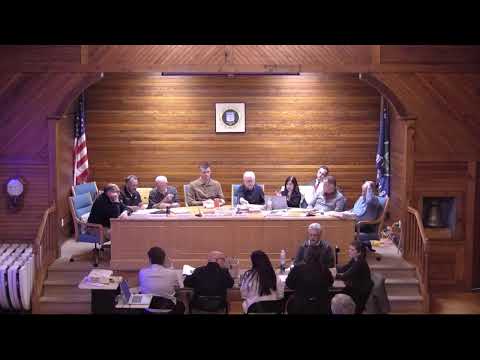
A Town of Clinton review panel and project applicants spent the meeting reviewing SEQR Part 2 screening for a proposed conference‑style development located in both the towns of Clinton and Hyde Park, focusing on transportation, lighting, noise and whether the project is consistent with the comprehensive plan.
Consultants presented a traffic analysis that used conservative, worst‑case assumptions including overlapping programs and maximum overnight and day guests. The report cited a projected AM peak of between 34 and 51 trips and a PM peak of between 52 and 93 trips, and recommended a southbound left‑turn lane on New York State Route 9G that would require widening the roadway beginning about 250 feet south of the Countryside Animal Hospital and extending roughly 1,055 feet to the Nylor Road intersection. With the left‑turn lane, consultants said the site driveway would operate at levels of service A–C with an average vehicle delay of approximately 15 seconds during peak hours.
Panel members questioned whether the left‑turn lane indicates the project exceeds roadway capacity or is a localized access improvement. Staff and consultants noted Route 9G’s monitored volume (about 8,340 vehicles per day) and observed that the project’s estimated 26 AM trips and 47 PM trips represent well under 1% of daily traffic; the board agreed to document the left‑turn mitigation rationale in Part 2 and to require a fuller explanation in Part 3.
On energy screening, the panel referenced standard thresholds — 2,500 megawatt‑hours per year and more than 100,000 square feet of heated or cooled space — and requested an energy‑use narrative and reconciliation with Central Hudson on feeder/substation needs and potential offsets such as rooftop solar.
Lighting and noise were prominent concerns for nearby residents. The applicant presented a detailed, dark‑sky‑compliant lighting plan with foot‑candle measurements and said lighting fixtures were designed to project downward; the plan also includes berms and landscaping intended to reduce spillover. A resident, Mr. Thorpe, described the local experience of night sky visibility and told the panel he “never saw the stars before” until a tenant reported clearer skies at another property, underscoring community sensitivity to light and visual impacts. The board asked staff to include the applicant’s noise study in Part 3 and to document construction‑period noise and hours for review.
Several members raised questions about community character and consistency with local land‑use policies. Panel members agreed the project is a permitted use under zoning and special‑permit rules but split on whether the proposal aligns with the town comprehensive plan’s recommendations about scale and low‑intensity tourism. Several items in the Part 2 screening were marked “moderate to large,” specifically impacts on architectural scale and the character of the natural landscape; the panel asked the applicant to provide comparative data on Omega (a nearby conference center) and said Part 3 should explain how this project’s scale and design will or will not contrast with surrounding land uses.
The board did not vote on a SEQR significance determination that night. Instead, it compiled a to‑do list for Part 3 — including the noise analysis, an energy narrative, any requested lighting tweaks, and a habitat/biodiversity assessment — and penciled the matter for the first December meeting, subject to receipt and staff review of the outstanding materials. Staff indicated they would coordinate with applicants and requested that Eric, Adriana and Pete be included in scheduling discussions.
The panel’s next steps are procedural: Part 3 will serve as the applicant’s formal response and supporting record; the board will review that submission before making a final SEQR determination or scheduling further hearings.