Get Full Government Meeting Transcripts, Videos, & Alerts Forever!
Get email alerts on the Labor And Contracts topic
No spam. Unsubscribe anytime.
Kirkwood teachers outline bargaining priorities: pay, class size, due process and time for teaching
Summary
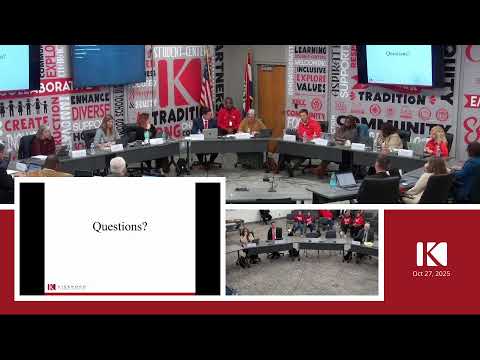
A group of Kirkwood teachers urged the Kirkwood R-VII School District Board of Education on Oct. 27 to make pay, class size and due-process protections top priorities as bargaining season begins.
KIRKWOOD, Mo. — A group of Kirkwood teachers urged the Kirkwood R-VII School District Board of Education on Oct. 27 to make pay, class size and due-process protections top priorities as bargaining season begins.
Leah Thomas, a kindergarten teacher at Kaiser and a member of the Kirkwood National Education Association executive board, framed the association’s request with a five-letter acronym she said the union will emphasize during bargaining: “RESPECT,” noting "recess equals readiness" and calling for equity and strong due process.
"Recess equals readiness," Thomas said, adding research shows unstructured play supports academic achievement and student mental health.
Amy Leatherbury, a librarian at Kirkwood High School and a KNEA executive-board member, asked the board to restore what teachers described as a contract “frozen step” from 2016, expand compensation supports such as funding for national-board certification and ensure administrators apply progressive discipline consistently.
"Education is a human right," Leatherbury said. "We believe that work deserves to be compensated, commensurate with its value." She said due process training for administrators would help assure staff they will be treated fairly.
Jenny Ono, an idea lab teacher and KNEA executive-board member, urged the board to prioritize class size and protect teacher time for planning and instruction. "Class size isn't just a number. It's the difference between meaningful instruction and survival mode," Ono said.
Other speakers representing classroom staff echoed the four priorities — pay, class size, due process and time for teaching — and thanked district leaders, including Dr. Rumpus and Dr. Rich, for in‑building engagement and efforts earlier in the year to add elementary sections and reduce selected class sizes.
The public-comment remarks did not include formal proposals or motions; they were framed as requests and priorities the association wants addressed during upcoming negotiations.
For now, the board took no formal action during public comment; members signaled they will continue to engage with the union and district administrators as bargaining proceeds.