Get Full Government Meeting Transcripts, Videos, & Alerts Forever!
Get email alerts on the Personnel Policy topic
No spam. Unsubscribe anytime.
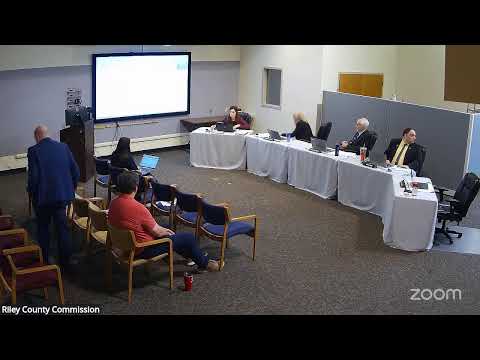
Riley County delays vote on travel-and-study pay policy; HR to revise draft
Summary
Riley County human resources officials presented a draft travel-and-study pay policy aligned with FLSA guidance. Commissioners debated whether required study time for hourly employees should be compensable and directed staff to remove compensable study time from the draft and return with a revised proposal.
Elizabeth Ward, Riley County human resources director, presented a draft travel-and-study pay policy on Oct. 27 that clarifies when travel and required study are compensable under federal standards.
"Travel is not compensable, so we don't pay it outside of a standard schedule unless the employee is required to drive a vehicle, or the employee is performing authorized work during travel time," Ward told the commission, citing alignment with Fair Labor Standards Act (FLSA) guidance.
Ward said the draft lays out which travel expenses are allowable, how to handle mixed personal and business travel, and a proposed approach for "study time" — defined as required or approved courses related to an employee's job. The draft would pay nonexempt employees for approved, required coursework and for study time outside normal hours if preapproved and documented.
Department supervisors who regularly send staff to intensive certification courses pushed back. Anna, a department supervisor involved in administering professional coursework, said many classes require substantial homework and out-of-hours review that is necessary for employees to maintain or obtain job-required credentials.
"Some of them are very intense, and they do require steady time outside of the office," Anna said, describing steps supervisors take to minimize overtime by adjusting schedules and maximizing downtime for study.
Commissioners pressed for consistency across departments and raised concerns about potential ongoing fiscal impact and unequal practices. One commissioner noted that different offices handle driver pay and scheduling differently and urged a single, countywide approach.
After discussion, commissioners chose not to vote on the draft. Ward said she would remove the compensable study-time language and return with an edited policy for further consideration.
The commission asked staff to consider the FLSA guidance Ward provided and to bring back an alternative that would clarify compensable travel while leaving study-time compensation out of the immediate draft. Ward said the changes would be recirculated to department heads and returned to the commission for another review.