Get Full Government Meeting Transcripts, Videos, & Alerts Forever!
Get email alerts on the Rulemaking topic
No spam. Unsubscribe anytime.
Motor Vehicle Commission adopts fee increases, adds civil‑penalty and response rules
Summary
The Tennessee Motor Vehicle Commission adopted rule changes Oct. 28 that raise two license fees, remove outdated motor‑vehicle‑show provisions, require dealers who relocate to notify the commission, and add a civil‑penalty rule and a requirement to respond to commission communications within 30 days.
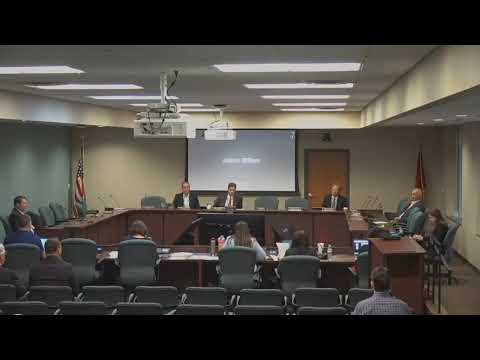
The Tennessee Motor Vehicle Commission completed a rule‑making hearing Oct. 28 and adopted a package of rule changes that raise two fees, remove outdated show requirements, add a relocation notice, and establish a new civil‑penalty rule and a 30‑day response requirement for communications from the commission.
Sierra Shepherd, associate general counsel for the Department of Commerce and Insurance, summarized the package during the hearing in Nashville, saying the changes were recommended as part of the statutory retrospective review process. Among the amendments adopted were: deleting a motor‑vehicle/recreational‑vehicle show fee; raising the application endorsement fee for change‑of‑employer of a motor‑vehicle salesperson from $35 to $50 and raising the fee for each name change (including additional line make) from $400 to $600; and amending the motor‑vehicle‑show rule to substitute “display” language that reflects current practice.
New and clarified rules: The commission added a civil‑penalty rule (allowing assessment of civil penalties for each separate violation and listing factors the commission may consider), a rule requiring licensees to comply with all applicable Tennessee and federal law, and a rule requiring licensees to respond to communications from the commission in writing within 30 days of mailing to the address on file. Shepherd told the hearing the response rule will permit the commission to rely on email and other communications and reduce postage expense while improving enforcement speed.
Small‑business impact and revenue: The regulatory flexibility addendum states the commission licenses about 3,316 dealers statewide; staff estimates 60% of licensees qualify as small businesses (less than 300 vehicles annually). The increased fees are modest, staff said, and were designed to preserve commission self‑sufficiency. Staff projected additional revenues of about $637,000 in FY26 and $937,000 in FY27 (this figure reflects multiple fee changes recently enacted and those adopted at this hearing).
Procedure and next steps: Commissioners adopted the hearing rules language and the regulatory‑flexibility and local‑government statements by roll call votes. Staff will forward the finalized rules to the governor’s office and the Attorney General for review; if the Attorney General approves, the rules will be filed with the Secretary of State and typically become effective after the 90‑day posting in that office unless the Joint Government Operations Committee takes different action.
Why it matters: The new civil‑penalty rule clarifies the factors the commission may consider in setting monetary penalties and formalizes the commission’s authority to assess fines in lawful proceedings. The new 30‑day response rule is intended to expedite enforcement processes and reduce certified‑mail costs by allowing reliance on email and other written communications provided to the commission address on file.
Quote: “The rulemaking hearing is called to order,” Sierra Shepherd said when opening the hearing; she later summarized the package as the product of the required retrospective review process and explained the changes were intended to align the rules with current practice and to improve enforcement efficiency.
What to watch for: Staff said it will publish the adopted rules on the commission’s website after Attorney General approval and said staff would supply notice and guidance to licensees to explain the new response and civil‑penalty provisions.