Get Full Government Meeting Transcripts, Videos, & Alerts Forever!
Get email alerts on the Housing Policy topic
No spam. Unsubscribe anytime.
Committee backs updated policy to support Texas low-income housing tax credit applications
Summary
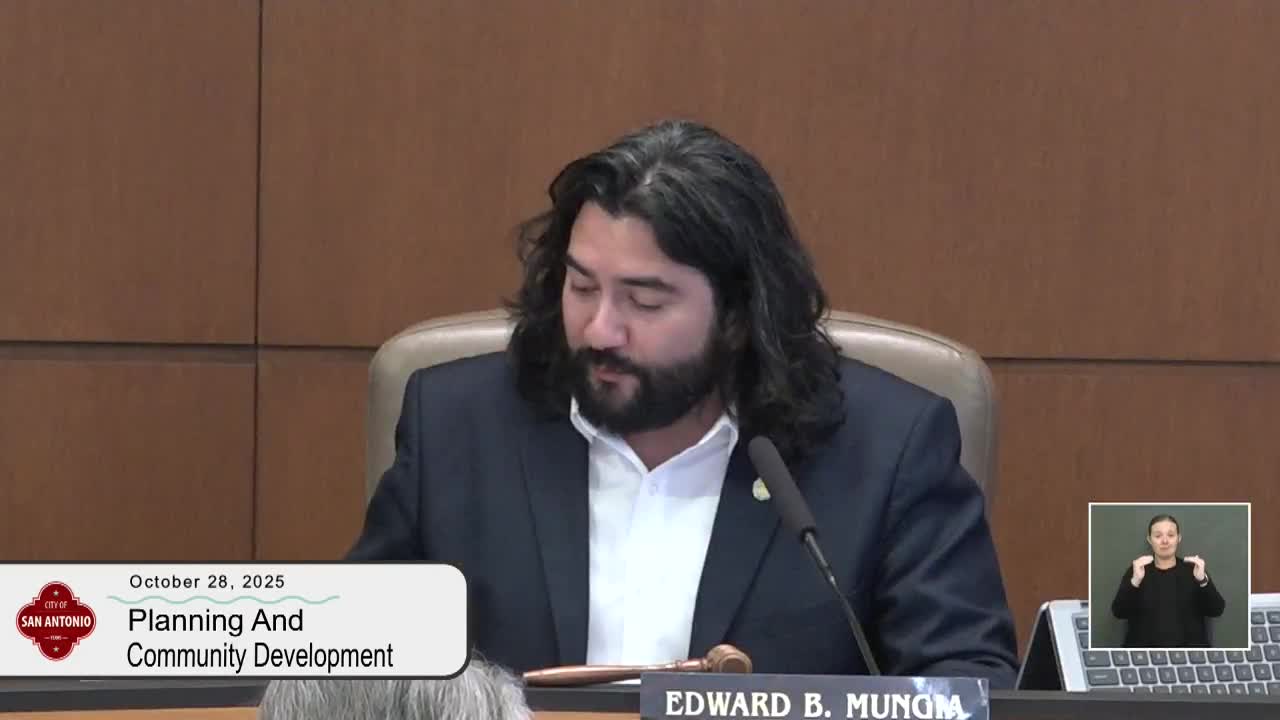
Planning and housing staff presented updated policy guidance on Oct. 28 to govern which developers receive the city's endorsement for Low-Income Housing Tax Credit applications, and the committee voted to forward the changes to City Council.
Planning and housing staff presented an updated policy on Oct. 28 for how the city will recommend Low-Income Housing Tax Credit applicants to the Texas Department of Housing and Community Affairs. The committee voted to forward the recommended changes to City Council consideration following a staff presentation and questions from committee members.
Housing staff said the Texas program includes a competitive 9 percent credit and a noncompetitive 4 percent credit and that local endorsements and points affect competitiveness. The proposed policy clarifies and adjusts scoring to prioritize accessibility, proximity to transit and the city's green lines, support for special populations (for example, older adults and single parents), and greater emphasis on local contractor participation. Staff described a timeline that would bring the policy to City Council on Nov. 6, open the application resolution process Dec. 1, allow a Jan. 9 pre-application check, and return to the council with resolutions in mid-February.
Staff acknowledged the region shares a single competitive allocation region (Region 9) with surrounding jurisdictions and said the policy updates aim to improve San Antonio's success rate. The subcommittee that reviewed the policy included local housing stakeholders and nonprofit partners; staff named members and partner organizations during the presentation.
Committee members asked whether the policy increases points for higher shares of affordable units and whether accessibility and universal-design considerations would be emphasized in future code discussions; staff said the policy can award higher points for projects that commit to greater percentages of deeply affordable units and that staff will pursue universal design discussions in upcoming Unified Development Code cycles.
The committee moved and approved the recommendation by voice vote; the transcript does not record a roll-call tally.