Get AI Briefings, Transcripts & Alerts on Local & National Government Meetings — Forever.
ULCT board warns of major unknowns as state pursues 1,300‑bed homelessness campus
Summary
ULCT staff told the board the state has acquired about 15 acres for a proposed roughly 1,300‑bed campus in Salt Lake and is exploring funding and program models. The board asked staff to continue engagement, flagged concerns about living conditions, civil‑commitment proposals and local roles, and asked for follow‑up before the next full board.
The Utah League of Cities and Towns (ULCT) on Tuesday updated its board on a state plan to develop a roughly 1,300‑bed homelessness campus in Salt Lake and urged members to review the League’s existing homelessness principles as staff continues negotiations with state leaders.
ULCT staff said the state has acquired roughly 15 acres for the proposed campus but that details remain unresolved, including who will pay for construction and operations, how the campus will fit into existing shelter and housing systems, and whether some services on the campus could be involuntary (civil commitment or mandatory detox). Staff flagged a leadership change: Wayne Nederhauser, the state homelessness coordinator, will step down in December and Nick Coleman will serve as interim, which staff said increases near‑term uncertainty.
Board members emphasized the need for clarity on the campus’ service model and living conditions. Council member Dugan asked whether the campus would rely on congregate or noncongregate beds and pressed for assurances that any new facility would not operate like a detention facility. He also raised public‑health concerns tied to the campus location, such as mosquito exposure in the proposed area, and called for a clear standard on quality of life for residents.
Staff described several open policy questions the state is discussing: potential expansion of winter response funding for multiple fiscal years, stronger data sharing between homeless services and public safety, and whether the campus would supplement or supplant local shelter capacity. Staff also said the state is considering expanded civil‑commitment authority and dedicated mandatory‑detox beds; it is not yet clear whether such beds would be included in the 1,300‑bed count.
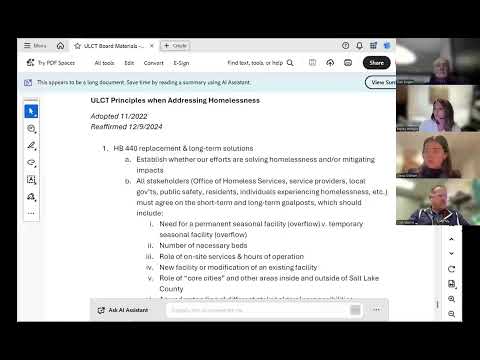
The board directed staff to continue outreach and return with recommendations once the League has additional details from this week’s meetings with state officials. Staff said the League will use its previously adopted homelessness principles as the baseline for negotiations but noted those principles did not contemplate a single large campus of the type currently proposed. The board asked staff to prepare options for potential updates to those principles before the next full board meeting.