Get Full Government Meeting Transcripts, Videos, & Alerts Forever!
Get email alerts on the Vacant Structure Registry topic
No spam. Unsubscribe anytime.
Mobile council delays vote on vacant-structure registry amid dispute over who must report vacancies
Summary
Council members debated whether responsibility to report vacant properties should rest with property owners or the city and put amendments to Chapter 52 on hold for further review and a committee meeting; staff and attorneys flagged enforcement, resource and public-safety trade-offs.
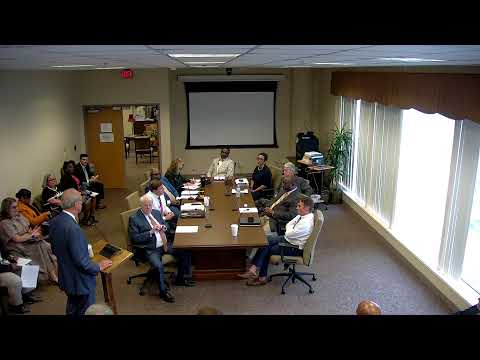
Councilman Reynolds introduced amendments to Chapter 52 of the Mobile City Code, which would create or modify a vacant-structure registry, but the Mobile City Council agreed to delay a final vote to allow further review and a committee discussion.
The measure, described by Councilman Reynolds as an update to "real property maintenance and enforcement" law, prompted a sustained exchange about who should bear the affirmative duty to report that a property is vacant. Attorney Woods told the council most of the rental-related amendments were "reasonable and acceptable," but said there remained "debate about what we need to do as far as enforcement back and forth" and that one issue might require an executive session.
Council members pressed on enforcement mechanics. Attorney Woods said the vacancy question differs from ordinary nuisance abatement partly because "you can't look in every building" and because the ordinance at issue is tied to fire-safety concerns rather than simply how a property appears. Councilman Reynolds and others emphasized resources: placing an affirmative reporting duty on the city would require additional inspection capacity and may be infeasible if the registry were applied citywide.
Councilman Carroll and others raised how owners might avoid regulation by asserting that a single person sleeps at a property for security, which would technically make it occupied. Attorney Woods said such a declaration would violate the ordinance if an owner knowingly misled the city, but acknowledged that "it's unenforceable unless we have line of sight on it," and that enforcement still requires staff to observe or otherwise verify occupancy.
No final action was taken. Council members suggested holding the item for the incoming council so members who will "have to live with it" can weigh in, and to schedule a committee meeting next week to work through enforcement language and resource implications. Councilman Ramos asked members to "hold this all for 2 weeks" and to schedule a committee meeting to continue the work.
The council recorded no vote on the ordinance at the pre-council meeting; attorneys and staff said questions of statutory construction, enforcement standards and resource needs remain outstanding and will be reconsidered at the committee meeting and by the new council.