Get Full Government Meeting Transcripts, Videos, & Alerts Forever!
Get email alerts on the Literacy topic
No spam. Unsubscribe anytime.
Blair Mill staff show structured "Science of Reading" routines, data use in classroom demonstration
Summary
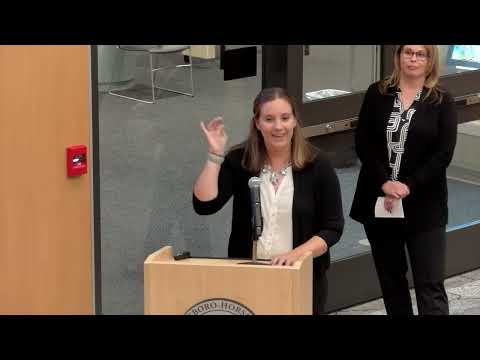
Blair Mill Elementary staff presented the district's Science of Reading implementation to the Hatboro-Horsham School District Board on Oct. 27, describing research-aligned instructional routines, K–5 resources (UFLI, HMH Into Reading), frequent assessment and data-driven flexible grouping. Presenters said the work is part of districtwide training,
Blair Mill Elementary School principal Dr. Gee told the Hatboro-Horsham School District Board on Oct. 27 that Blair Mill has spent the past year implementing research-based approaches to improve literacy and that the school's work is now being used across the district. “A little over, I guess about a year ago, we partnered with the MCIU and our curriculum department to begin thinking about how we approach literacy instruction at Blair Mill,” Dr. Gee said.
The presentation framed the Science of Reading as the research foundation and structured literacy as the instructional approach. Literacy specialist Chrissy Kamali summarized the five pillars—phonemic awareness, phonics, fluency, vocabulary and comprehension—and said teachers use explicit, systematic lessons and small-group work to target those areas. "The Science of Reading research focuses on phonemic awareness, phonics, fluency, vocabulary, and comprehension, which are the 5 pillars of reading that are critical to becoming a strong reader," Kamali said.
Presenters described specific curriculum resources and classroom routines. Kindergarten through grade 2 teachers use UFLI to teach phonemic awareness, phonics and early fluency; K–5 teachers use HMH Into Reading to support fluency, vocabulary and comprehension; and teachers use decodable readers and technology-supported blending boards. Classroom routines demonstrated included consistent warm-ups that review previously taught sounds, a predictable two-day sequence for introducing new skills, and strategies such as "say it, tap it, spell it" for kindergarten students.
The team emphasized regular assessment and flexible grouping. Presenters said weekly or biweekly probes and DIBELS progress monitoring inform instruction so students move fluidly in and out of targeted small groups rather than remaining in static groups. Staff also described a data-collection system (referred to in the presentation as Forefront and MCAS) that aggregates classroom and intervention data for teacher planning and PLC discussion.
Teachers showed hands-on classroom materials—magnet tile boards, whiteboards and iPad blending tools—that they said increase student engagement while practicing foundational skills. Presenters also described family engagement efforts (Title I nights and information sessions) and ongoing professional learning offered by the MCIU and district curriculum staff as next steps to support consistent implementation across buildings.
Speakers emphasized results and iterative practice rather than claiming final outcomes. Presenters said many students are meeting benchmarks under the new routines and that staff will continue monitoring data and professional learning. The board greeted the presentation with a standing ovation at its conclusion.
Speakers quoted in this article are drawn from remarks made during the Blair Mill presentation at the Oct. 27, 2025 legislative action meeting of the Hatboro-Horsham School District Board of School Directors.