
Superintendent outlines plan to 'right‑size' the district; board records motion to extend open‑enrollment window
Get AI-powered insights, summaries, and transcripts
Subscribe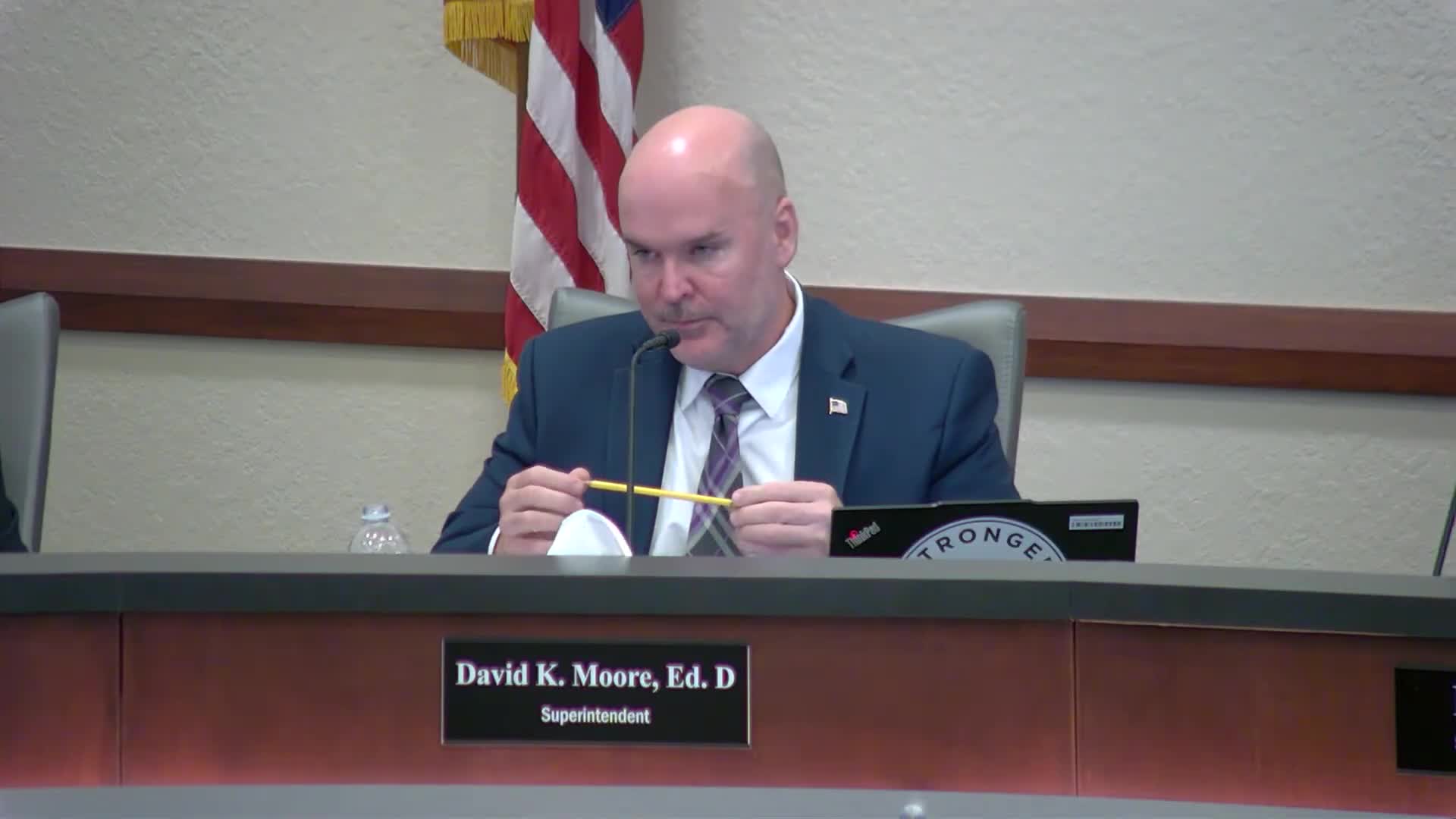
Summary
Superintendent Michael Moore presented a multi‑year operational plan to increase facility utilization, expand programs and avoid layoffs; he asked the board to extend the controlled open‑enrollment (Policy 5121) deadline to allow schools time to publicize changed programming while staff holds faculty meetings and community town halls.
Superintendent Michael Moore told the board on Oct. 30 that Indian River County Schools sits at roughly 72–74% total district occupancy and that underused facilities and program mismatches threaten long‑term fiscal stability if enrollment declines continue. He presented programmatic and facility proposals intended to increase utilization, expand choice offerings and avoid reductions in force.
Moore described several concrete ideas: convert four under‑used middle schools to three through reconfigured feeder patterns; expand K–8 magnet programming where demand exists; relocate some magnet campuses to newer facilities to reduce high maintenance costs at older buildings; move the district's small alternative (IR Prep) to co‑locate at Treasure Coast Technical College for shared vocational programming; and expand evening and adult education courses to generate revenue. He presented school‑by‑school capacity examples (K–8 magnets operating above 100% capacity while multiple middle schools were in the 40–60% range in use) and said the district currently turns away about 90 students each year from over‑subscribed magnet programs.
To allow schools time to market revised programming and boundary changes, Moore asked the board to waive or extend the enrollment window in Policy 5121 (controlled open enrollment). The chair called for a motion to extend the choice window; a motion and second were recorded. The transcript does not contain a roll‑call tally for that motion. Moore said staff will hold faculty meetings beginning immediately, schedule several community town halls over the next five to six weeks, hold a public hearing on attendance boundary proposals in November and seek final board action at a special meeting in mid‑December.
Board members praised the approach as proactive and emphasized the need for clear, positive messaging to parents. Ms. Rosario asked that town halls be scheduled with adequate notice for working families and suggested providing live and recorded town hall options. Dr. Posca and other board members emphasized the need to manage taxpayer dollars prudently and to protect employee roles; Moore said his initial analysis suggests the work can be done in a way that avoids a reduction in force for employees who meet performance expectations.
Why it matters: The district's enrollment and facility configuration decisions affect classroom sizes, transportation, program access (CTE, advanced coursework) and the district budget. Moore told the board that repurposing or consolidating space could free roughly $1.2 million annual operational savings (example: consolidating a stand‑alone freshman center) that would be available to reallocate to instruction and employee compensation.
Next steps: Moore said staff will begin face‑to‑face talks with faculty and parents this week, convene task‑force style meetings with bargaining units, hold town halls, publish an itemized recommendation to the board and place attendance‑boundary changes on a November public hearing with board action targeted for mid‑December.