Get Full Government Meeting Transcripts, Videos, & Alerts Forever!
Get email alerts on the Student Fundraising Permits topic
No spam. Unsubscribe anytime.
Students and parents say food‑sale permits burden school fundraisers; DOE, senators discuss waivers
Summary
Parents, teachers and student leaders told legislators that temporary-food permits and ServSafe certification requirements are forcing student governments to shoulder hundreds to thousands of dollars in fees.
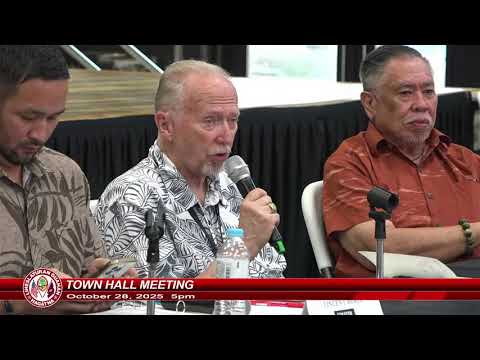
Parents, teachers and student leaders told legislators that public‑health permit fees and ServSafe certification requirements are taxing student activity funds. Myra Hernandez Bautista told the town hall that a Temporary Food Service Establishment (TFSE) permit costs roughly $300 per site for six months and that a full year of multiple site clearances could cost student accounts more than $1,200 to $1,800. "That's $1,200 coming out of a student account," she said, arguing those costs should not be borne by students.
Sean Monforti, Food and Nutrition for the Guam Department of Education, explained which permits require manager certification and which do not. He said temporary sanitary permits (the permits Myra described) generally require only health certificates for vendors and do not necessarily require a ServSafe manager certificate. "If you're applying for your temporary sanitary permit, you as far as we know, you just need your health certificates," Monforti said; "If you're cooking and you're managing a restaurant, you need a ServSafe." Monforti added that DOE can run ServSafe training through its central office and that the test cost to students is under $40, with DOE providing materials and instruction.
Senator Chris Barnett said the legislature would explore bills to waive costs that fall to students and their fundraisers. "The students should not be having to raise $1,800 just to pay for permits," he said, calling it unfair and pledging legislative follow-up. The town hall highlighted a gap between public‑health and school‑nutrition rules: DOE officials noted Board policy 705 and federal regulations (CFR) constrain food sales during the school day but that fundraising outside the school day can be treated differently.
No legislation was introduced at the meeting; officials said they would pursue options with the legislature and DOE to reduce or eliminate permit fees paid from student accounts.