Get Full Government Meeting Transcripts, Videos, & Alerts Forever!
Get email alerts on the Legislative Package topic
No spam. Unsubscribe anytime.
Fairfax legislative committee unveils narrowed legislative package focused on housing, K‑12 funding and regional priorities
Summary
Staff presented a narrowed, "living" legislative packet intended to sharpen Fairfax County's priorities for the 2026 General Assembly and federal advocacy, centering on housing, K‑12 funding, transportation and solid‑waste policy.
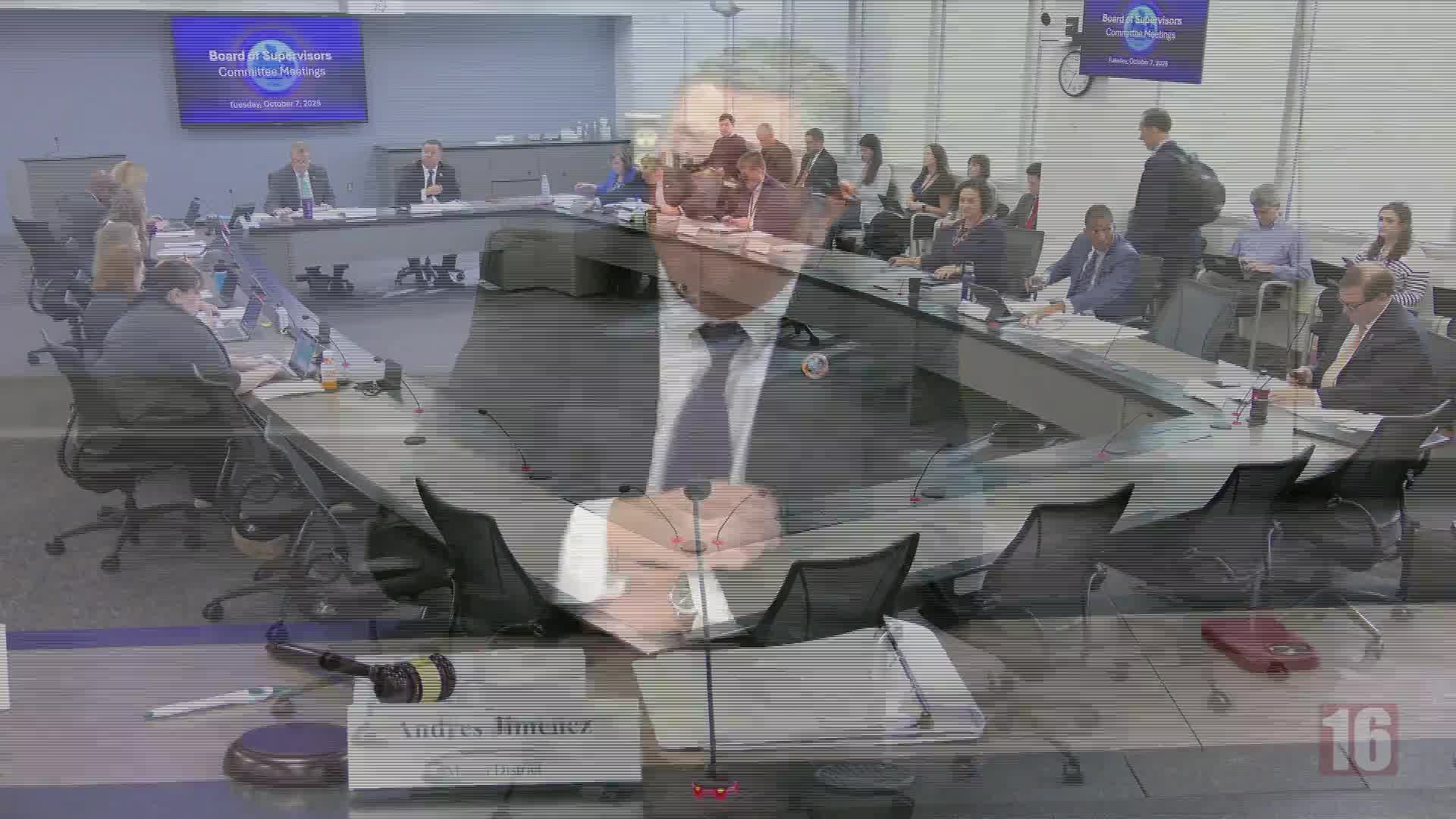
Staff presented a narrowed, "living" legislative packet intended to sharpen Fairfax County's priorities for the 2026 General Assembly session and for federal advocacy. Chairman Fairman opened the meeting by saying the committee exists to "ensure that we are not only reactive but proactive, delivering legislative priorities that strengthen the quality of life for our residents." Jennifer Vanney, the county's legislative director, described the packet as streamlined and noted the visuals in the draft are "all drafts" that staff will continue to refine.
The packet begins with a county profile and a set of guiding principles the packet calls "always true," including support for local authority and opposition to rollbacks. Staff highlighted housing, K‑12 funding changes recommended in the JLARC report, and transportation coordination as major priorities. Vanney said the team focused the package on items that are "moving" at the state level and that reflect the county's top priorities.
Supervisors sought more detail in several areas. Multiple supervisors asked staff to quantify how replacing the JLARC linear weighted average for teacher pay with alternative approaches (including a regional cost adjustment, COCA) would affect Fairfax schools and whether other localities would be held harmless. Vanney said JLARC numbers are several years old and that staff would work with schools to provide updated estimates.
Housing was added as a discrete section this year. Staff said the item will be refined this fall as the county's housing task force continues its work; supervisors emphasized they expect the housing language to evolve and to include specific state requests that support local goals without simply removing quality standards such as stormwater or open‑space requirements.
The packet includes new environment language on solid‑waste management: staff proposed support for short‑ or long‑term exemptions tied to carbon‑capture requirements for certain waste‑to‑energy facilities under the Virginia Clean Economy Act and asked for expanded local authority over source separation and food‑waste programs. Supervisor Alcorn asked staff for more analysis on the potential costs and greenhouse‑gas reductions associated with carbon‑capture approaches.
Human services additions include language responding to a state budget cap on private day special‑education services under the Children’s Services Act (CSA), prompting staff to warn those caps could shift costs to localities if providers do not lower rates. Staff also added positions on child‑welfare oversight and on preventing financial exploitation of older adults; Ariel McElune, human services legislative liaison, said a background memo on financial‑exploitation proposals is in the packet.
Vanney and deputies framed the packet as the starting point for continued work: the draft will be posted Nov. 13, a public hearing held Nov. 18, another committee meeting on Dec. 2 and final adoption on Dec. 9. The board will hold Friday meetings to consider bills individually as language emerges.
The committee did not take formal votes; staff said they will update the packet and return with analyses and revised language on the items supervisors flagged.