Lifetime Citizen Portal Access — AI Briefings, Alerts & Unlimited Follows
CSU Sacramento project earns QAPP, expands participatory trash monitoring in East Bay
Loading...
Summary
A participatory monitoring project led by Julian Fulton at CSU Sacramento has secured a Quality Assurance Project Plan (QAPP) that allows volunteer‑collected visual trash assessment data to be used as regulatory evidence under municipal permit requirements. The effort begins field data collection in Richmond and will expand to additional East Bay,
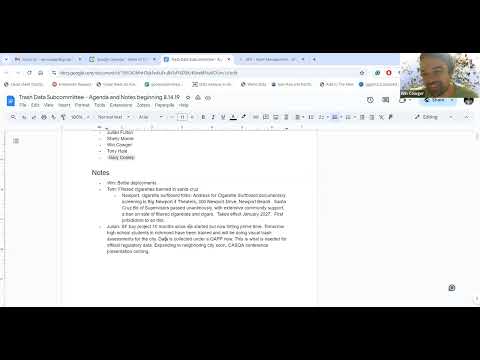
Julian Fulton, a researcher at California State University, Sacramento, said the team’s participatory trash monitoring effort in the San Francisco Bay region has reached a regulatory milestone by obtaining a Quality Assurance Project Plan (QAPP). "We're kind of hitting prime time now with, the participatory monitoring of trash conditions in 4 cities in the East Bay," Fulton said.
The QAPP certifies that data collected by trained high‑school students and community volunteers meet quality control and documentation standards required by regulatory programs. Fulton said the team will start training and visual trash assessments in Richmond “starting tomorrow,” and plans to expand monitoring into Berkeley, San Pablo and Bridal in the coming weeks.
Nut graf: The QAPP matters because it allows locally gathered data to be used in compliance reporting under stormwater and municipal trash programs. In California, municipalities must demonstrate that actions to reduce trash from stormwater are working; having community‑collected data at regulatory quality can expand monitoring capacity and strengthen localized evidence.
Project leads described a two‑layer approach: a general, portable QAPP that sets minimum standards and a site‑specific monitoring work plan with standard operating procedures and schedules tailored to each city. Fulton said the QAPP was written to be public domain once approved and that monitoring work plans provide the city‑level detail necessary for implementation. He said the project was developed with input from water board staff.
Participants encouraged cross‑jurisdictional sharing. One participant noted the QAPP could be translated to coastal contexts and that microplastics and lab‑intensive monitoring would require more detailed laboratory QA procedures. Fulton said he worked with Water Board staff and other models when developing the documents and expects to post the final QAPP on the project website.
Ending: Project organizers said they will present findings and methods at the California Stormwater Quality Association conference and hope the public QAPP will serve as a template for other cities and community groups seeking to produce regulatory‑quality trash monitoring data.