Get Full Government Meeting Transcripts, Videos, & Alerts Forever!
Get email alerts on the Property Tax Appeals topic
No spam. Unsubscribe anytime.
Hernando County special magistrate hears 12 property tax appeals; disputes focus on cost-of-sale, comparables and sinkhole adjustments
Summary
Special Magistrate Robert Hicks heard 12 residential property appeals for Hernando County on Oct. 27, with property appraiser staff presenting sales‑comparison packets and petitioners disputing cost‑of‑sale adjustments, choice of comparables, and treatment of sinkhole repairs and condition differences; Hicks said he will file written recommendations to the Value Adjustment Board.
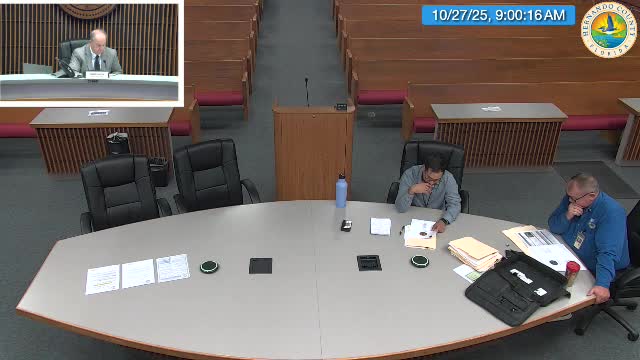
SPRING HILL, Fla. — Special Magistrate Robert Hicks heard 12 residential property value appeals for Hernando County on Oct. 27, taking testimony from property appraiser staff and petitioners and saying he would file written recommendations to the Value Adjustment Board in the coming weeks.
Hicks opened the session by reminding participants he is an independent hearing officer and that he could consider only evidence presented on the record. Property appraiser staff, identified on the record by Doug Mack and others, presented sales-comparison packets for each parcel that included property record cards, three to four comparables, square‑foot medians and a computed weighted mean that the office used to derive a cost‑of‑sale adjustment applied in its assessments.
The core disputes across multiple petitions concerned three recurring technical issues: how the appraiser applied a general cost‑of‑sale adjustment (often described in the hearing as 15% but shown in packet calculations at varying observed rates), whether the comparables used were truly comparable to the subject because of differences in finished living area versus “under‑roof” measurements, and whether condition differences or post‑sale renovations ("flips") made particular sales unreliable.
In petition 25‑051 (5308 Abigail Drive, Spring Hill), the property appraiser described a sales set that produced a weighted mean of roughly 76.6% and explained that the county’s rate-building process already incorporated a cost‑of‑sale assumption; the petitioner submitted an alternate grid of four nearby comparables and testified an opinion of value of $298,000. The petitioner argued the appraiser’s packet did not directly show the 15% cost‑of‑sale applied to the subject property, and Hicks pressed the appraiser to explain whether applying an additional adjustment to the subject would double‑count the reduction.
In petition 25‑054 (2260 Lima Drive), the appraiser told the magistrate the subject had been a repaired sinkhole and sat on a golf course; the office said repaired sinkholes in Hernando County typically sell about 5% below non‑sinkhole homes and unrepaired sinkholes near 20% below, while the petitioner presented six comps and an opinion of value of $285,000 and disputed whether the golf‑course factor applied to that lot.
Other hearings followed similar patterns: the appraiser presented the packet, petitioners offered alternate comparables and asserted lower opinions of value (examples from the record include petitioner opinions of $238,000; $280,000; $193,000; $109,000; and $354,000 for different parcels). Appraiser staff repeatedly noted the distinction between “under‑roof” total area (used on property record cards) and heated/finished living area (used in market comparisons) and objected where petitioner comparables were substantially smaller or larger than the subject. Appraiser rebuttals also frequently raised concern that some sales had large year‑to‑year price jumps that suggested a post‑sale renovation and therefore an unreliable condition match.
No formal rulings or vote counts were taken at the hearing. Hicks said he would "take this under advisement and write a recommendation" to the Value Adjustment Board, and he instructed that repetitive testimony may be incorporated by reference into recommendations for subsequent petitions so shared factual points did not need to be re‑repeated in every hearing.
Why it matters: For taxpayers and owners, these hearings determine what the magistrate will recommend to the Value Adjustment Board, which in turn affects final county assessments and potential tax liabilities for the 2025 roll. The hearing transcript shows the technical basis for both sides’ arguments — sale selection, measurement basis, condition, effective age and the mechanics of cost‑of‑sale adjustments — and indicates the magistrate will weigh those points in written findings.
What’s next: The magistrate will file written recommendations to the Value Adjustment Board in the next couple of weeks. The board will consider those recommendations in a subsequent meeting and may accept, modify or reject them under Florida’s value adjustment procedures.