Get Full Government Meeting Transcripts, Videos, & Alerts Forever!
Get email alerts on the Impact Fees topic
No spam. Unsubscribe anytime.
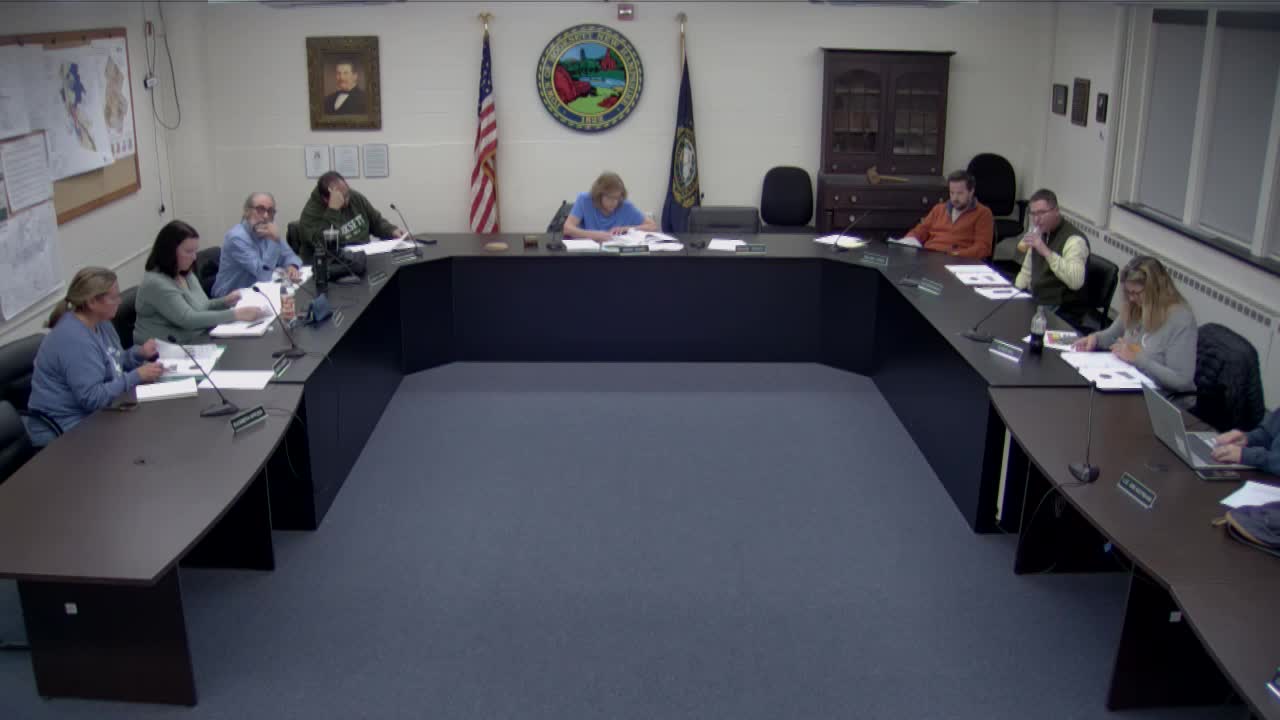
Hooksett committee prioritizes impact-fee updates, flags possible loss of school funds
Summary
The town administrator told the Hooksett Budget Committee on Nov. 3 that the community development department will use professional services to update several impact‑fee ordinances and to better align fees with current costs.
The town administrator told the Hooksett Budget Committee on Nov. 3 that the community development department will use professional services to update several impact-fee ordinances and to better align fees with current costs.
"The majority of those funds are gonna be used to update the, impact fee ordinance. We have a a, police and fire impact fee ordinance. We have a parks and rec impact fee ordinance. We have a traffic impact fee ordinance, and we have a school, impact fee ordinance," the administrator said during the department presentation.
Why it matters: impact fees pay for capacity-related capital items tied to new development (roads, parks, police and fire equipment and school capacity). The town’s professional‑services budget includes roughly $27,000 planned for updating the police/fire and parks ordinances; traffic and school updates were described as more expensive and scheduled later.
Committee members asked how the town is prioritizing updates. The administrator said police and fire updates were advanced because those funds have already been partially returned under existing rules and because they support projects the town has identified. Traffic updates are costly; the administrator said only a partial traffic update is expected this fiscal year.
School impact fees were discussed at length. The administrator said about $300,000–$400,000 remains in the school impact‑fee account and warned that, under current rules, money not obligated within six years must be returned, with interest. The committee and school representatives debated whether impact fees can be used for certain school maintenance or modular classrooms, with the administrator saying legal and statutory interpretations will guide decisions.
The administrator also highlighted the Southern New Hampshire Planning Commission’s role in advancing major transportation projects and cited recent success in increasing a Route 3 project estimate from $4 million to $10.8 million after regional advocacy. "We were able to advocate, and they were also able to advocate for us to keep that plan on ... and increase the amount from 4,000 $4,000,000 to $10,800,000," the administrator said.
Other operational notes: the community development budget of about $642,921 is mostly level-funded; the department plans to encumber professional‑services funds to pay consultants who will prepare the updated ordinances and studies. The town is also operating without a full‑time town engineer and plans to hire an interim firm for peer review while recruiting a permanent replacement. Planning staff named in the presentation include Grant McGregor (town planner) and Dana (code enforcement officer).
What’s next: the town administrator said the town will proceed with consultant contracts and keep the planning board, council and town legal counsel engaged to confirm permitted uses of impact fees and to sequence updates so the town can spend rather than return funds.