Get Full Government Meeting Transcripts, Videos, & Alerts Forever!
Get email alerts on the Law Enforcement Jurisdiction topic
No spam. Unsubscribe anytime.
Commission hears sheriffs and legal scholars on 287(g), deputization and domestic military use; agrees to working group
Summary
County sheriffs and a constitutional scholar briefed the Utah Federalism Commission on deputization models under 287(g), the practical effects of federal rulemaking on local enforcement, and the statutory constraints on domestic use of military forces; members agreed to form a working group for follow‑up.
The commission devoted its final session to law‑enforcement jurisdiction, deputization under 287(g) and the legal framework for the domestic use of military forces.
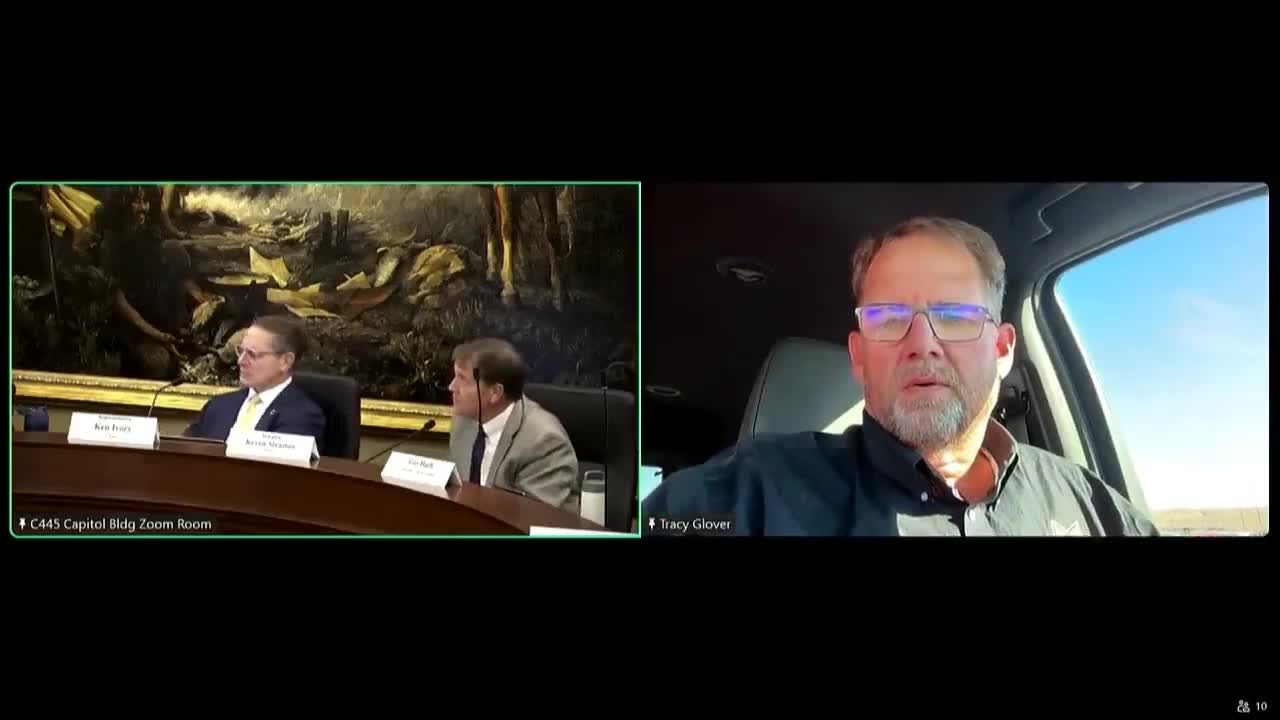
Sheriff Tracy Glover (Kane County) described involvement with federal rulemaking and the effect of some federal rules on local law enforcement. He cited recent rulemaking efforts from OSHA and the Forest Service as examples where sheriffs have engaged the rule‑making process and urged the commission to continue participating in federal comment periods.
Sheriff Mike Smith (Utah County) described two operational 287(g) approaches used in Utah counties:
- Warrant‑officer/booking model: deputies are authorized to access federal databases during booking to confirm identities and allow ICE to place holds; the aim is to prevent immediate release on local bond before federal immigration authority can respond.
- Task‑force model: local deputies embedded in multi‑agency task forces investigate and arrest persons engaged in crimes; federal partners provide immigration databases and resources to identify noncitizen suspects in discrete criminal investigations.
Smith said those MOAs are county level and elected sheriffs decide whether to enter agreements; he described the models as tools to assist criminal investigations and to prevent criminals from evading identification.
Commissioners discussed reports about federal offers to deputize deputies and incentives in some localities; a number of members noted that practices and MOAs differ across counties and that transparency and written MOAs are essential.
Professor Ilya Somin (George Mason/Cato) framed the issue in constitutional and statutory terms. He traced the historical expansion of federal authority (commerce, spending and immigration) and described the growth in presidential emergency powers (National Emergencies Act, IEEPA, Alien Enemies Act) and their potential to be invoked in non‑emergency contexts. He explained statutory authorities for domestic military assistance:
- Posse Comitatus Act generally restricts the use of the federal military for domestic law enforcement. - 10 U.S.C. 12406, the Insurrection Act and related statutes provide limited exceptions when invasion, rebellion, or inability to enforce laws by ordinary means exists.
Somin told the commission that courts have sometimes deferred to the president's factual determinations, but recent appellate decisions show limits to blanket deference. He recommended statutory limits to emergency declarations (shorter automatic expiration, clearer standards) and said repeal or tightening of archaic statutes (for example the Alien Enemies Act, in his view) should be considered alongside reforms to the National Emergencies Act and clearer judicial review standards.
Commission members sought clarifications and asked the panel to return. Participants agreed to form a working group to develop a follow‑up agenda and a set of written questions to share with Professor Somin ahead of a deeper Q&A session; Senator Kwan and Representative Burton agreed to lead the follow up. The commission adjourned after the agreement to continue the work.
Quotations in this article come from the meeting transcript and speakers on the record.