Get Full Government Meeting Transcripts, Videos, & Alerts Forever!
Get email alerts on the Wildlife Management Areas topic
No spam. Unsubscribe anytime.
Panel backs education, donation and stewardship tools for Wildlife Management Areas; livestock retrieval carve‑out added
Summary
The committee reviewed draft Wildlife Management Area amendments designed to reduce damage from increased recreation near neighborhoods by educating users, enabling voluntary donations to specific WMAs, and expanding volunteer stewardship. Members adopted a friendly amendment allowing adjacent landowners to access WMAs to recover wandering stock;
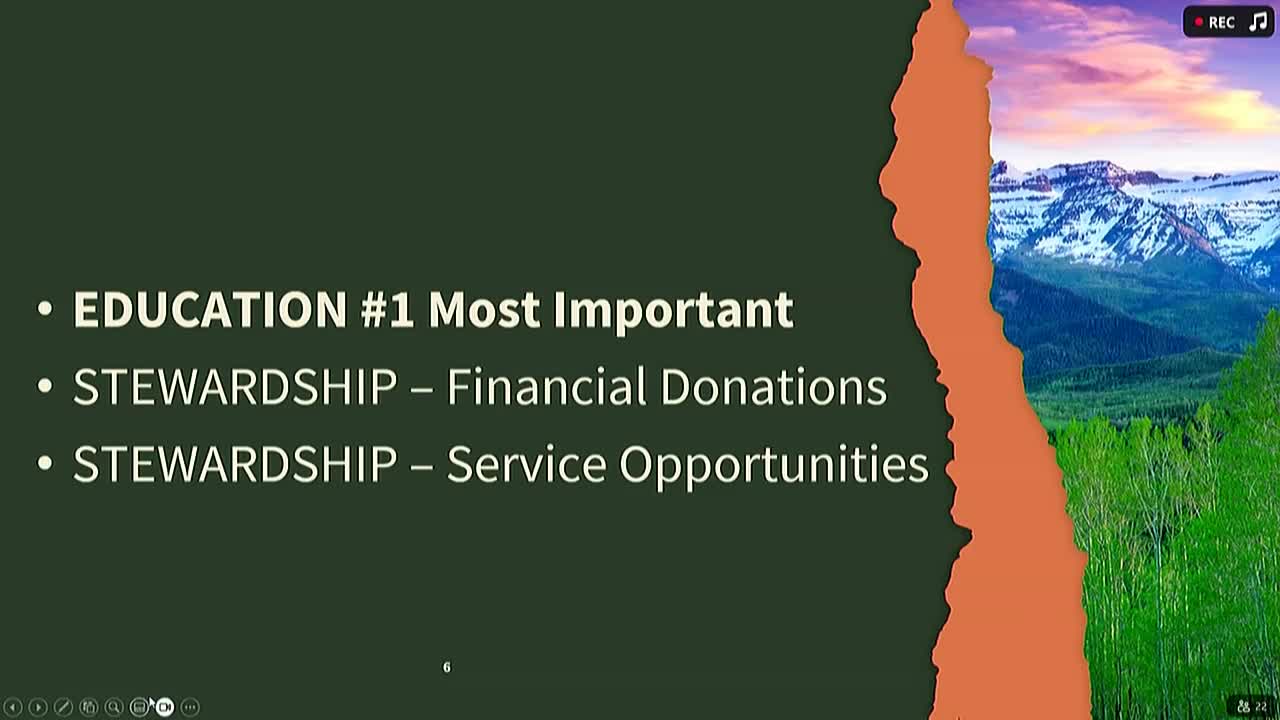
Representative Shallenberger presented a draft set of changes to clarify how Wildlife Management Areas (WMAs) are managed near communities and to encourage stewardship by non‑angling recreationists. The sponsor summarized three priorities: education, optional donations tied to specific WMAs, and volunteer service opportunities. "The 3 main areas as we present this bill is education, education, education," he said.
Schallenberger used the Timpanogos WMA—adjacent to neighborhoods and the Bonneville Shoreline Trail—to illustrate conflicts between hikers, cyclists, hunters and wildlife (wintering big game, waterfowl refuges). He and Division of Wildlife Resources staff described problems reported by residents: illegal trails, dumped furniture, user conflicts, and trips when hikers did not hold hunting or fishing licenses. The proposal includes QR-coded short videos at trailheads to educate users about seasonal restrictions, an optional donation mechanism that can be directed to specific WMAs (tax-deductible; small donations can trigger federal matching if they meet license/match thresholds), and expanded volunteer partnership programs for trail cleanups and maintenance.
Multiple local recreation and nonprofit representatives told the committee they support the approach and want the ability to direct donations to local WMAs and to contribute labor for trail maintenance. David Fox of the Utah Valley Trail Alliance urged that donations be allowed to support trail maintenance and enforcement in high‑use areas.
Representative Chiu moved a narrowly drawn amendment permitting a person to enter a WMA without complying with the education/permitting requirement to the extent necessary to recover livestock that entered the WMA from adjacent, authorized grazing land. The amendment was accepted as friendly, Division staff expressed no objection, and the committee voted to recommend the bill with the amendment. The committee instructed sponsors to carry the draft as a committee bill for continued stakeholder refinement.