Get Full Government Meeting Transcripts, Videos, & Alerts Forever!
Get email alerts on the State Budget topic
No spam. Unsubscribe anytime.
Senate debates $2.3 billion FY25 closeout supplemental; bill targets sheriffs oversight, student aid and disaster fund
Summary
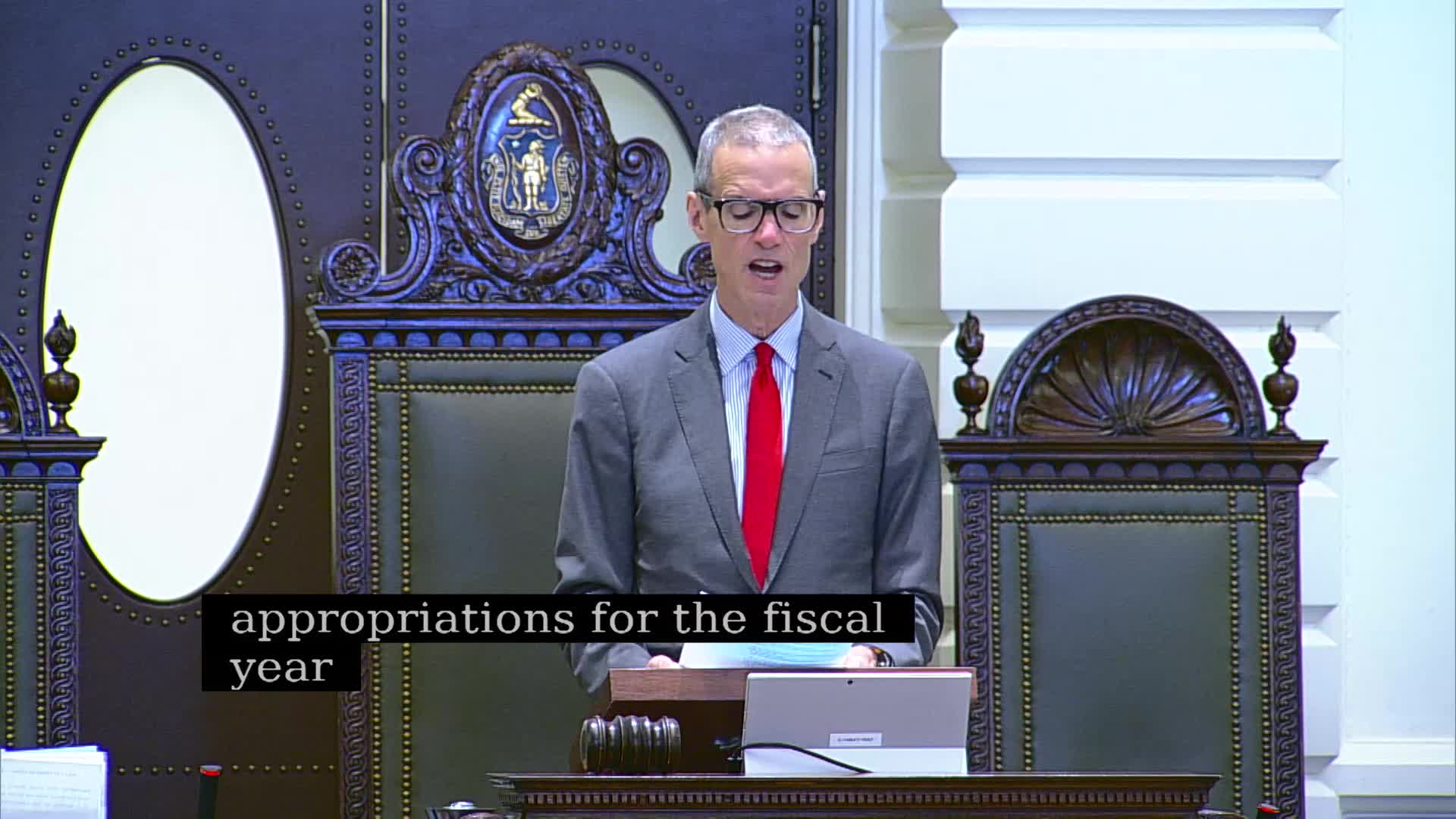
Senators opened a prolonged debate on House Bill 4615, the fiscal year 2025 closeout supplemental spending bill reported by the Committee on Ways and Means. Chair Senator Roberts called the measure the vehicle to "balance the books, reconciling spending gaps, addressing priorities, and putting FY25 to bed." (Senator Roberts, 00:11:25).
Senators opened a prolonged debate on House Bill 4615, the fiscal year 2025 closeout supplemental spending bill reported by the Committee on Ways and Means. Chair of Ways and Means, Senator Roberts, described the bill as the instrument to "balance the books, reconciling spending gaps, addressing priorities, and putting FY25 to bed." (Senator Roberts, 00:11:25).
The bill proposes substantial gross spending supported by federal participation; after federal financial participation the committee described the net impact on state funds as substantially smaller. The committee recommended a MassHealth (Medicaid) supplemental appropriation of $2,050,000,000 gross and $539,000,000 net to cover FY25 deficiencies, citing higher acuity in MassHealth populations and long-term supportive care as principal drivers (Senator Roberts, 00:19:56; 00:23:27).
Ways and Means also proposed a trio of measures to address what the chair called an "unsustainable" increase in sheriff expenditures after the 14 independent sheriff offices overspent their FY25 appropriations by approximately $162 million. The package would: (1) appropriate $12.5 million for a no-cost-calls program; (2) provide $14 million for Section 35 substance-use treatment aid; and (3) authorize an Inspector General review of FY25 finances for all 14 sheriff offices and establish a sheriff fiscal oversight council to review sheriff finances monthly (Senator Roberts, 00:13:37).
On higher education, the amendment would create a $100 million public higher-education student support fund and restore $18.3 million in student financial aid, intended to prevent reductions in stipends and preserve access for low- and moderate-income students, including community college attendees (Senator Roberts, 00:16:47).
Other supplemental allocations listed by the committee include $12 million for universal school meals, $18.5 million for public health hospitals, $10 million for Department of Transitional Assistance technology improvements, $5 million to reproductive health-care providers, $75 million to the Housing Preservation and Stabilization Trust Fund, and $60.7 million to MassDOT for snow-and-ice removal (Senator Roberts, 00:17:36).
The committee would invest $426 million in excess capital gains into a new deficiency reserve fund, and deposit an additional $25 million split across three buckets for the Stabilization Fund, state retiree benefits (OPEB), and pension obligations (Senator Roberts; Senator Rodricks, 00:30:22). Senator Rodricks described the 85%/$426 million and 5%/$25 million disbursement breakdown as the committee’s proposed allocation of the year’s excess capital gains.
Senators pressed the chair on several points during floor discussion. Senator Friedman and others emphasized health-safety-net provisions, praising hospital participation in assessments to help stabilize the system given possible federal changes to Medicaid. Senator Roberts explained that MassHealth cost growth and higher acuity had driven the large recommended supplementary appropriation and that the committee sought tools to restore fiscal stability (Senator Friedman, 00:19:56; Senator Roberts, 00:23:27).
Senator Rogers and other members discussed surtax (the so-called "millionaires' tax") receipts and the committee’s conservative approach to investing that revenue. The committee reported FY25 collections near $3 billion versus a $1.3 billion budget baseline. The supplemental proposes spending $91 million of surtax on three line items and placing $200 million to recapitalize the Student Opportunity Act Investment Fund and $100 million into the public higher-education student support fund; the committee said roughly $1.1 billion of surtax would remain unspent and handled according to statute (85% to the education and transportation innovation and capital fund, 15% to a reserve) (Senator Rogers, 00:27:31).
On contingency and disaster preparedness, the committee proposed depositing approximately $25 million to the Stabilization Fund (which the chair said would raise the fund to about $8.1 billion) and transferring a modest consolidated net surplus of about $14 million into a Disaster Relief and Resiliency Fund (Senator Rogers, 00:23:27).
The Senate proceeded to consider a large set of amendments to the Ways and Means text. The floor record shows a mixture of technical and programmatic changes—some adopted (for example, local infrastructure and library appropriations and an amendment to assist Hampshire County municipalities facing severe health-insurance premium spikes), many held for later, and several rejected by voice vote. The Senate also recorded debate and a withdrawn amendment on broader policing and surveillance concerns; that measure was removed from consideration and referred for further work in steering and policy (amendments process, 00:32:20–00:47:31).
The matter remained under active debate at the close of the provided transcript: members completed a first call of numerous amendments and continued to make and withdraw motions. No final passage vote on House Bill 4615 is recorded in the supplied segment.
Why it matters: The supplemental would close FY25 obligations and direct large targeted investments and reserves. The MassHealth deficiency, sheriff oversight measures, student-aid funds, and capital-gains reserve could all influence FY26 budget choices and program operations if enacted. The bill relies heavily on federal financial participation and on statute-driven disposition of surtax and excess capital gains, so implementation depends partly on federal reimbursements and standing statutory formulas.
What's next: The Senate will continue amendment consideration and is expected to take recorded votes (the chair requested a call of the ayes and nays on final passage). If passed by the Senate, House Bill 4615 would then return to the House and, if enacted, be presented to the governor for approval.