Get Full Government Meeting Transcripts, Videos, & Alerts Forever!
Get email alerts on the Elections topic
No spam. Unsubscribe anytime.
Committee hears wide-ranging political sign amendments; holds action for more stakeholder review
Summary
Representative Tuscher presented a draft to clarify rules on defacing signs, sign placement on park strips, post-election removal windows, and confiscated-sign storage and reclamation procedures. Legislators raised concerns about penalties, fee caps and disclosure sizes; the committee postponed final action to allow additional stakeholder review.
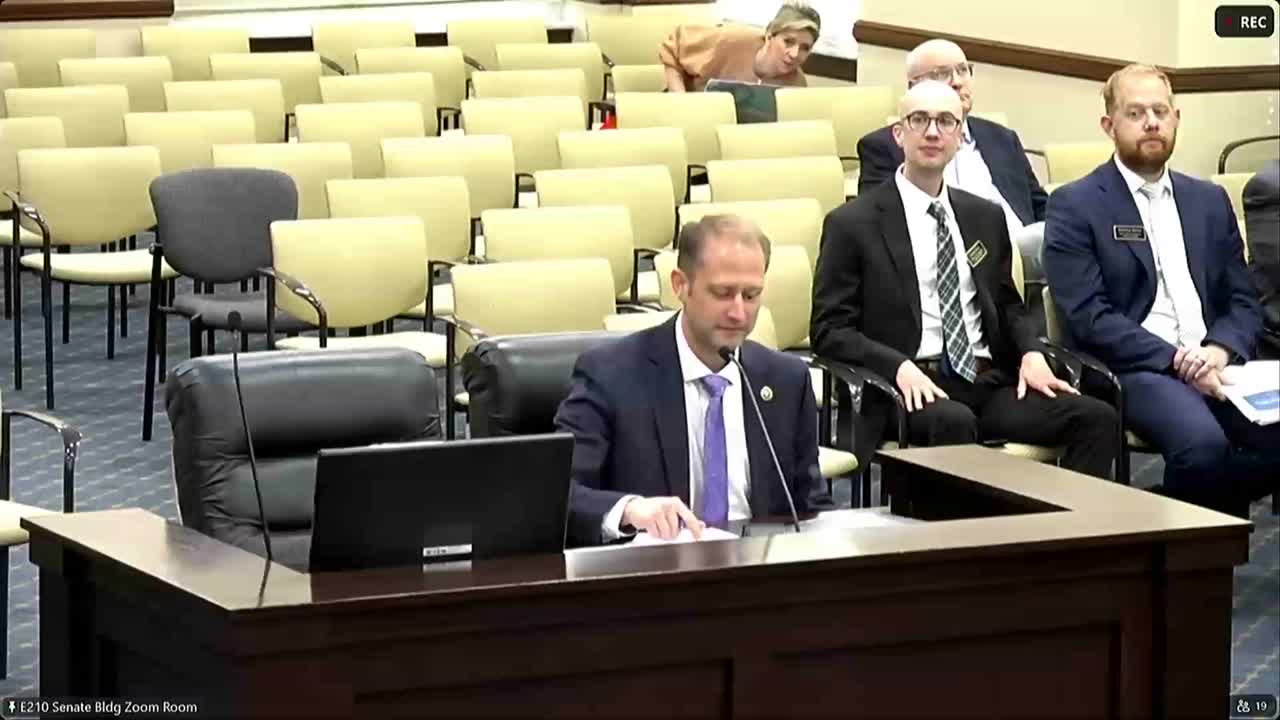
Representative Tuscher presented a draft political-signs bill that would clarify multiple aspects of state sign law, including when objects affixed to a sign may be removed, limits on placing signs on public infrastructure, a post-election removal window, and a required process for municipalities to store and notify campaigns about confiscated signs.
The bill would explicitly allow removal of any object affixed to a political sign that hides or misrepresents the sign's message, and it would make clear that anyone may remove such an affixed object without engaging in a criminal offense for removing a political sign. The draft would also create a 14-day window for candidates and supporters to remove campaign signs after an election; after that window, a municipality could remove and store signs and charge a storage fee that the drafter said "can exceed ... $20 a sign" (the text sets a not-to-exceed amount).
Representative Tuscher said the bill would also treat a park strip that an adjacent owner must maintain as space where a homeowner may place political signs. The draft requires municipalities to designate a storage location for confiscated signs, notify the campaign using contact information on file, and allow five days for the campaign to reclaim signs before disposal or imposition of storage fees.
Committee members pressed on several points: whether the criminal mens rea in the code should be "knowingly" or "intentionally," the economics and fairness of a $20 per-sign storage fee, and whether lowering the disclosure-size threshold for "paid for by" language to typical yard-sign size would unfairly burden small campaigns. Justin Lee of the Utah League of Cities and Towns said his organization would like additional time to review the draft and offer feedback before committee endorsement.
After public comment and extended discussion, the committee did not give the draft a favorable recommendation and voted instead to move on with the agenda to allow more stakeholder review and drafting time.