Get Full Government Meeting Transcripts, Videos, & Alerts Forever!
Get email alerts on the Payments topic
No spam. Unsubscribe anytime.
Committee backs bill to let schools join state credit-card processing contract
Summary
The Government Operations Interim Committee unanimously recommended the credit card processing fee amendments, a committee bill intended to allow public K–12 schools and institutions of higher education to participate in the state—s credit-card processing contract and to recover merchant processing costs.
The Government Operations Interim Committee unanimously recommended a committee bill that would let public schools and institutions of higher education participate in the state—s credit-card processing contract and recover electronic payment fees.
Thomas Vaughn of the Office of Legislative Research and General Counsel, the drafter, told the committee the bill creates a legal exemption to allow those public entities to pass a processing fee on to payers and join the statewide contract. "We don't favor or oppose any bills," Vaughn said as part of his presentation, adding that the draft takes language consistent with other code provisions and applies it to education entities.
Supporters said the change would let schools and colleges use the purchasing power of a single state contract while still recovering the cost that private payment processors charge. Committee members discussed broader, separate ideas—such as whether the state should create a centralized processing service to reduce overall costs—but no changes on that topic were included in the draft.
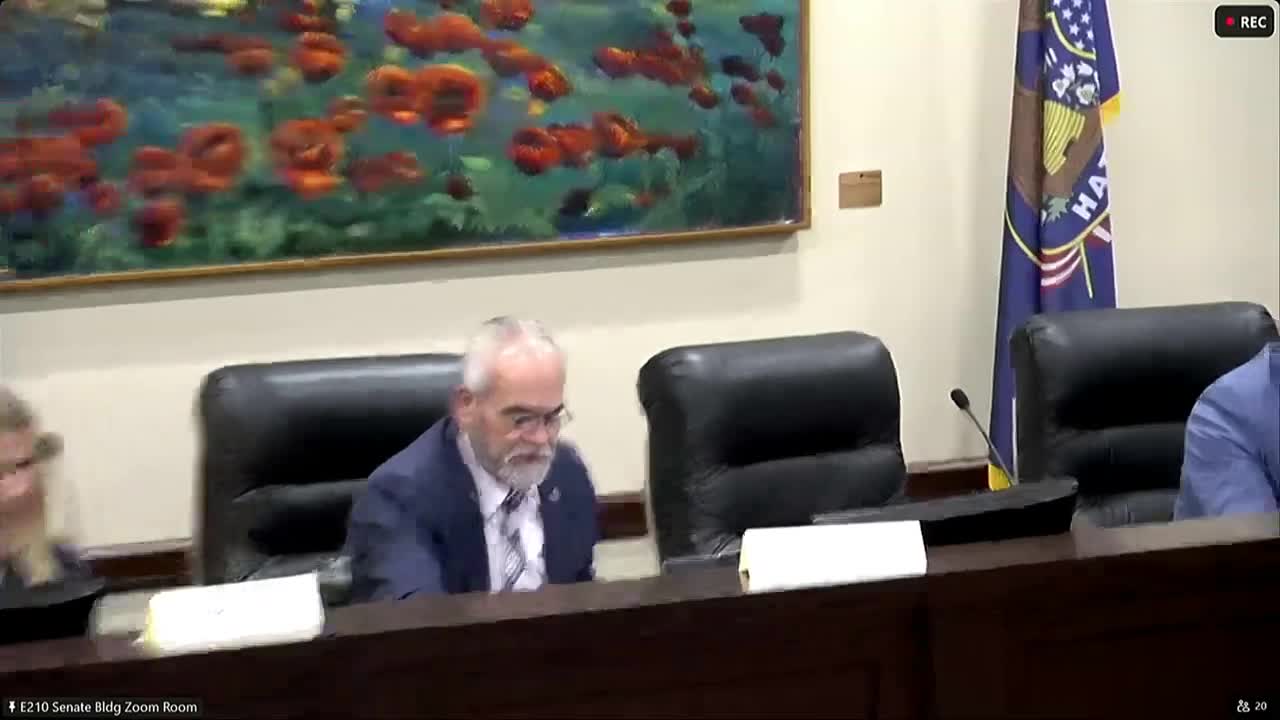
After no public comment, Senator Musselman moved that the committee give the draft a favorable recommendation. The committee voted unanimously in favor by voice, and the committee clerk recorded the motion as recommended out of committee.
Next steps: The recommendation sends the draft forward with the committee's support for consideration during the general session.