Get Full Government Meeting Transcripts, Videos, & Alerts Forever!
Get email alerts on the Consumer Protection topic
No spam. Unsubscribe anytime.
Consumer advocates urge state action on 'zombie' second mortgages after testimony of homeowners and mediators
Summary
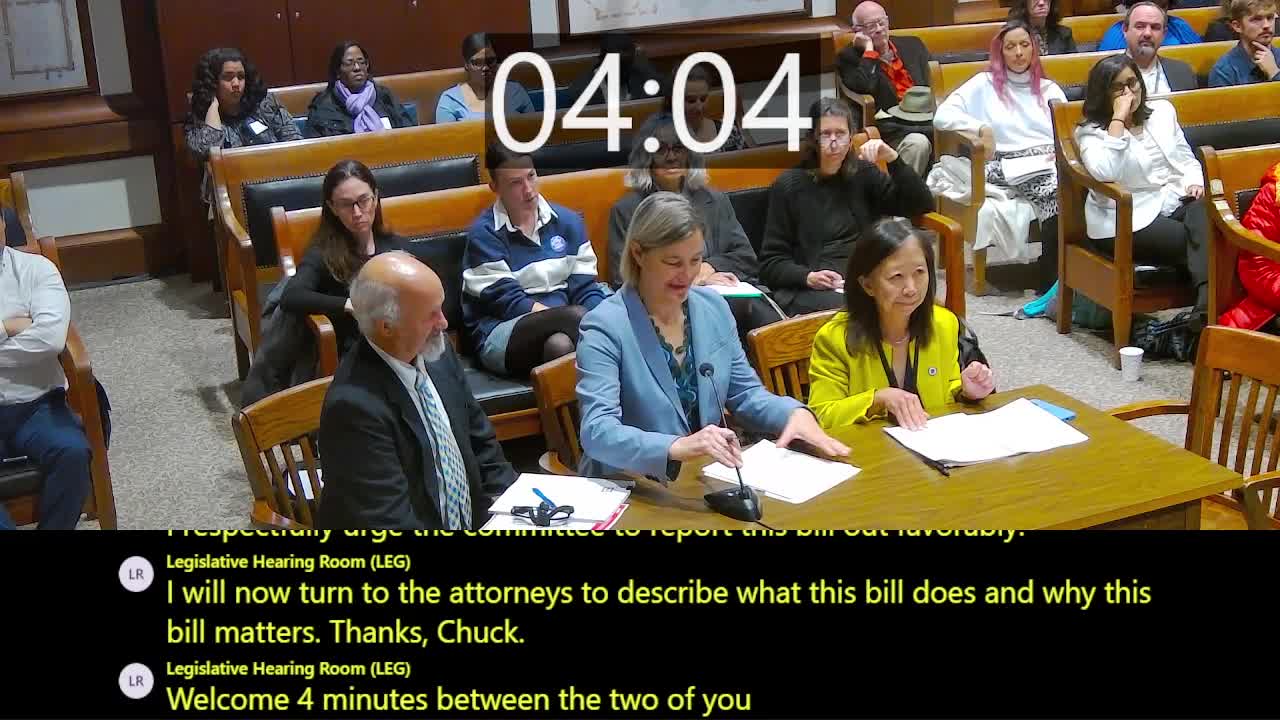
Consumer advocates told the Joint Committee on the Judiciary that state action is needed to prevent debt buyers from reviving dormant subordinate mortgages and pursuing foreclosure without adequate notice to homeowners.
Consumer advocates described a pattern they called "zombie" second mortgages: subordinate loans that were written off or sold after the 2008 crash, had no active servicing or borrower communication for years, and later resurfaced when housing values rose — sometimes demanding repayment and threatening foreclosure.
"In the majority of the cases I mediated, borrowers received no notification that their loan had been sold," said Chuck (testimony identified as a former consumer-protection attorney), recounting a case where a homeowner who believed both mortgages were modified later received demands for more than $150,000 on a second mortgage that had been purchased by a debt buyer.
Andrea Bob Stark of the National Consumer Law Center urged the committee to act while federal enforcement efforts at the CFPB were, she said, constrained: witnesses cited Bloomberg reporting that federal investigations into companies collecting zombie seconds slowed under the current administration. The proposed bills (H.1983 / S.1071) would require servicers who intend to foreclose on subordinate mortgages to disclose whether they followed statutory servicing requirements and would permit borrowers to seek court review of servicer conduct; courts could use equitable authority to ensure only lawful arrearages are collected.
Todd Kaplan of Greater Boston Legal Services offered similar examples of homeowners threatened with foreclosure after many years without notice and urged state remedies because federal enforcement alone could not address all actors.
Ending: Advocates asked for favorable reports to give Massachusetts homeowners stronger defenses against debt buyers who pursue ancient subordinate loans without prior notice; no votes were taken at the hearing.