Get Full Government Meeting Transcripts, Videos, & Alerts Forever!
Get email alerts on the Tenant Advocate topic
No spam. Unsubscribe anytime.
Tenants and advocates press for tenant-advocate office in attorney general’s office, cite bullying and management retaliation
Summary
Tenants, tenant-association leaders and the Stop Bullying Coalition told the Judiciary Committee that H.1814, which would create an Office of the Tenant Advocate in the Attorney General’s office, is needed to address persistent bullying, retaliation, security deficits and lack of effective oversight in subsidized housing.
Tenants, housing advocates and coalition leaders urged the Joint Committee on the Judiciary to report H.1814 favorably and create a statutory Office of the Tenant Advocate in the Attorney General’s office to provide oversight, investigation and remedies for tenants in subsidized and public housing.
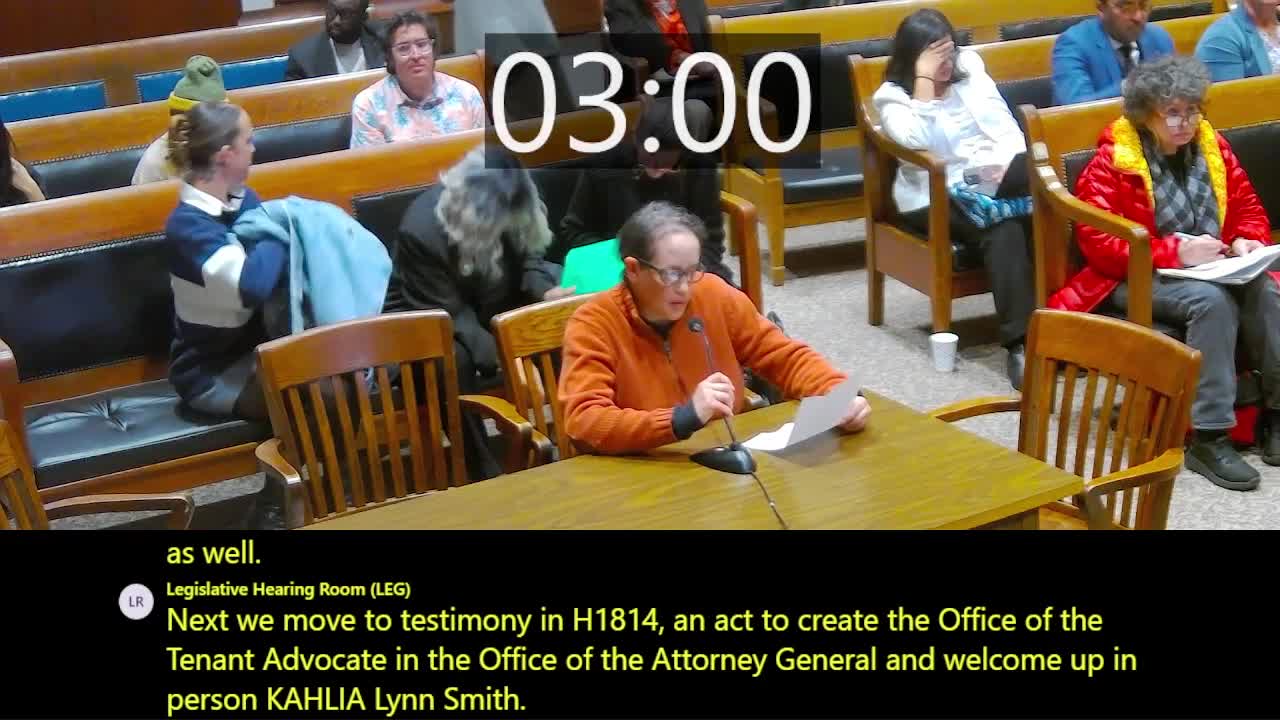
"These covenants may no longer be enforceable, but they remain visible reminders," said Nancy Sanchez of Harbor Light Homes in earlier testimony about racist covenants. In the tenant-advocate panel, Kolia Lynn Smith, who lives in subsidized housing in Kenmore Square, described persistent security problems and alleged management retaliation after tenants organized: "Management is trying to force us to remove doorbell cameras," Smith testified, adding that tenants who reported package theft and unauthorized entry received little effective recourse.
Jerry Halberstadt of the Stop Bullying Coalition framed the problem as systemic: "A major source of bullying is the failure of the housing provider to meet their legal obligation to tenants' peaceful enjoyment and protection from bullying," he said, and argued that tenants need a state-level advocate with authority to intervene.
Ross Donald, president of the Linden Chambers Residents Association and a Needham public-housing resident, described maintenance shortfalls and what he called administrative practices that can feel like "bullying and gaslighting" to elderly or disabled residents.
Supporters told the committee that existing remedies are often inadequate: tenants said local officials and City Hall sometimes lacked authority over private nonprofit owners or could not compel management to produce security footage or complete repairs. Witnesses urged an advocate office that could investigate complaints, coordinate with housing agencies, and provide accessible legal help or referrals.
Committee members asked about prior outreach to registers of deeds and mechanics of implementation; witnesses described local research projects that identified hundreds of problematic deeds in parts of the state and said a blanket statutory remedy would spare individual homeowners the expense and confusion of correcting deeds one by one.
Ending: Advocates characterized H.1814 as filling an enforcement gap in existing housing law—providing oversight, accountability and an accessible avenue for tenants who say they face bullying, neglect, or unsafe conditions.