Get Full Government Meeting Transcripts, Videos, & Alerts Forever!
Get email alerts on the Direct Care Registry topic
No spam. Unsubscribe anytime.
Direct-care workers, unions back MAP registry to expand training access
Summary
Unions and direct-care workers urged lawmakers to create a Medication Administration Program (MAP) registry so industry groups and trainers can identify workers who need MAP testing and provide bilingual preparation; witnesses said the MAP exam creates a barrier for English learners and contributes to workforce vacancies.
Labor leaders, MAP instructors, and direct-care workers urged the committee to back H.237 / S.162 to create a Direct Care Worker Medication Administration Program (MAP) registry that would allow trainers and employers to identify individuals who must take the MAP test and to coordinate training resources.
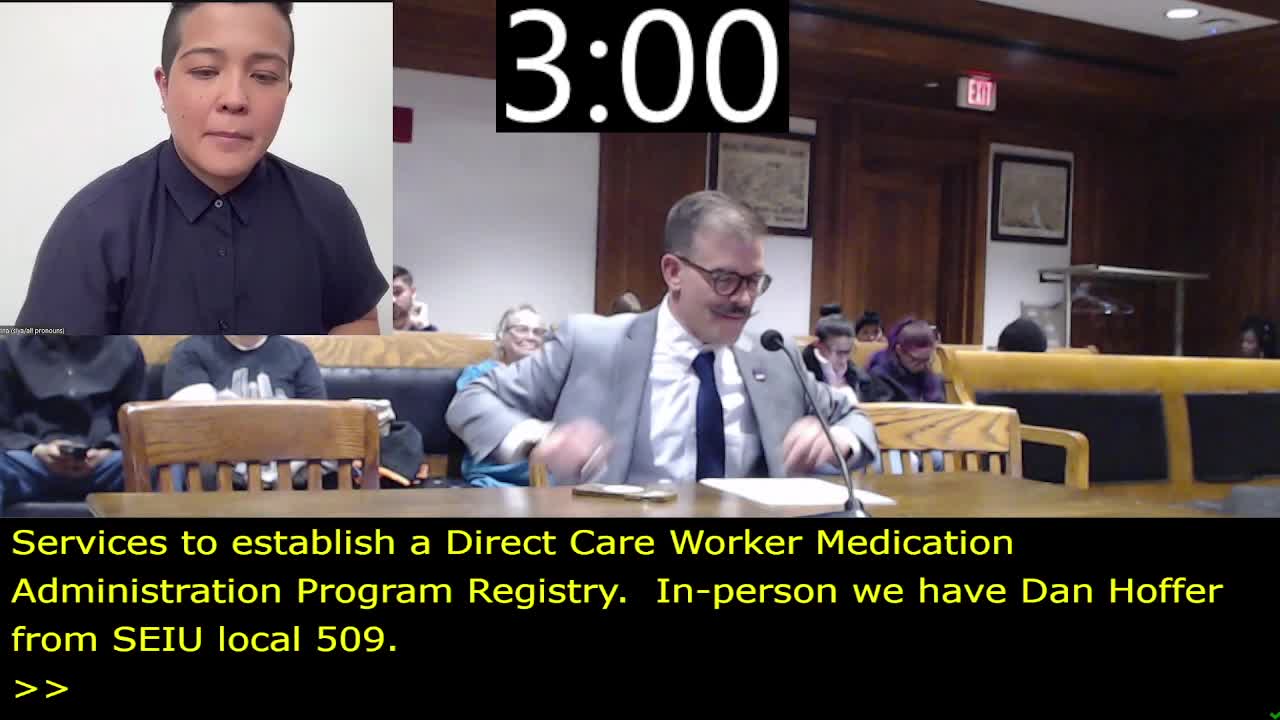
"If we're going to make a meaningful dent in getting people into this workforce, take care of our loved ones with disabilities or mental health conditions, we need to do everything we can," Dan Hoffer of SEIU Local 509 told the committee. He said the MAP test is a hiring requirement and failure to pass can result in termination after limited attempts.
Direct-care workers and certified MAP instructors described language and access barriers. Adisa Abogi Marfo, a certified MAP instructor, said English-language materials and timing create obstacles for non-English speakers, and bilingual instruction in languages such as Swahili, Yoruba, Haitian Creole, Spanish and Portuguese could improve pass rates. David Zanger and other workers described repeated difficulty passing the exam and the employment instability that follows.
Proponents cited two existing registries in Massachusetts (nursing assistants and home care) as models and said the current list is managed by a private third party not subject to public access. They estimated 15,000 to 20,000 individuals would be included in the proposed registry and argued that access by legitimate industry groups could improve culturally competent training and reduce vacancies.
Committee members asked about privacy and who would have access; proponents framed the registry as restricted to industry groups and employee organizations with a legitimate interest. No final registry design or privacy safeguards were offered in the hearing; proponents urged the committee to move the bill forward so details can be worked out.