Get Full Government Meeting Transcripts, Videos, & Alerts Forever!
Get email alerts on the Public Lands Protection topic
No spam. Unsubscribe anytime.
Committee hears bill to bar oil and gas extraction under Lake Erie and in state parks
Summary
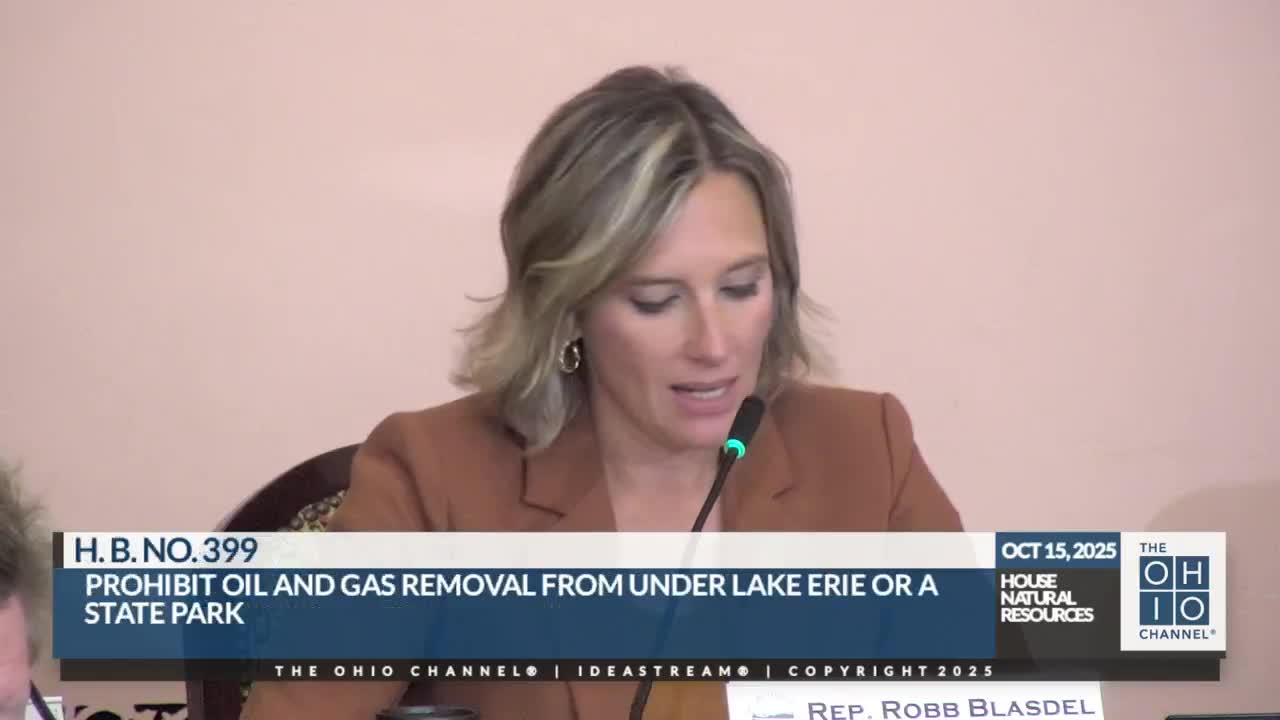
Representative Reiter and Representative Cockley told the House Natural Resources Committee that House Bill 399 would bar permitting, leasing or extraction of oil and gas in Ohio state parks and beneath Lake Erie.
Representative Reiter and Representative Cockley presented sponsor testimony for House Bill 399, which would prohibit any authority from issuing permits, entering leases, or granting authorization to extract oil or natural gas from under Lake Erie or within Ohio state parks.
"These lands are visited and cherished by millions of residents and tourists every year," Representative Reiter said, describing the ecological, recreational and cultural value of state parks. Reiter said a 2023 statutory change accelerated the process for oil and gas companies to obtain leasing on public lands and argued HB399 would restore a clear state-level prohibition.
Representative Tristan Rader, joining in support, noted economic benefits tied to the Great Lakes Restoration Initiative and warned that federal protections can change; he cited a January incident at Salt Fork State Park where a horizontal drilling facility caught fire and burned for about 14 hours, prompting local cleanup.
Committee members asked practical questions about implementation and existing leases. Vice Chair Fisher asked whether the bill would require shutting down existing operations; sponsors replied the bill would ban current permitting and affect leases that are currently extracting under parks. Representative Salvo noted that drilling infrastructure under some parks is not visible from park grounds and said he had not observed impacts on fish or water; sponsors responded that out-of-sight activity can still pose environmental and safety risks and that allowing extraction could lead to expanded activity on public lands.
Sponsors framed the bill as a precautionary measure to preserve parks and Lake Erie for future generations; they asked the committee to advance the bill to opportunity for proponent and opponent testimony in subsequent hearings.