Get Full Government Meeting Transcripts, Videos, & Alerts Forever!
Get email alerts on the Drug Safety ODH List topic
No spam. Unsubscribe anytime.
Dozens of witnesses oppose House Bill 324, raising scientific, legal and access concerns
Summary
House Bill 324 would direct the Ohio Department of Health to identify drugs with severe adverse effects occurring in more than 5% of users based on insurance claims, patient reports and FDA data. Multiple clinicians, researchers, pharmacies, advocacy groups and students opposed the bill at the committee hearing, arguing the statutorily prescribed
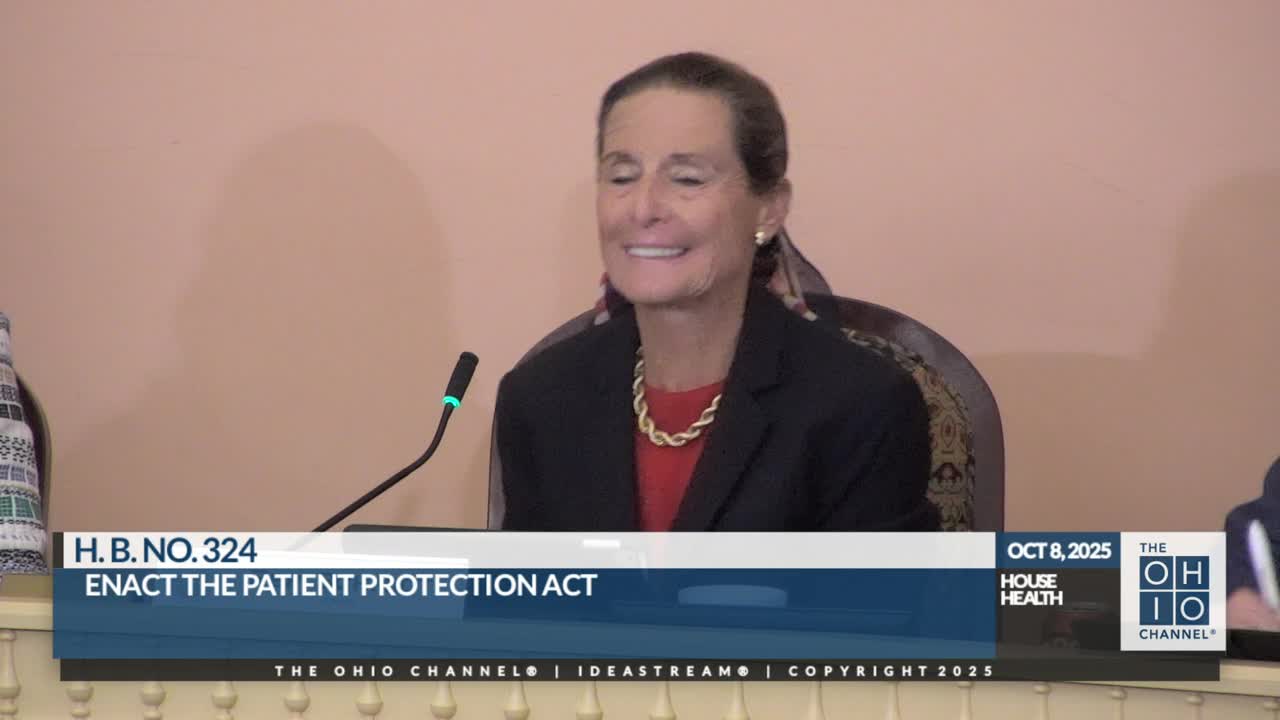
House Bill 324, which would require the Ohio Director of Health to identify medicines that cause specified severe adverse events in more than 5 percent of users based on a set of data sources, drew extensive testimony and opposition at its third hearing before the House Health Committee.
Dr. Lisonbee Norris, an epidemiologist and reproductive health researcher, testified as an interested‑party witness that the bill’s required evidence sources — insurance claims, patient reports to health care professionals, and applicable FDA data — could lead the Department of Health to rely on poorly conducted analyses. She told the committee that one report often cited by proponents (Hall and Anderson) counts emergency department visits and routine follow‑up care as "serious adverse events," inflating adverse‑event rates for mifepristone and other drugs. "Basing care on evidence means relying on information that scientists in related fields have examined and affirmed," she said, warning that the bill could "prohibit standard evidence‑based care."
Planned Parenthood Advocates of Ohio and Planned Parenthood of Greater Ohio opposed the bill, calling it an "unconstitutional attempt" to limit access to medication abortion and saying the report relied on by proponents is self‑published and methodologically flawed. Danielle Fierczyk (Planned Parenthood) and Jamie Mericle (Abortion Forward) both urged the committee to reject the bill, citing peer‑reviewed literature, FDA findings, and court rulings that recognize medication abortion as safe and constitutionally protected under Ohio’s Reproductive Freedom Amendment.
Representatives of chain retail pharmacies submitted a legal memorandum and warned the committee that the bill would duplicate and conflict with FDA authority, create arbitrary thresholds (5 percent) that fail to account for clinical context, risk removing over‑the‑counter access (for example ibuprofen), and disrupt mail‑order supply chains relied upon by rural, elderly and disabled patients. The witness from the chain drug committee said the bill ‘‘would create unnecessary duplication of federal oversight’’ and highlighted concerns about preemption and practical pharmacy compliance challenges.
Clinicians and trainees — including emergency nurses and a fourth‑year medical student — testified that telehealth prescriptions have comparable safety to in‑person care in peer‑reviewed studies and that the bill would impose burdensome in‑person visit requirements that could delay care and worsen outcomes for patients in rural and underserved areas.
Committee members asked witnesses to identify specific data sources and definitions; Dr. Norris and other witnesses repeatedly emphasized the distinction between peer‑reviewed research and self‑published reports using insurance claims. Several witnesses requested the report cited by proponents and underscored that if the Department of Health were to undertake this task, statutory language should require use of peer‑reviewed, validated data and preserve telehealth access for routine care.
No committee vote on HB324 occurred at this hearing; committee members adjourned after concluding testimony.