Get Full Government Meeting Transcripts, Videos, & Alerts Forever!
Get email alerts on the Property Tax topic
No spam. Unsubscribe anytime.
House Finance Committee backs bill to cap property-tax spikes, funds hold-harmless payments for some school districts
Summary
The House Finance Committee voted to favorably report Substitute House Bill 186, a measure to limit sudden, large increases in unvoted property taxes for school districts and to appropriate state funds to hold certain districts harmless after recent reappraisals.
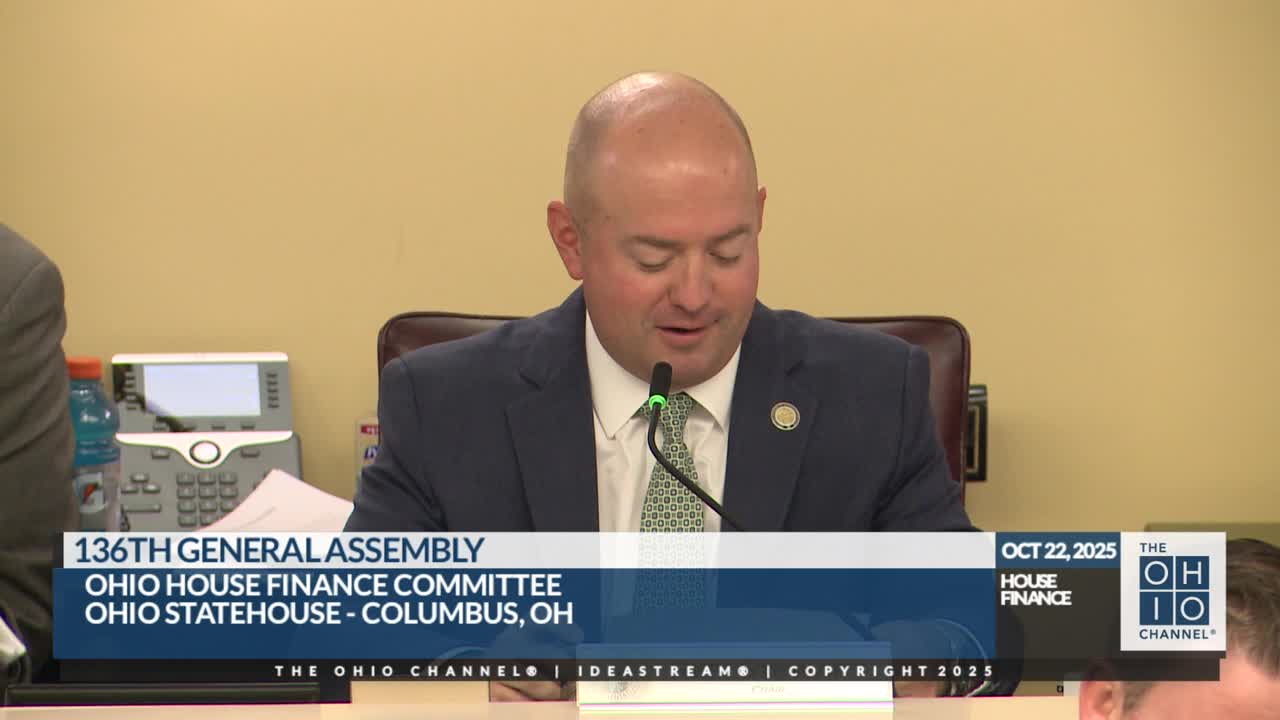
The House Finance Committee voted to favorably report Substitute House Bill 186, a measure to limit sudden, large increases in unvoted property taxes for school districts, and to use state funds to temporarily "hold harmless" affected districts after recent reappraisals. The committee vote on the motion to recommend passage was 24 affirmative and 4 negative; the bill moves to the rules and reference committee with LSC harmonizing authority.
The bill creates an "inflation cap credit" that ties increases in property-tax revenues for school districts at the 20-mill floor to an inflation measure based on the preceding three years, sponsors said during the committee’s first hearing. Testimony provided to the committee said the bill appropriates money from the expanded sales tax holiday fund to make school districts and counties that underwent reappraisal or triennial updates in tax years 2023 and 2024 whole through the next revaluation period.
Sponsors described the planned payments as roughly $360,000,000 in fiscal year 2027 and $105,000,000 in fiscal year 2028, and they cited a Legislative Budget Office projection that the credit would provide approximately $1.7 billion in taxpayer relief over the next three years. Sponsors stressed the measure does not attempt to claw back past payments; rather, they said, the state would apply the inflation credit going forward and use the appropriation to offset the difference between what a district would receive under the cap and what it otherwise received after a reappraisal until the district’s next revaluation.
Committee members raised questions about how targeted the relief is and whether the approach prioritizes taxpayers over baseline school-funding needs. Representative Troy and others urged continued work to fill remaining shortfalls in years two and three and asked whether more targeted mechanisms — such as circuit breakers or expanded homestead exemptions — would better reach taxpayers most in need. Sponsors responded that the bill targets the specific spikes created by recent revaluations and that other budgetary choices and reforms remain for future work.
Representative Callender sought clarification on timing and source of funds; sponsors used a Springboro School example to illustrate the hold-harmless mechanics and said a second payment that falls in fiscal year 2028 would be addressed in the next budget cycle. The sponsor also reiterated that the bill limits future increases to inflation beginning the next tax year and does not recapture prior payments from taxpayers or local entities.
The committee’s motion to favorably report the bill was made by Vice Chair Davila. The clerk conducted a roll call; Abdulahi, Graham, Pickle Antonio and Robinson were recorded as voting no; the remaining votes produced the 24-4 tally announced by Chair Stewart. The committee granted LSC harmonizing authority and forwarded the bill to the rules and reference committee.