Get Full Government Meeting Transcripts, Videos, & Alerts Forever!
Get email alerts on the Natural Gas Regulatory Reform topic
No spam. Unsubscribe anytime.
Ohio GOP sponsors pitch HB 142 to shorten PUCO timelines, boost gas infrastructure investment
Summary
Sponsors of House Bill 142 told the House Energy Committee the bill would reduce regulatory lag by adopting forecast test years and shortening the Public Utilities Commission of Ohio's rate-case timeline from 545 days to 365 days. Supporters said the changes would make Ohio more competitive for large-load customers and encourage investment in new,
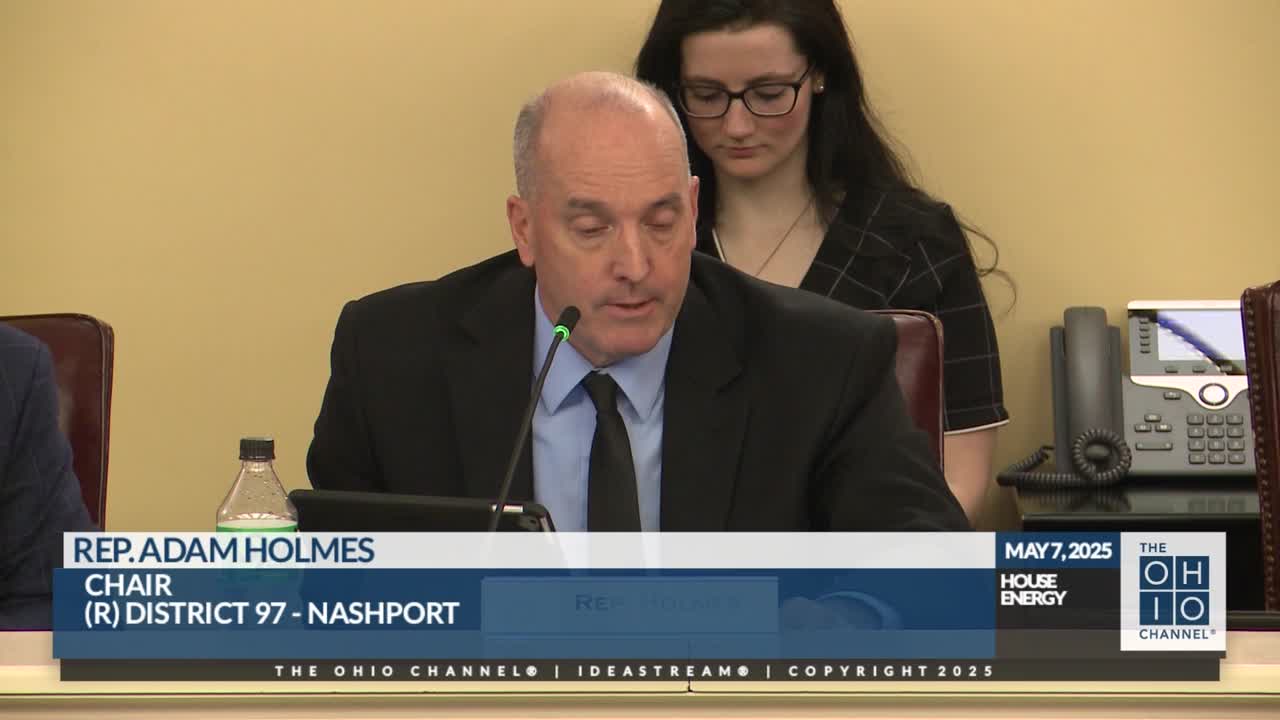
House Bill 142 would change how Ohio regulates natural gas utilities by allowing forward-looking test years and shortening the timeline for the Public Utilities Commission of Ohio (PUCO) to issue rate-case orders from 545 days to 365 days, sponsors told the House Energy Committee in a first hearing.
Representative Davila, a sponsor, said the bill 22implements forward looking test years22 and 22increases Ohio's regulatory certainty,22 allowing utilities to recover costs when they are incurred and better position the state to attract investment. 22Quite simply, the current process is broken and requires change,22 Davila said.
Representative Fisher, the bill's joint sponsor, described HB 142 as 22pro-growth, pro-investment22 reform that would reduce regulatory lag and permit customized rate plans and commercial agreements for large-load customers such as data centers, manufacturers and logistics centers while maintaining PUCO oversight.
Why it matters: Sponsors said the changes would provide clearer, faster procedures for utilities negotiating large infrastructure projects and give prospective customers a predictable process and timeline. They said that, taken together, forward-looking test years and a shorter PUCO review period would better align Ohio with neighboring states and aid economic development.
Committee questions and follow-up: Members pressed sponsors on specifics. Representative Hall asked why the current timeline is 545 days and whether steps would be cut; sponsors replied they had not yet met PUCO to map the exact steps but planned to do so. Vice Chair Klopfenstein and other members asked which peer states have the fastest timelines; sponsors cited Indiana (about 300 days) and noted other states' timelines range from roughly six months to a year. Sponsors said they chose 365 days as a clear one-year target that could be revisited based on experience.
PUCO engagement: Sponsors said they expect PUCO staff or commissioners to provide technical testimony on procedural steps, staffing implications, and any needed safeguards before finalizing language.
Scope and limits: The sponsors emphasized that the bill is intended to preserve PUCO oversight and consumer protections while accelerating review and offering objective criteria for approving large-customer infrastructure. They framed the measure as a follow-on to this session27s House Bill 15 energy reforms.
Outcome: The committee held a first hearing; no vote was taken. The sponsors indicated plans to meet with PUCO and refine language based on agency feedback.
Sources: Committee hearing testimony by Representative Davila and Representative Fisher; committee Q&A.