Get Full Government Meeting Transcripts, Videos, & Alerts Forever!
Get email alerts on the Reliability Risk topic
No spam. Unsubscribe anytime.
Expert: PJM may face shortfalls as plants retire faster than replacements arrive
Summary
An Energy Policy Network director told lawmakers that PJM states face elevated reliability risk because retirements outpace new generation and supply-chain delays (turbines, pipelines) and that significant near-term action is needed to preserve baseload capacity.
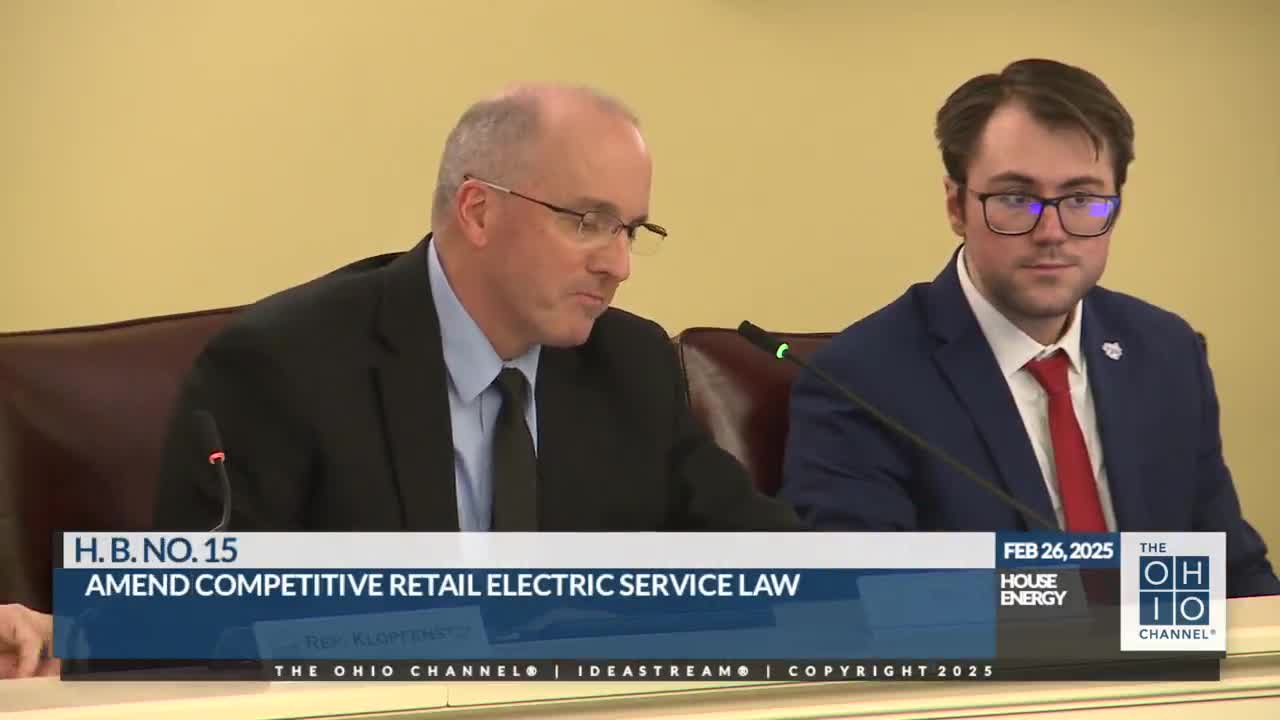
An Energy Policy Network director told the House Energy Committee that PJM and its member states face elevated reliability risk because retirements of conventional generation have outpaced new construction and because supply-chain delays and permitting timelines are slowing replacement capacity.
"We're closing power plants much faster than we're building them," the witness said, summarizing NERC and FERC observations. He reported that more than 44 GW have retired across PJM and that PJM lists more than 30,000 MW of planned retirements or announced closures; within Ohio, the witness noted more than a dozen recent plant retirements and additional units scheduled to close by 2030. He said that 86% of the new generation in PJM's queue through 2030 is wind and solar and that only about 14% is base load generation, creating a mismatch between the type of capacity being added and the dispatchable capacity retiring.
The witness highlighted practical constraints for rapid replacement of baseload: a limited number of manufacturers for combined-cycle gas turbines and multi-year lead times (he cited a common four-year delivery timeline), pipeline and siting litigation risks, and supply-chain problems affecting wind/solar components as well. He recommended policies that preserve or replace baseload capacity where retirement is imminent, urged storage and transmission planning, and suggested options some states have used such as mothball statutes that retain idle capacity in a reparable state for emergency use.
The testimony offered urgency: regional operators and federal reliability monitors have elevated the risk level for PJM and recommended faster interconnection queue reform, transmission planning and targeted incentives for dispatchable resources. Committee members asked technical follow-ups about capacity factors, mothballing options and the interplay with state permitting reforms.