Get Full Government Meeting Transcripts, Videos, & Alerts Forever!
Get email alerts on the Infrastructure topic
No spam. Unsubscribe anytime.
Select Board approves $65,000 change order for Slaughterhouse Road covered bridge amid questions about oversight
Summary
The Select Board authorized a $65,000 change order for emergency repairs to the Slaughterhouse Road covered bridge after heated public comment and board debate over contracting, notification and oversight. Residents also raised broader concerns about contractor communication on the South Main Street water project and unpaid damage claims.
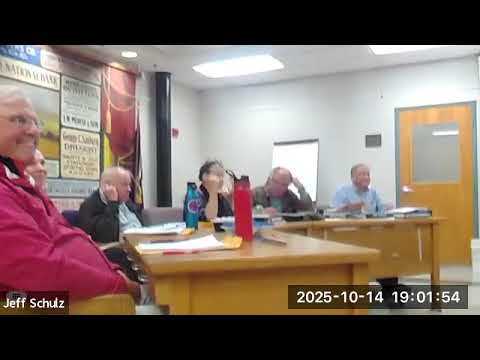
A majority of the Northfield Select Board on Oct. 14 approved an after‑the‑fact $65,000 change order to pay for emergency repairs to the Slaughterhouse Road covered bridge, but the vote followed extended public comment and sharp questioning from board members about procurement and supervisory oversight.
A resident, Chris, who addressed the board during public comment, read contract language and asked why the contract used permissive phrasing (“may” execute a change order) rather than mandatory phrasing and why the work proceeded without an agreed change order. Quoting the contract, he said section 3.c.1 on concealed conditions stated contractor and owner “may, not shall, may execute a change order for this additional work,” and he asked whether the town had treated the document as an estimate rather than a fully executed contract.
The timeline recounted by commenters and staff: a contract for initial stabilization and work was signed in early August after an emergent condition that reduced the bridge weight limit; the contractor performed shoring in early August; and a later change‑order proposal for additional work arrived after the stabilization work had been completed. Several board members said the contractor did quality work; others criticized the process, saying the town should have required a formal change order before the additional work proceeded.
Town staff and some board members said the bridge presented an emergent safety issue that required immediate contractor action. One board member announced a planned vote against the change order on process grounds; another member urged approval, noting the contractor’s good work and the lack of local contractors able to perform specialized timber bridge repairs. After debate the board voted to approve the change order; the meeting transcript records verbal ayes and noes but does not contain a roll‑call vote by name.
The discussion about the bridge occurred alongside broader public complaints about communication on the South Main Street water project. A resident said he was not notified when contractors blocked his driveway, that two phone lines were cut, and that dust suppression and communication from contractors were spotty until he called the town manager. Town staff said they had contacted contractors, engaged the engineer, and were pursuing reimbursement claims with insurers and the contractor where appropriate; staff also indicated they plan to adjust accounting entries if claims are later reimbursed.
Board members asked for clearer oversight going forward. Concerns raised included (a) whether emergency procurement followed the town’s policies, (b) whether change orders should be required before additional work is performed when practicable, (c) what steps the town will take to improve contractor notification to property owners during water and street projects, and (d) whether insurance or contractor responsibility can be pursued for property damage claims.
What’s next: the board authorized the change order. Staff said they will pursue reimbursement with contractors and insurers for water‑project damage claims, will review procurement and notification practices for future emergency and non‑emergency contracts, and will provide further updates on other bridge repairs and planned work (including Stony Brook and Moseley bridges) at future meetings.
Direct quotes in this article are taken from public comment and the Oct. 14 meeting transcript.