Get Full Government Meeting Transcripts, Videos, & Alerts Forever!
Get email alerts on the Conservation topic
No spam. Unsubscribe anytime.
Northfield considers permanent conservation of town forest with Vermont Land Trust
Summary
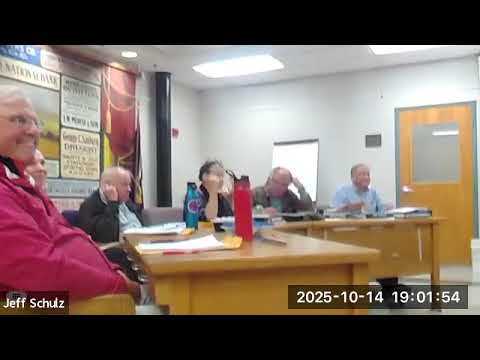
Northfield Select Board members on Oct. 14 heard a presentation from the Conservation Commission and the Vermont Land Trust on a proposal to pursue a permanent conservation easement for the Northfield Town Forest.
Northfield Select Board members on Oct. 14 heard a presentation from the Conservation Commission and the Vermont Land Trust on a proposal to pursue a permanent conservation easement for the Northfield Town Forest.
Conservation Commission members and Vermont Land Trust staff told the board the town forest contains rare natural-community habitat, mapped vernal pools and trail connections to adjoining conserved parcels — and that current funding opportunities make pursuing an easement feasible now. “There appears to be a source of funding, and the Vermont Land Trust is interested,” Vermont Land Trust representative Mead Bin Amer told the board as he walked through ecological maps and aerial photos.
The proposal would likely use a conservation easement held by the Vermont Land Trust to protect development rights in perpetuity while leaving recreational uses in place. “We try to leave a lot of leeway because we believe that it's up to the town forest stewardship committee or the conservation commission to determine … what uses are suitable,” Bin Amer said, noting that easement language can be negotiated to allow hiking, trail use, sugaring and carefully defined forest management.
Jeremy, chair of the Town Forest Stewardship Committee, read goals from the committee's 2019 stewardship plan — including conserving biodiversity, protecting riparian and wetland habitats and maintaining recreational access — and said an easement would align with those objectives. He emphasized that the stewardship plan already frames permitted recreational and management activities and that the committee would continue public dialogues about specific rules (for example, mountain-biking and electric-bike policies).
Speakers told the board the funding picture strengthens the case for at least developing a formal application: Bin Amer warned the current funding source is relatively robust now and may not recur soon, and said, “there is some value in pursuing this now, at least developing ideas, just to make sure that we don't miss an opportunity.” He said typical grant programs expect some local match but that the town contribution is usually modest and can include in‑kind volunteer hours recorded by the stewardship committee.
Board members pressed for details about which parcels would be included (the presenter showed adjacent conserved lands in Berlin and parcels owned by Norwich University on the ridgeline), whether Cheney Field (the water-tank area) would be treated differently, and whether recreation, hunting, timber harvest and mechanized uses such as snowmachines or certain classes of e-bikes could be allowed. Presenters said those are negotiable elements of an easement and that state or federal funding sources sometimes require provisions (for example, guaranteed public access) that the town and land trust would need to accept.
The Conservation Commission asked the Select Board for direction: should the commission continue to develop options and work with town staff on applications and draft easement language, or pause the effort? Board members did not make a final decision on Oct. 14; several said they want staff to confirm details (funding timing, likely town contribution, exactly which adjacent parcels might be included), to assess impacts on town facilities such as Cheney Field, and to involve the public in further discussion before the board commits.
What’s next: staff and the conservation commission will return with more detailed options, including an assessment of likely matching requirements (presenters estimated a modest town contribution in the low five‑digit range or a combination of cash and in‑kind volunteer credit), timing tied to quarterly grant application windows, and recommended language for uses the town wants to preserve. The board will also require public notice and the standard municipal review steps before any decision to convey or encumber town land.
Quotes in this article come from presenters at the Oct. 14 Select Board meeting.