
Santa Cruz County delays battery-energy-storage zoning as public and state review continues
Get AI-powered insights, summaries, and transcripts
Subscribe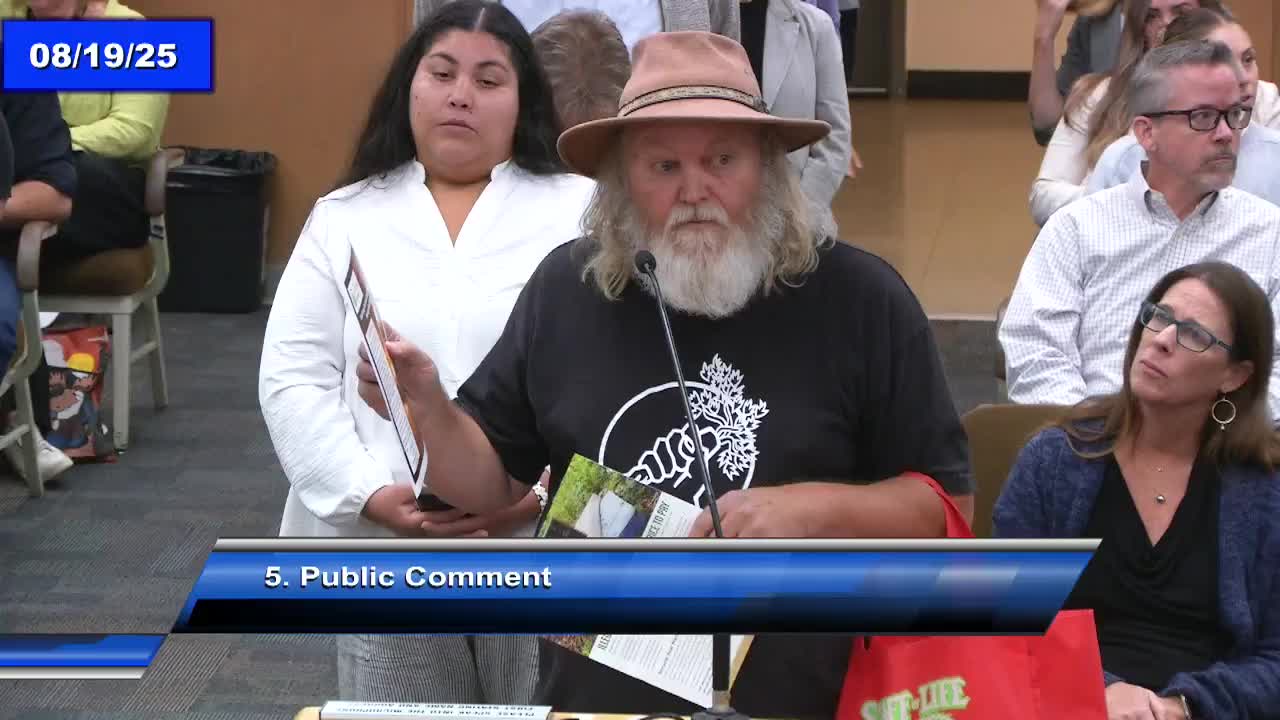
Summary
The Santa Cruz County Board of Supervisors on Aug. 19 deferred action on a proposed battery-energy-storage combining‑district ordinance until on or before the second meeting in August 2026 to allow time for state law changes and results of post‑Moss Landing safety studies.
The Santa Cruz County Board of Supervisors on Aug. 19 directed staff to defer action on a proposed battery energy storage (BESS) combining-district ordinance until on or before the board's second meeting in August 2026 to allow more time for state law developments and for county and Monterey County studies related to the Moss Landing fire to be completed.
Why it matters: Residents and public-safety advocates told the board they remain deeply concerned about the safety, siting and long-term public-health effects of grid-scale lithium‑ion storage facilities following the 2023 Moss Landing fire. Several speakers asked the board to support state bills that would require setback standards and moratoria while new state fire codes are finalized.
The board's action followed extensive public comment opposing large-scale lithium battery installations near schools, homes and farmland. "There is an apple orchard there now that is producing," resident Gregory Aldino said of a proposed site near Minto Road, arguing the project would pave over prime farmland and place a 200-container BESS "in the middle of prime farmland." Becky Steinbruner, a longtime critic of grid-scale lithium projects, told the board she supports AB303 and AB434 to establish objective setbacks and to place an effective moratorium on new grid-scale lithium projects until updated state fire codes are adopted.
Board discussion centered on timing. Supervisors said a deferral would give staff time to interpret presumptive state actions on bills such as SB283 and to review ongoing post‑Moss Landing analyses. "By then we will probably have enough information on the new state laws, all these different studies, how they all intersect," Supervisor Cummings said when urging a longer defer date than staff initially proposed.
Direction to staff: The board asked staff to return with an updated ordinance no later than the second meeting in August 2026 but left open the option of returning earlier if state actions or study results arrive sooner. Supervisors emphasized continuing public engagement and asked planning staff and the Commission on the Environment to participate in the outreach now under way.
Outlook: The deferral preserves the board's ability to adopt local standards while giving staff and the public time to weigh new state-level rules and technical findings from ongoing investigations and independent studies. County staff said they and the board would continue to receive community input and that the August 2026 date is a hard latest-return date, not a required delay.
Ending: The item illustrated the county's tension between local zoning authority and rapidly evolving state policy and technical advice on BESS safety; the board opted for more time and study rather than immediate local standards.