Get Full Government Meeting Transcripts, Videos, & Alerts Forever!
Get email alerts on the Affordable Housing Funding topic
No spam. Unsubscribe anytime.
Tuscaloosa officials adopt CAPER, reallocate HOME/CDBG funds to active housing projects and adjust Habitat, ESG contracts
Summary
The city adopted its Consolidated Annual Performance and Evaluation Report for HOME and CDBG programs and approved a package of budget and contract amendments to shift unspent federal funds to active affordable‑housing projects, officials said.
The city approved the Consolidated Annual Performance and Evaluation Report (CAPER) for the Home Investment Partnerships (HOME) program and the Community Development Block Grant (CDBG) and authorized a 15-day public comment period, staff said.
Miss Heather Hill of the Office of Community and Neighborhood Services said the CAPER documents the city's performance under its HOME and CDBG grants and asked the body to adopt it and advertise it for citizen review for 15 days. “So this would allow us, to adopt our annual performance and evaluation report. That's for our HOME or the Home Investment Partnership Program and our Community Development Block Grant,” Hill said. A motion to adopt the CAPER was approved by voice vote.
The committee then approved multiple budget and contract changes to move remaining federal funds into projects that are already underway. Hill said some HOME activity years still have unspent money that must be committed before federal expenditure deadlines. “It is coming to a point where our expenditure deadline is coming up, and we need to get it in a project that's ready to go so we don't lose the funds,” she said.
The body authorized moving $299,770.38 in remaining HOME funds from 2018 and 2019 (including down-payment assistance and tenant-based rental assistance) to the Springer Estates project, to be administered by the Tuscaloosa Housing Authority for affordable-housing construction. A voice vote approved the transfer.
Officials also approved adding previously programmed funds back into a Habitat for Humanity contract after that nonprofit completed a project under budget. Staff said the additional funds would raise the relevant HOME contract to $125,810.62 for work in the Millstone/Mills Creek neighborhood. The motion passed by voice vote.
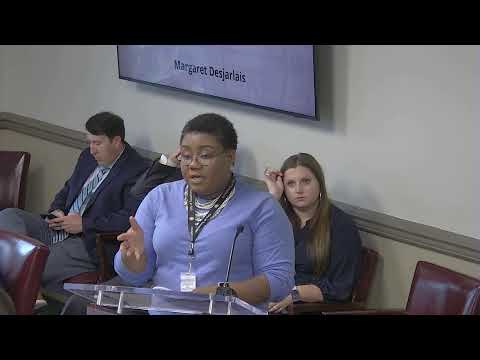
Under the 2024 Emergency Solutions Grant (ESG) program, Turning Point requested a line-item amendment to move $6,500 from homeless prevention into rapid rehousing because it is seeing greater need in rapid rehousing. Miss Margaret (Office of Community and Neighborhood Services) presented the request; the council approved the amendment.
Council members also agreed to transfer $100,000 from a CDBG rehabilitation program to Habitat for Humanity for the Westgrove development, which staff described as a 25-house affordable-housing build. Miss Margaret explained Westgrove is one of the city's partner developments and that CDBG funds will support infrastructure for the subdivision. The body approved a related amendment to add $100,000 to Habitat's Westgrove subrecipient agreement, increasing that contract from about $331,000 to about $431,000.
To fund the Westgrove increase, staff said they would reduce the city's Critical Home Repair contract with Habitat by $100,000 (from $200,000 to roughly $100,000). Staff clarified the Critical Home Repair program is citywide, requires owner-occupied homes and income qualification, typically requires homeowners to carry insurance, and is not available for properties owned by landlords or intended for flipping. “They are not the house, we do not do rehabilitation for landlords. We don't do it in order for you to flip the home,” staff said.
Board members thanked Habitat and staff for responsiveness during the pandemic-era changes and encouraged volunteering on build days; several motions approving the amendments passed by voice votes. No roll-call vote tallies were recorded in the transcript.
The meeting concluded with brief guest introductions and announcements about community events.