Get Full Government Meeting Transcripts, Videos, & Alerts Forever!
Get email alerts on the Industrial Terminal Butane Storage topic
No spam. Unsubscribe anytime.
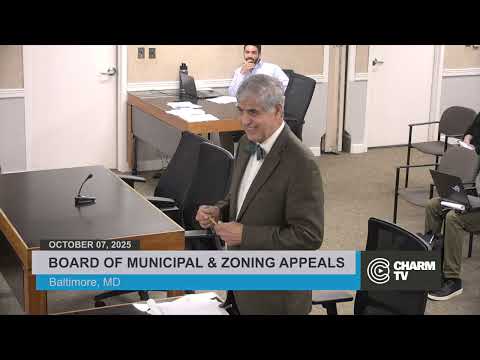
BMZA approves Buckeye Partners’ proposal for butane storage at Curtis Bay after finding net water‑quality benefits
Summary
Baltimore City’s zoning appeals board voted unanimously to allow Buckeye Partners to install three 60,000‑gallon butane storage vessels at its Curtis Bay terminal, finding the project would reduce impervious cover and truck idling and meet conditional‑use and critical‑area standards.
The Baltimore City Board of Municipal and Zoning Appeals on Monday approved Buckeye Partners’ request to add three 60,000‑gallon butane storage tanks at its Curtis Bay maritime industrial terminal, granting a conditional use for industrial‑general activity, a variance to expand an existing grandfathered terminal in the Chesapeake Bay critical area, and an exception to the code’s list of prohibited critical‑area uses.
Justin Walker of the Department of Planning told the board the applicant met the technical standards for conditional use in the MI (maritime industrial) district and for the critical‑area exceptions listed in the Natural Resources Article and city code. Planning recommended approval after finding the project would remove roughly 15,000 square feet of impervious surface, add street trees and best‑management practices, and reduce truck idling by regularizing butane deliveries — actions that the planning staff said would improve local water quality compared with current operations.
Caroline Hecker of Rosenberg Martin, representing Buckeye, described the project as an $11 million capital investment to “streamline the butane blending process” at an existing terminal that dates to 1968. The company said the permanent storage vessels would reduce truck queuing and idling during seasonal peaks; civil engineering and critical‑area reports proffered by the applicant concluded there would be no adverse impacts on water quality or habitat and predicted net reductions in nitrogen, phosphorus and total suspended solids after converting some impervious area to natural turf.
Planning and the Critical Area Commission both reviewed the application; the commission’s letter in the record deferred to the board’s judgment, and planning staff confirmed the final permit package will include a best‑management practices plan and additional agency reviews during permitting.
Board members said the project met the conditional‑use factors for industrial‑general use in the MI district, the statutory and COMAR variance standards for critical‑area expansions of grandfathered uses, and the two findings required for an exception to critical‑area prohibited uses — that no environmentally acceptable alternative exists outside the critical area and that the use is needed to correct an existing water‑quality or wastewater management problem. The board voted unanimously to approve all three requests; the written resolution will detail conditions and permitting requirements.
Permits and final engineering reviews remain required before construction; the applicant also must file standard erosion‑control and stormwater best‑management plans as part of the building and environmental permitting process.